


4 months 1 week ago
Every rebellion implies some kind of unity.


4 months 2 days ago
But it isn't just a matter of faith, but of faith and works. Each is necessary. For the demons also believe you heard the apostle and tremble (Jas 2:19); but their believing doesn't do them any good. Faith alone is not enough, unless works too are joined to it: Faith working through love (Gal 5:6), says the apostle.
▼
Source
source
16A:11:2

1 week 4 days ago
Let us pardon him his hope of a vain apocalypse, and of a second coming in great triumph upon the clouds of heaven. Perhaps these were the errors of others rather than his own; and if it be true that he himself shared the general illusion, what matters it, since his dream rendered him strong against death, and sustained him in a struggle to which he might otherwise have been unequal?
▼
Source
source
Ch. 17.
2 months 1 week ago
Sex-appeal is the keynote of our whole civilization.
▼
Source
source
Chapter IV

2 months 2 weeks ago
Nothing less will content me, than whole America.
4 months 1 week ago
"What on earth prompted you to take a hand in this?""I don't know. My... my code of morals, perhaps.""Your code of morals. What code, if I may ask?" "Comprehension."

3 months 2 weeks ago
Thee will find out in time that I have a great love of professing vile sentiments, I don't know why, unless it springs from long efforts to avoid priggery.
▼
Source
source
Letter to Alys Pearsall Smith (1894). Smith was a Quaker, thus the archaic use of "Thee" in this and other letters to her.
1 month 3 weeks ago
It is certainly not a matter of indifference whether I learn something without effort or finally arrive at it myself through my system of thought. In the latter case everything has roots, in the former it is merely superficial.
▼
Source
source
F154
4 months 2 weeks ago
There are many people who reach their conclusions about life like schoolboys; they cheat their master by copying the answer out of a book without having worked out the sum for themselves.
2 months 1 week ago
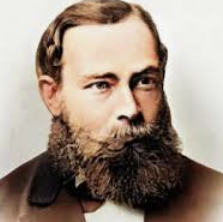
The historical approach, with its aim of detecting how things began and arriving from these origins at a knowledge of their nature, is certainly perfectly legitimate; but it also has its limitations. If everything were in continual flux, and nothing maintained itself fixed for all time, there would no longer be any possibility of getting to know about the world, and everything would be plunged into confusion.
▼
Source
source
Translation J. L. Austin (Oxford, 1950) as quoted by Stephen Toulmin, Human Understanding: The Collective Use and Evolution of Concepts (1972) Vol. 1, p. 55.

4 months 2 weeks ago
There are limits beyond which your folly will not carry you. I am glad of that. In fact, I am relieved.
1 month 1 week ago
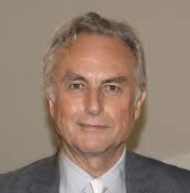
Ignorance, to a scientist, is an itch that begs to be pleasurably scratched. Ignorance, if you are a theologian, is something to be washed away by shamelessly making something up.
▼
Source
source
The Intellectual and Moral Courage of Atheism
2 months 1 week ago
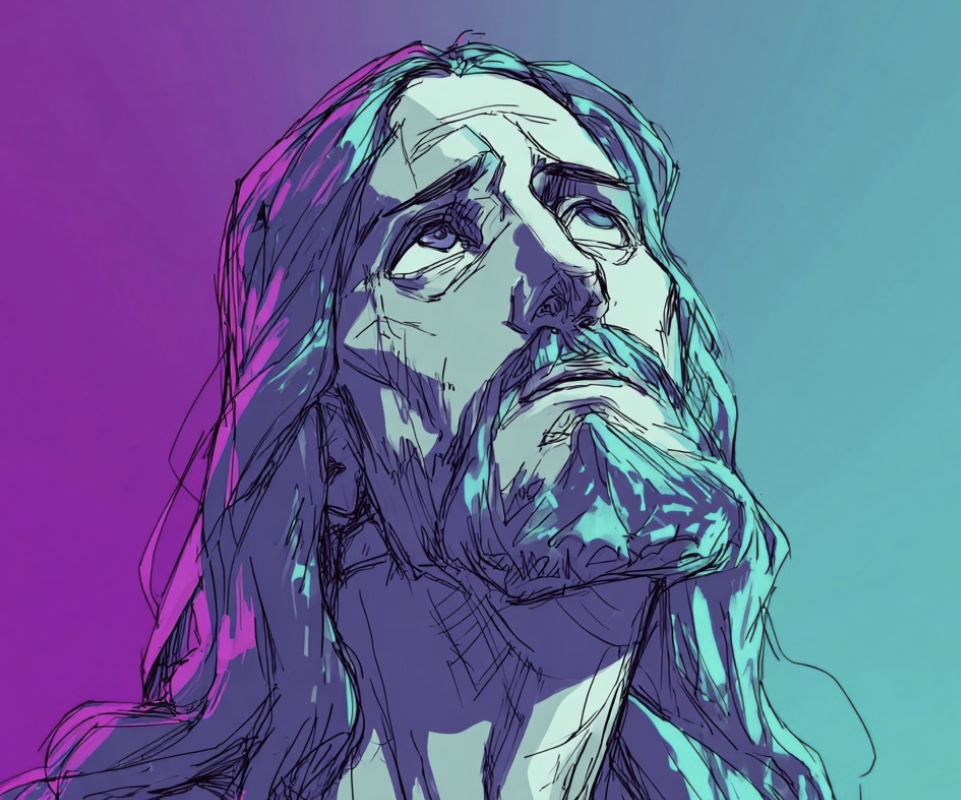
Why callest thou me good? there is none good but one, that is, God: but if thou wilt enter into life, keep the commandments.
▼
Source
source
19:17 (KJV)

1 day ago
Withdraw into yourself, as far as you can. Associate with those who will make a better man of you. Welcome those whom you yourself can improve. The process is mutual; for men learn while they teach.
▼
Source
source
Line 8.

2 months 3 weeks ago
Nothing is quite so wretchedly corrupt as an aristocracy which has lost its power but kept its wealth and which still has endless leisure to devote to nothing but banal enjoyments. All its great thoughts and passionate energy are things of the past, and nothing but a host of petty, gnawing vices now cling to it like worms to a corpse.
▼
Source
source
Book Three, Chapter XI.

1 month 2 weeks ago
Quite often a man goes on for years imagining that the religious teaching that had been imparted to him since childhood is still intact, while all the time there is not a trace of it left in him.
▼
Source
source
Pt. I, ch. 1

3 months ago
Again, Amyclas the Heracleotean, one of Plato's familiars, and Menæchmus, the disciple, indeed, of Eudoxus, but conversant with Plato, and his brother Dinostratus, rendered the whole of geometry as yet more perfect. But Theudius, the Magnian, appears to have excelled, as well in mathematical disciplines, as in the rest of philosophy. For he constructed elements egregiously, and rendered many particulars more universal. Besides, Cyzicinus the Athenian, flourished at the same period, and became illustrious in other mathematical disciplines, but especially in geometry. These, therefore, resorted by turns to the Academy, and employed themselves in proposing common questions.
▼
Source
source
Ch. IV.
3 months 2 weeks ago
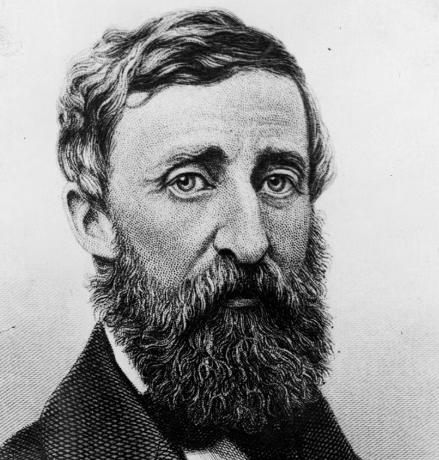
One cannot too soon forget his errors and misdemeanors. To dwell long upon them is to add to the offense. Repentance and sorrow can only be displaced by something better, which is as free and original as if they had not been.
▼
Source
source
January 9, 1842
1 month 3 weeks ago
Man is always partial and is quite right to be. Even impartiality is partial.
▼
Source
source
F 78

2 months 3 days ago
Man is said to be a reasoning animal. I do not know why he has not been defined as an affective or feeling animal. Perhaps that which differentiates him from other animals is feeling rather than reason. More often I have seen a cat reason than laugh or weep. Perhaps it weeps or laughs inwardly - but then perhaps, also inwardly, the crab resolves equations of the second degree.
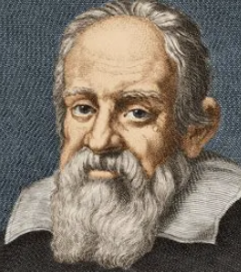
1 week 3 days ago
To this end they make a shield of their hypocritical zeal for religion. They go about invoking the Bible, which they would have minister to their deceitful purposes. Contrary to the sense of the Bible and the intention of the holy Fathers, if I am not mistaken, they would extend such authorities until even in purely physical matters - where faith is not involved - they would have us altogether abandon reason and the evidence of our senses in favor of some biblical passage, though under the surface meaning of its words this passage may contain a different sense.

2 months 3 weeks ago
Of the eternal incorporeal substance nothing is changed, is formed or deformed, but there always remains only that thing which cannot be a subject of dissolution, since it is not possible that it be a subject of composition, and therefore, either of itself or by accident, it cannot be said to die.
▼
Source
source
As translated by Arthur Imerti

1 month 2 weeks ago
Although the medium is the message, the controls go beyond programming. The restraints are always directed to the "content," which is always another medium. The content of the press is literary statement, as the content of the book is speech, and the content of the movie is the novel. So the effects of radio are quite independent of its programming.
▼
Source
source
(p. 267)

3 months 2 weeks ago
It is a mistake to classify the passions as lawful and unlawful, so as to yield to the one and refuse the other. All alike are good if we are their masters; all alike are bad if we abandon ourselves to them. Nature forbids us to extend our relations beyond the limits of our strength; reason forbids us to want what we cannot get, conscience forbids us, not to be tempted, but to yield to temptation. To feel or not to feel a passion is beyond our control, but we can control ourselves. Every sentiment under our own control is lawful; those which control us are criminal. A man is not guilty if he loves his neighbour's wife, provided he keeps this unhappy passion under the control of the law of duty; he is guilty if he loves his own wife so greatly as to sacrifice everything to that love.

3 months 2 weeks ago
The soul active sees absolute truth; and utters truth, or creates.
▼
Source
source
par. 17
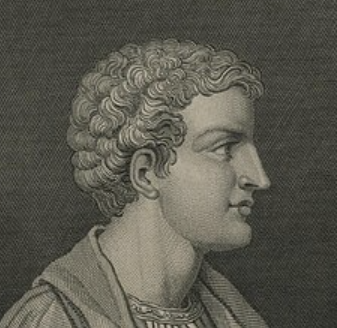
3 months 6 days ago
He who feared that he would not succeed sat still.
▼
Source
source
Book I, epistle xvii, line 37

3 months 2 weeks ago
Somebody ought to make a historical study of the relations between theology and corporal punishment in childhood. I have a theory that, wherever little boys and girls are systematically flagellated, the victims grow up to think of God as - 'Wholly Other'... A people's theology reflects the state of its children's bottoms. Look at the Hebrews - enthusiastic child-beaters. And so were all good Christians in the Age of Faith. Hence Jehovah, hence Original Sin and the infinitely offended Father of Roman and Protestant orthodoxy. Whereas among Buddhists and Hindus education has always been nonviolent. No laceration of little buttocks - therefore Tat tvam asi, thou art That, mind from Mind is not divided.... Major premise: God is Wholly Other. Minor premise: man is totally depraved. Conclusion: Do to your children's bottoms what was done to yours, what your Heavenly Father has been doing to the collective bottom of humanity ever since the Fall: whip, whip, whip!
4 months 2 weeks ago
Editor Preface In this book, originating in the year 1848, the requirement for being a Christian is forced up by the pseudonymous author to the supreme ideality. Yet the requirement should indeed be stated, presented, and heard. From the Christian point of view, there ought to be no scaling down of the requirement, nor suppression of it-instead of a personal admission and confession. The requirement should be heard-and I understand what is said as spoken to me alone-so that I might learn not only to resort to grace but to resort to it in relation to the use of grace.

4 months 6 days ago
Follow the seasons of Ha,Ride in the state carriage of Yau,Wear the ceremonial cap of Chan,Let the music be the Shiu with its pantomimes.

1 week 1 day ago
He who exerts his mind to the utmost knows his nature.
▼
Source
source
7A:1, as translated by Wing-tsit Chan in A Source Book in Chinese Philosophy (1963), p. 62
4 months 1 week ago
When the imagination sleeps, words are emptied of their meaning: a deaf population absent-mindedly registers the condemnation of a man. ... there is no other solution but to speak out and show the obscenity hidden under the verbal cloak.

1 week ago
Books-there is a good kind of a book and a bad kind of a book. I am not to assume that you are all ill acquainted with this; but I may remind you that it is a very important consideration at present. It casts aside altogether the idea that people have that if they are reading any book-that if an ignorant man is reading any book, he is doing rather better than nothing at all.

3 months 6 days ago
Now as of old the gods give men all good things, excepting only those that are baneful and injurious and useless. These, now as of old, are not gifts of the gods: men stumble into them themselves because of their own blindness and folly.
1 month 2 weeks ago
America is 100% 18th Century. The 18th century had chucked out the principle of metaphor and analogy - the basic fact that as A is to B so is C to D. AB:CD. It can see AB relations. But relations in four terms are still verboten. This amounts to deep occultation of nearly all human thought for the USA.
▼
Source
source
Letter to Ezra Pound
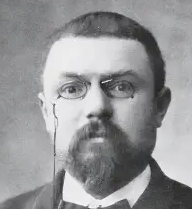
1 week 3 days ago
If... it be supposed that another way of measuring time is adopted... enunciation of the law would be... translated into another language... much less simple. So that the definition implicitly adopted by the astronomers may be summed up..: Time should be so defined that the equations of mechanics may be as simple as possible... [i.e.,] there is not one way of measuring time more true... only more convenient.
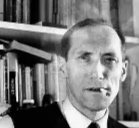
1 week 2 days ago
I do not know what postmodern is and how it differs from the premodern, nor do I feel that I ought to know.
▼
Source
source
"Modernity on Endless Trial"

3 months 2 weeks ago
Through the emancipation of private property from the community, the State has become a separate entity, beside and outside civil society; but is it nothing more than the form of organization which the bourgeois necessarily adopt both for internal and external purposes, for the mutual guarantee of their property and interests.
▼
Source
source
Part One The Marx-Engels Reader, p. 187
2 months 2 days ago
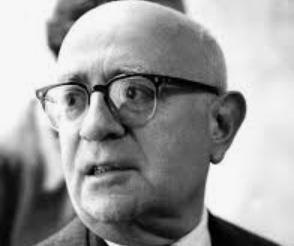
What appears as the positive is essentially the negative, i.e. the thing that is to be criticized.
▼
Source
source
p. 18
4 weeks 1 day ago
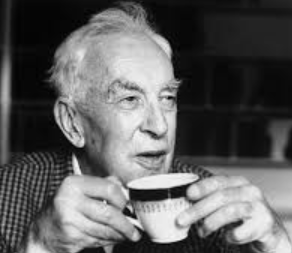
A city that outdistances Man's walking powers is a trap for Man. It threatens to become a prison from which he cannot escape unless he has mechanical means of transport, the thoroughfares for carrying these, and the purchasing power for commanding the use of artificial means of communication.
▼
Source
source
"Has Man's Metropolitan Environment Any Precedents?", Ekistics, vol. 22, no. 133 (December 1966) pp. 385-7
3 months 2 weeks ago
I think no virtue goes with size; The reason of all cowardice Is, that men are overgrown, And, to be valiant, must come down To the titmouse dimension.
▼
Source
source
The Titmouse, st. 5
1 week 4 days ago
Nature has made a race of workers; that is the Chinese race, with a marvelous dexterity of hand and hardly any feeling of honor; govern this race with justice by exacting from them through the competence of such government an ample dowry to the conquering race; the subordinate race will be satisfied; a race of workers of the earth, such is the Negro; let us be for him good and human, and everything will be in order -- a race of masters and soldiers, that is the European race.
▼
Source
source
94
3 months 2 weeks ago
The end cannot justify the means for the simple and obvious reason that the means employed determine the nature of the ends produced.
▼
Source
source
Ch. 1, p. 10 [2012 reprint]
1 week ago
It is no longer the moral, religious, spiritual condition of the people that is our concern, but their physical, practical, economical condition, as regulated by public laws.
3 months 2 weeks ago
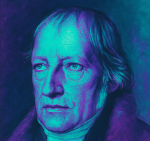
That man should think of God as nothingness must at first sight seem astonishing, must appear to us a most peculiar idea. But, considered more closely, this determination means that God is absolutely nothing determined. He is the Undetermined; no determinateness of any kind pertains to God; He is the Infinite. This is equivalent to saying that God is the negation of all particularity.
▼
Source
source
Hegel, Georg Wilhelm Friedrich, Lectures on the philosophy of religion, together with a work on the proofs of the existence of God. Vol 2 Translated from the 2d German ed. 1895 Ebenezer Brown Speirs 1854-1900, and J Burdon Sanderson p. 51
4 months 1 week ago
Nothing is harder to understand than a symbolic work. A symbol always transcends the one who makes use of it and makes him say in reality more than he is aware of expressing.
3 months 2 weeks ago
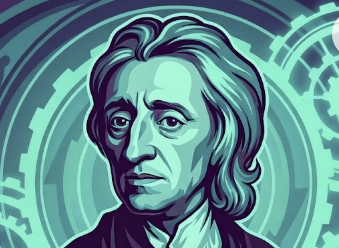
To this I answer: That force is to be opposed to nothing, but to unjust and unlawful force. Whoever makes any opposition in any other case, draws on himself a just condemnation, both from God and man...
▼
Source
source
Second Treatise of Government, Ch. XVIII, sec. 204
3 months 2 weeks ago
Whensoever therefore the legislative shall transgress this fundamental rule of society; and either by ambition, fear, folly or corruption, endeavour to grasp themselves, or put into the hands of any other, an absolute power over the lives, liberties, and estates of the people; by this breach of trust they forfeit the power the people had put into their hands for quite contrary ends, and it devolves to the people, who have a right to resume their original liberty, and, by the establishment of a new legislative, (such as they shall think fit) provide for their own safety and security, which is the end for which they are in society.
▼
Source
source
Second Treatise of Civil Government, Ch. XIX, sec. 222
2 months 1 week ago
Is it not altogether absurd that, under actual circumstances, the average man does not feel spontaneously, and without being preached at, an ardent enthusiasm for those sciences and the related ones of biology?... Every day furnishes a new invention which this average man utilises. Every day produces a new anesthetic or vaccine from which this average man benefits. ... How is it, nevertheless, that there is no sign of the masses imposing on themselves any sacrifice of money or attention in order to endow science more worthily? Far from this being the case, the post-war period has converted the man of science into a new social pariah.
▼
Source
source
Chap.IX: The Primitive and the Technical
2 months 2 days ago
Myth is depoliticized speech.
▼
Source
source
p. 145
CivilSimian.com created by AxiomaticPanic, CivilSimian, Kalokagathia