
2 months ago
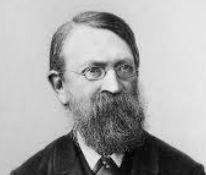
Some Machians were sufficiently impressed by Einstein's interpretations of Brownian movement to accept atomism. Mach himself brushed such objections aside, and also emphatically rejected Einstein's relativity theory.
▼
Source
W. W. Bartley III, "Philosophy of biology versus philosphy of physics" (2004) p. 412, Karl Popper: Critical Assessments of Leading Philosophers, Vol. III: Philosophy of Science 2.
2 months ago
Not bodies produce sensations, but element-complexes (sensation-complexes) constitute the bodies. When the physicist considers the bodies as the permanent reality, the `elements' as the transient appearance, he does not realise that all `bodies' are only mental symbols for element-complexes (sensation-complexes)
▼
Source
p. 23, as quoted in Lenin as Philosopher: A Critical Examination of the Philosophical Basis of Leninism (1948) by Anton Pannekoek, p. 33
2 months ago
There was a loud echo of Hume in Mach's work, as both emphasized the tangibility of all knowledge-ultimately, all knowledge is based in the senses. Mach also emphasized the internal nature of all knowledge, in that it is experienced in the mind. Finally, he emphasized the importance of quantitative and mathematical methods and models to understand sensory experience.
▼
Source
Alan Ebenstein, Hayek's Journey" The Mind of Friedrich Hayek (2003), Ch. 10 : Epistemology, Psychology, and Methodology
2 months ago
Nature consists of the elements given by the senses. Primitive man first takes out of them certain complexes of these elements that present themselves with a certain stability and are most important to him. The first and oldest words are names for "things". ... The sensations are no "symbols of things". On the contrary the "thing" is a mental symbol for a sensation-complex of relative stability. Not the things, the bodies, but colours, sounds, pressures, times (what we usually call sensations) are the true elements of the world.
▼
Source
p. 23, as quoted in Lenin as Philosopher: A Critical Examination of the Philosophical Basis of Leninism (1948) by Anton Pannekoek, p. 454
2 months ago
In the philosophy of Mach a world without matter is unthinkable. Matter in Mach's philosophy is not merely required as a test body to display properties of something already there ...it is an essential feature in causing those properties which it able to display, Inertia, for example, would not appear by the insertion of one test body in the world; in some way the presence of other matter is a necessary condition. It will be seen how welcome to such a philosophy is the theory that space and the inertial frame come into being with matter, and grow as it grows.
▼
Source
Arthur Eddington, Space, Time and Gravitation
2 months ago
The mental operation by which one achieves new concepts and which one denotes generally by the inadequate name of induction is not a simple but rather a very complicated process. Above all, it is not a logical process although such processes can be inserted as intermediary and auxiliary links. The principle effort that leads to the discovery of new knowledge is due to abstraction and imagination.
▼
Source
3rd edition, p. 318ff, As quoted by Phillip Frank, Philosophy of Science: The Link Between Science and Philosophy
2 months ago
I know of nothing more terrible than the poor creatures who have learned too much. Instead of the sound powerful judgement which would probably have grown up if they had learned nothing, their thoughts creep timidly and hypnotically after words, principles and formulae, constantly by the same paths. What they have acquired is a spider's web of thoughts too weak to furnish sure supports, but complicated enough to provide confusion.
▼
Source
On the Relative Educational Value of the Classics and the Mathematico-Physical Sciences in Colleges and High Schools, an address in (16 April 1886)
2 months ago
:...Vienna is the origin of so many schools of its own which were dominant in the 1920s. And one of the most fundamental and influential, in which we all were partially caught, was logical positivism. In fact, Mises' brother, Richard von Mises, became one of the leading figures. Now he and I all grew up in this Ernst Mach philosophy that ultimately everything must be rationally justified...
▼
Source
Friedrich Hayek, in 1985 interview, quoted in Alan Ebenstein, Hayek's Journey: The Mind of Friedrich Hayek (2003), Ch. 10. Epistemology, Psychology, and Methodology
2 months ago
The student of mathematics often finds it hard to throw off the uncomfortable feeling that his science, in the person of his pencil, surpasses him in intelligence,-an impression which the great Euler confessed he often could not get rid of. This feeling finds a sort of justification when we reflect that the majority of the ideas we deal with were conceived by others, often centuries ago. In a great measure it is really the intelligence of other people that confronts us in science.
▼
Source
Mach, Ernst. p. 196: Mathematics seems possessed of intelligence
2 months ago
Personally, people know themselves very poorly.
▼
Source
Contributions to the analysis of the sensations (1897), translated by Cora May Williams, published by Open Court Publishing Company, p. 4
2 months ago
Scientists believe there is a hierarchy of facts and that among them may be made a judicious choice. They are right, since otherwise there would be no science... One need only open the eyes to see that the conquests of industry which have enriched so many practical men would never have seen the light, if these practical men alone had existed and if they had not been preceded by unselfish devotees who died poor, who never thought of utility, and yet had a guide far other than caprice.As Mach says, these devotees have spared their successors the trouble of thinking.
▼
Source
Henri Poincaré, The Value of Science (1907) Author's Essay Prefatory to the Translation: "The Choice of Facts," p.4, Tr. George Bruce Halsted
2 months ago
The aim of research is the discovery of the equations which subsist between the elements of phenomena.
▼
Source
p. 205; On aim of research.
2 months ago
In reality, the law always contains less than the fact itself, because it does not reproduce the fact as a whole but only in that aspect of it which is important for us, the rest being intentionally or from necessity omitted.
▼
Source
"The Economical Nature of Physical Inquiry," in Popular Scientific Lectures (1898), p. 192
2 months ago
Mathematical and physiological researches have shown that the space of experience is simply an actual case of many conceivable cases, about whose peculiar properties experience alone can instruct us.
▼
Source
p. 205; On the space of experience.
2 months ago
There is no problem in all mathematics that cannot be solved by direct counting. But with the present implements of mathematics many operations can be performed in a few minutes which without mathematical methods would take a lifetime.
▼
Source
p. 197; On mathematics and counting.
2 months ago
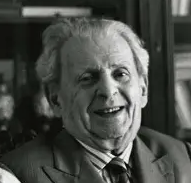
The theory of transparency was set up in reaction to the theory of mental images, of an inner tableu which the perception of an object would leave in us. In imagination our gaze always goes outward, but imagination modifies and neutralizes the gaze: the real world appears in it as it were between parenthesis or quote marks.
▼
Source
The Levinas reader by Levinas, Emmanuel p. 134
2 months ago
By asserting the objectivity of the physical world, naturalism identifies the existence and the conditions of existence of the physical world with existence and the conditions of existence in general. It forgets that the world of the physicist necessarily refers back, through its intrinsic meaning, through the subjective world which one tries to exclude from reality as being pure appearance, conditioned by the empirical nature of man, which is incapable of reaching directly to a world of things in themselves. But while the world of the physicist claims to go beyond naive experience, his world really exists only in relation to naive experience.
▼
Source
The Theory Of Intuition In Husserls Phenomenology 1963, 1995 p. 9
2 months ago
To be or not to be is not the question where transcendence is concerned. The statement of being's other, of the otherwise than being, claims to state a difference over and beyond that which separates being from nothingness - the very difference of the beyond, the difference of transcendence.
▼
Source
Otherwise than Being, or Beyond Essence (1974) Chapter I, Section 1.
2 months ago
The transition of the subject-object relation to that of the I-Thou implies a passage of consciousness to a new sphere of existence, viz, the interval, betweenness or Zwischen; and this is a passage from thought to Umfassung.
▼
Source
The Levinas reader by Levinas, Emmanuel p. 73
2 months ago
When ethics thus moves into the domain of politics and becomes morality, the possibility of violence appears because of the threat of the application of such absolutist forms of thought. Further, although the moral agent must remain free in order to avoid the totalizing domination of the state, morality must still be grounded in the ethical relation of the face-to-face.
▼
Source
Steven Bindeman, Levinas: The Face of Otherness and the Ethics of Therapy
2 months ago
Fear for the Other, fear for the other man's death is my fear, but is in no way an individual's taking fright.
▼
Source
The Levinas reader by Levinas, Emmanuel p. 84
2 months ago
The detour to ideality leads to coinciding with oneself, that is, to certainty, which remains the guide and guarantee of the whole spiritual adventure of being.
▼
Source
The Levinas reader by Levinas, Emmanuel p. 89
2 months ago
To ignore the true God is in fact only half an evil; atheism is worth more than the piety bestowed on mythical gods.
▼
Source
A Religion for Adults
2 months ago
The mores I return to myself, the more I divest myself, under the traumatic effect of persecution , of my freedom as a constituted, wilful, imperialistic subject, the more I discover myself to be responsible' the more just I am, the more guilty I am. I am 'in myself' through others.
▼
Source
The Levinas reader by Levinas, Emmanuel p. 102
2 months ago
The moral consciousness can sustain the mocking gaze of the political man only if the certitude of peace dominates the evidence of war. Such a certitude is not obtained by a simple play of antitheses. The peace of empires issued from war rests on war. It does not restore to the alienated beings their lost identity. For that a primordial and original relation with being is needed.
▼
Source
Totality and Infinity
2 months ago
The ego involved in responsibility is me and no one else, me with whom one whould have liked to pair up a sister soul, from whom one would have substitution and sacrifice.
▼
Source
The Levinas reader by Levinas, Emmanuel p. 116
2 months ago
The comprehension of God taken as a participation in his sacred life, an allegedly direct comprehension, is impossible, because participation is a denial of the divine, and because nothing is more direct than the face to face, which is straightforwardness itself.
▼
Source
Totality and Infinity
2 months ago
If every pure character in the Old Testament announces the Messiah, if every unworthy person is his torturer and every woman his Mother, does not the Book of Books lose all life with this obsessive theme? On the doctrine of prefiguration.
▼
Source
Persons or Figures

2 months ago
There is always someone above you: beyond God Himself rises Nothingness.
2 months ago
The source of an emotion is very difficult to grasp, but it comes to just that. That holds for all phenomena, for faith, etc. Why did it begin, how did it develop? and so forth-only he who has the gift of divination can perceive where it really comes from. But it is not accessible to reflection.
2 months ago
The fact that life has no meaning is a reason to live - moreover, the only one.
2 months ago
The need to devour oneself absolves one of the need to believe.
2 months ago
To dream of an enterprise of demolition that would spare none of the traces of the original Big Bang.
2 months ago
Without will, no conflict: no tragedy among the abulic. Yet the failure of will can be experienced more painfully than a tragic destiny.
2 months ago
If I were asked to summarize as briefly as possible my vision of things, to reduce it to its most succinct expression, I should replace words with an exclamation point, a definitive !
2 months ago
The more one has suffered, the less one demands. To protest is a sign one has traversed no hell.
2 months ago
If you don't want to explode with rage, leave your memory alone, abstain from burrowing there.
2 months ago
What an incitation to hilarity, hearing the word goal while following a funeral procession!
2 months ago
With success and a literary career one becomes an unquestioning part of the mechanism, whereas the only truly important years are those in which one is unknown.
2 months ago
The surest means of not losing your mind on the spot: remembering that everything is unreal, and will remain so...
2 months ago
To have grazed every form of failure, including success.
2 months ago
There exists, I grant you, a clinical depression, upon which certain remedies occasionally have effect; but there exists another kind, a melancholy underlying our very outbursts of gaiety and accompanying us everywhere, without leaving us alone for a single moment. And there is nothing that can rid us of this lethal omnipresence: the self forever confronting itself.
2 months ago
To think we could have spared ourselves from living all that we have lived!
2 months ago
One grasps incomparably more things in boredom than by labor, effort being the mortal enemy of meditation.
2 months ago
How many disappointments are conducive to bitterness? One or a thousand, depending on the subject.
2 months ago
In order to deceive melancholy, you must keep moving. Once you stop, it wakens, if in fact it has ever dozed off.
2 months ago
To read is to let someone else work for you - the most delicate form of exploitation.
2 months ago
I love talking to simple people, with common folk, if you like, and I still do it and still chat now as before with anyone, regardless of intellectual level. On the contrary, I like uneducated people much better and that is obviously my Rumanian heritage.
2 months ago
My mission is to see things as they are. Exactly the contrary of a mission.
2 months ago
Dead of night. No one, nothing but the society of the moments. Each pretends to keep us company, then escapes - desertion after desertion.
CivilSimian.com created by AxiomaticPanic, CivilSimian, Kalokagathia