
1 month ago
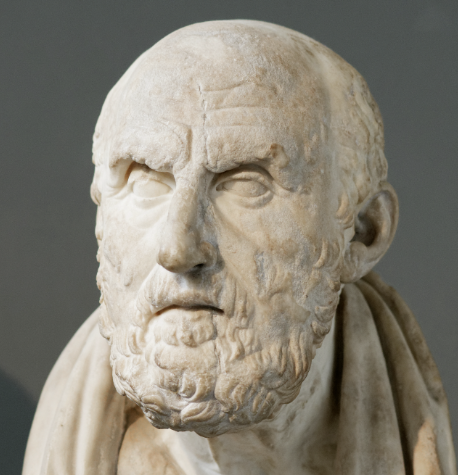
We should infer in the case of a beautiful dwelling-place that it was built for its owners and not for mice; we ought, therefore, in the same way to regard the universe as the dwelling-place of the gods.
▼
Source
As quoted in De Natura Deorum by Cicero, iii. 10.
1 month ago
Living virtuously is equal to living in accordance with one's experience of the actual course of nature.
▼
Source
As quoted by Diogenes Laërtius, vii. 182.
1 month ago
Wise people are in want of nothing, and yet need many things. On the other hand, nothing is needed by fools, for they do not understand how to use anything, but are in want of everything.
▼
Source
As quoted in Moral Epistles by Seneca, iii. 10.
1 month ago
He who is running a race ought to endeavor and strive to the utmost of his ability to come off victor; but it is utterly wrong for him to trip up his competitor, or to push him aside. So in life it is not unfair for one to seek for himself what may accrue to his benefit; but it is not right to take it from another.
▼
Source
As quoted in De Officiis by Cicero, iii. 10.
1 month ago
If I had followed the multitude, I should not have studied philosophy.
▼
Source
As quoted by Diogenes Laërtius, vii. 182.
1 month ago
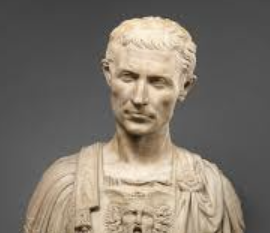
Nay, men, if any of you had heeded what I was ever foretelling and advising, ye would now neither be fearing a single man nor putting your hopes in a single man.
▼
Source
Quoted by Plutarch, Life of Cato the Younger, 52 Bernadotte Perrin, ed. Plutarch's Lives, Vol. 8, LCL 100 (1919), pp. 247, 361
1 month ago
It is worth observing, how we feel ourselves affected in reading the characters of Cæsar, and Cato, as they are so finely drawn and contrasted in Salust. In one, the ignoscendo, largiundo; in the other, nil largiundo. In one, the miseris perfugium; in the other, malis perniciem. In the latter we have much to admire, much to reverence, and perhaps something to fear; we respect him, but we respect him at a distance. The former makes us familiar with him; we love him, and he leads us whither he pleases.
▼
Source
Edmund Burke, A Philosophical Enquiry into the Origin of Our Ideas of the Sublime and Beautiful (2nd ed. 1759), pp. 206-207
1 month ago
Bear in mind, that if through toil you accomplish a good deed, that toil will quickly pass from you, the good deed will not leave you so long as you live; but if through pleasure you do anything dishonourable, the pleasure will quickly pass away, that dishonourable act will remain with you for ever.
▼
Source
In the speech which he delivered ('At Numantia to the Knights'); quoted by Aulus Gellius, Attic Nights, XVI, i, 4 John C. Rolfe, ed. The Attic Nights of Aulus Gellius, Vol. 3, LCL 212 (1928), p. 131
1 month ago
I will begin to speak when I am not going to say what were better left unsaid.
▼
Source
Quoted by Plutarch, Life of Cato the Younger, 4 Bernadotte Perrin, ed. Plutarch's Lives, Vol. 8, LCL 100 (1919), pp. 247, 361
1 month ago
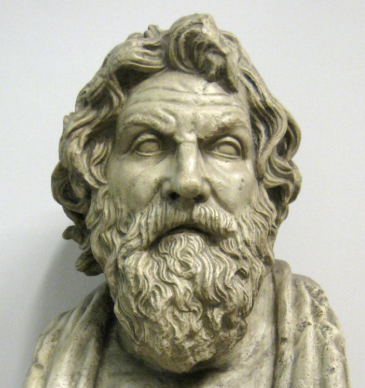
Ill repute is a good thing and much the same as pain.
▼
Source
§ 5
1 month ago
It is better to fall in with crows than with flatterers; for in the one case you are devoured when dead, in the other case while alive.
▼
Source
§ 4
1 month ago
Wealth and poverty do not lie in a person's estate, but in their souls.
▼
Source
iv. 34
1 month ago
It is better to fight with a few good men against all the wicked, than with many wicked men against a few good men.
▼
Source
§ 5
1 month ago
Antisthenes ... was asked on one occasion what learning was the most necessary, and he replied, "To unlearn one's bad habits."
▼
Source
§ 4
1 month ago
I have enough to eat till my hunger is stayed, to drink till my thirst is sated; to clothe myself withal; and out of doors not Callias there, with all his riches, is more safe than I from shivering; and when I find myself indoors, what warmer shirting do I need than my bare walls? what ampler greatcoat than the tiles above my head?
▼
Source
iv. 34
1 month ago
One should attend to one's enemies, for they are the first persons to detect one's errors.
▼
Source
§ 5
1 month ago
When he was asked what advantage had accrued to him from philosophy, his answer was, "The ability to hold converse with myself."
▼
Source
§ 4
1 month ago
There is no work so mean, but it would amply serve me to furnish me with sustenance.
▼
Source
iv. 35
1 month ago
The investigation of the meaning of words is the beginning of education.
▼
Source
Arrian, Discourses of Epictetus, i. 17
1 month ago
Virtue is the same for a man and for a woman.
▼
Source
§ 5
1 month ago
States are doomed when they are unable to distinguish good men from bad.
▼
Source
§ 5
1 month ago
To all my friends without distinction I am ready to display my opulence: come one, come all; and whosoever likes to take a share is welcome to the wealth that lies within my soul.
▼
Source
iv. 35
1 month ago
I'd rather be mad than feel pleasure.
▼
Source
§ 3; quoted also by Eusebius of Caesarea, Praeparatio Evangelica xv. 13
1 month ago
As iron is eaten away by rust, so the envious are consumed by their own passion.
▼
Source
§ 5
1 month ago
It is a royal privilege to do good and be ill spoken of.
▼
Source
§ 3; quoted also by Marcus Aurelius, vii. 36
1 month ago
Being asked what learning is the most necessary, he replied, "How to get rid of having anything to unlearn.
▼
Source
" § 7
1 month ago
Once, when he was applauded by rascals, he remarked, "I am horribly afraid I have done something wrong."
▼
Source
§ 5
1 month ago
Antisthenes ... said once to a youth from Pontus who was on the point of coming to him to be his pupil, and was asking him what things he wanted, "You want a new book, and a new pen, and a new tablet;"
▼
Source
meaning a new mind. § 4
1 month ago
Pay attention to your enemies, for they are the first to discover your mistakes.
▼
Source
§ 12
1 month ago
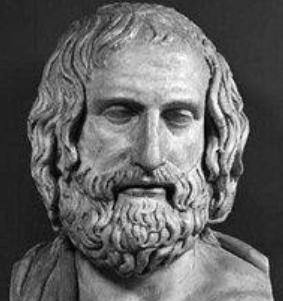
Thought is something limitless and independent, and has been mixed with no thing but is alone by itself. ... What was mingled with it would have prevented it from having power over anything in the way in which it does. ... For it is the finest of all things and the purest.
▼
Source
Frag. B12, in Jonathan Barnes, Early Greek Philosophy (1984), p. 190.
1 month ago
The Greeks follow a wrong usage in speaking of coming into being and passing away; for nothing comes into being or passes away, but there is mingling and separation of things that are. So they would be right to call coming into being mixture, and passing away separation.
▼
Source
Frag. B 17, quoted in John Burnet's Early Greek Philosophy, (1920), Chapter 6.
1 month ago
The sun provides the moon with its brightness.
▼
Source
Fragment in Plutarch De facie in orbe lunae, 929b, as quoted in The Riverside Dictionary of Biography (2005), p. 23
1 month ago
Wrongly do the Greeks suppose that aught begins or ceases to be; for nothing comes into being or is destroyed; but all is an aggregation or secretion of pre-existent things: so that all-becoming might more correctly be called becoming-mixed, and all corruption, becoming-separate.
▼
Source
quoted in Heinrich Ritter, Tr. from German by Alexander James William Morrison, The History of Ancient Philosophy, Vol.1
1 month ago
All things were together, infinite both in number and in smallness; for the small too was infinite.
▼
Source
Frag. B 1, quoted in John Burnet's Early Greek Philosophy, (1920), Chapter 6.
1 month ago
And since these things are so, we must suppose that there are contained many things and of all sorts in the things that are uniting, seeds of all things, with all sorts of shapes and colours and savours.
▼
Source
Frag. B 4, quoted in John Burnet's Early Greek Philosophy, (1920), Chapter 6.
1 month ago
Mind is infinite and self-ruled, and is mixed with nothing, but is alone itself by itself.
▼
Source
Frag. B 12, quoted in John Burnet's Early Greek Philosophy, (1920), Chapter 6.

1 month ago
Suffer no anxiety, for he who is a sufferer of anxiety becomes regardless of enjoyment of the world and the spirit, and contraction happens to his body and soul.
1 month ago
Unto Thee, O Lord, the Soul of Creation cried:"For whom didst Thou create me, and who so fashioned me?Feuds and fury, violence and the insolence of might have oppressed me; None have I to protect me save Thee;Command for me then the blessings of a settled, peaceful life."
▼
Source
Ahunuvaiti Gatha; Yasna 29, 1.
1 month ago
Thou shouldst not become presumptuous through much treasure and wealth; for in the end it is necessary for thee to leave all.
1 month ago
I will now tell you who are assembled here the wise sayings of Mazda, the praises of Ahura and the hymns of the Good Spirit, the sublime truth which I see rising out of these flames. You shall therefore harken to the Soul of Nature. Contemplate the beams of fire with a most pious mind. Every one, both men and women, ought to-day to choose his creed. Ye offspring of renowned ancestors, awake to agree with us. So preached Zoroaster, the proph of the Parsis, in one of his earliest sermons nearly 3,500 years ago.
▼
Source
p. 15 (Introduction), S. A. Kapadia
1 month ago
With an ill-famed man form no connection.
1 month ago
He who abhors and shuns the light of the Sun, He who refuses to behold with respect the living creation of God, He who leads the good to wickedness, He who makes the meadows waterless and the pastures desolate, He who lets fly his weapon against the innocent, An enemy of my faith, a destroyer of Thy principles is he, O Lord!
▼
Source
Ahunuvaiti Gatha; Yasna 32, 10.
1 month ago
Commit no lustfulness, so that harm and regret may not reach thee from thine own actions.
1 month ago
Thus to the Lord doth Asha, the Truth, reply:"No guide is known who can shelter the world from woe, None who knows what moves and works Thy lofty plans."
▼
Source
Ahunuvaiti Gatha; Yasna 29, 3.
1 month ago
Thou shouldst not become presumptuous through great connections and race; for in the end thy trust is on thine own deeds.
▼
Source
(p. 60)
1 month ago
Purity is for man, next to life, the greatest good that parity is procured by the Law of Mazda to him who cleanses his own self with Good Thoughts, Words, and Deeds.
▼
Source
(Extracts, p. 57)
1 month ago
With an ignorant man thou shouldst not become a confederate and associate.
1 month ago
A reflective, contented mind is the best possession.
▼
Source
Ushtavaiti Gatha; Yasna 43, 15.
1 month ago
Bear no improper envy, so that thy life may not become tasteless.
CivilSimian.com created by AxiomaticPanic, CivilSimian, Kalokagathia