
1 month 4 weeks ago
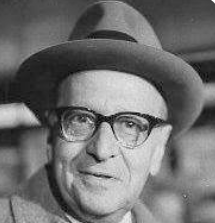
Long after Plato's time the concept of the Ideas still represented the sphere of aloofness, independence, and in a certain sense even freedom, an objectivity that did not submit to 'our' interests.
▼
Source
p. 46.
1 month 4 weeks ago
The significance of God, cause, number, substance or soul consists, as James asserts, in nothing but the tendency of the given concept to make us act or think. If the world should reach a point at which it ceases to care not only about such metaphysical entities but also about murders perpetrated behind closed frontiers or simply in the dark, one would have to conclude that the concepts of such murders have no meaning, that they represent no 'distinct ideas' or truths, since they do not make any 'sensible difference to anybody.
▼
Source
describing the pragmatist view, pp. 46-47.
1 month 4 weeks ago
All things in nature become identical with the phenomena they present when submitted to the practices of our laboratories, whose problems no less than their apparatus express in turn the problems and interests of society as it is. This view may be compared with that of a criminologist maintaining that trustworthy knowledge of a human being can be obtained only by the well-tested and streamlined examining methods applied to a suspect in the hands of the metropolitan police.
▼
Source
describing the pragmatist view, p. 49.
1 month 4 weeks ago
Answers determined by the social division of labor become truth as such.
▼
Source
p. 50: Describing the pragmatist view
1 month 4 weeks ago
Pragmatism, in trying to turn experimental physics into a prototype of all science and to model all spheres of intellectual life after the techniques of the laboratory, is the counterpart of modern industrialism, for which the factory is the prototype of human existence, and which models all branches of culture after production on the conveyor belt.
▼
Source
p. 50.
1 month 4 weeks ago
Thought must be judged by something that is not thought, by its effect on production or its impact on social conduct, as art today is being ultimately gauged in every detail by something that is not art, be it box-office or propaganda value.
▼
Source
describing the pragmatist view, p. 51.
1 month 4 weeks ago
In the face of the idea that truth might afford the opposite of satisfaction and turn out to be completely shocking to humanity at any given historical moment, ... the fathers of pragmatism made the satisfaction of the subject the criterion of truth. For such a doctrine there is no possibility of rejecting or even criticizing any species of belief that is enjoyed by its adherents.
▼
Source
p. 52.
1 month 4 weeks ago
Pragmatism ... reflects with almost disarming candor the spirit of the prevailing business culture, the very same attitude of 'being practical' as counter to which philosophical meditation as such was conceived.
▼
Source
p. 52.
1 month 4 weeks ago
Plato and his objectivistic successors ... preserved the awareness of differences that pragmatism has been invented to deny-the difference between thinking in the laboratory and in philosophy, and consequently the difference between the destination of mankind and its present course.
▼
Source
p. 53.
1 month 4 weeks ago
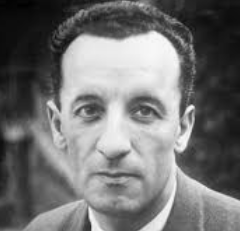
Montaigne puts not self-satisfied understanding but a consciousness astonished at itself at the core of human existence.
▼
Source
Signs, trans. R. McCleary (Evanston: 1964), p. 203
1 month 4 weeks ago
The sensate body possesses an art of interrogating the sensible according to its own wishes, an inspired exegesis The Visible and the Invisible, trans.
▼
Source
A. Lingis (Evanston: 1968), p. 135
1 month 4 weeks ago
By becoming the pure subject who knows the world objectively, man ultimately realizes that absolute consciousness with respect to which the body and individual existence are no longer anything but objects; death is deprived of meaning. Reduced to the status of object of consciousness, the body could not be conceived as an intermediary between "things" and the consciousness which knows them.
▼
Source
p. 204
1 month 4 weeks ago
The world is nothing but 'world-as-meaning.'
▼
Source
p. xi
1 month 4 weeks ago
Hardness and softness, roughness and smoothness, moonlight and sunlight present themselves in our recollection not preeminently as sensory contents but as certain kinds of symbioses, certain ways outside has of invading us and certain ways we have of meets this invasion...
▼
Source
p. 317
1 month 4 weeks ago
Language transcends us and yet, we speak.
▼
Source
p. 349
1 month 4 weeks ago
The function of objective thinking is to reduce all phenomena which bear witness to the union of subject and world, putting in their place the clear idea of the object as in itself and of the subject as pure consciousness. It therefore severs the links which unite the thing and the embodied subject, leaving only sensible qualities to make up our world (to the exclusion of the modes of appearance which we have described), and preferably visual qualities, because these give the impression of being autonomous, and because they are less directly linked to our body and present us with an object rather than introducing us into an atmosphere. But in reality all things are concretions of a setting, and any explicit perception of a thing survives in virtue of a previous communication with a certain atmosphere.
▼
Source
p. 374
1 month 4 weeks ago
It is a great good fortune, as Stendhal said, for one "to have his passion as a profession."
▼
Source
p. 4
1 month 4 weeks ago
Even those who have desired to work out a completely positive philosophy have been philosophers only to the extent that, at the same time, they have refused the right to install themselves in absolute knowledge. They taught not this knowledge, but its becoming in us, not the absolute but, at most, our absolute relation to it, as Kierkegaard said. What makes a philosopher is the movement which leads back without ceasing from knowledge to ignorance, from ignorance to knowledge, and a kind of rest in this movement.
▼
Source
p. 5
1 month 4 weeks ago
Thought without language, says Lavelle, would not be a purer thought; it would be no more than the intention to think. And his last book offers a theory of expressiveness which makes of expression not "a faithful image of an already realized interior being, but the very means by which it is realized."
▼
Source
p. 8
1 month 4 weeks ago
Theology recognizes the contingency of human existence only to derive it from a necessary being, that is, to remove it. Theology makes use of philosophical wonder only for the purpose of motivating an affirmation which ends it. Philosophy, on the other hand, arouses us to what is problematic in our own existence and in that of the world, to such a point that we shall never be cured of searching for a solution.
▼
Source
p. 44
1 month 4 weeks ago
De Lubac discusses an atheism which means to suppress this searching, he says, "even including the problem as to what is responsible for the birth of God in human consciousness."
▼
Source
p. 45
1 month 4 weeks ago
Socrates reminds us that it is not the same thing, but almost the opposite, to understand religion and to accept it.
▼
Source
p. 45
1 month 4 weeks ago
Lichtenberg ... held something of the following kind: one should neither affirm the existence of God nor deny it. ... It is not that he wished to leave certain perspectives open, nor to please everyone. It is rather that he was identifying himself, for his part, with a consciousness of self, of the world, and of others that was "strange" (the word is his) in a sense which is equally well destroyed by the rival explanations.
▼
Source
pp. 45-46
1 month 4 weeks ago
Thinking which displaces, or otherwise defines, the sacred has been called atheistic, and that philosophy which does not place it here or there, like a thing, but at the joining of things and words, will always be exposed to this reproach without ever being touched by it.
▼
Source
p. 46
1 month 4 weeks ago
The philosopher will ask himself ... if the criticism we are now suggesting is not the philosophy which presses to the limit that criticism of false gods which Christianity has introduced into our history.
▼
Source
p. 47
1 month 4 weeks ago
Philosophy is in history, and is never independent of historical discourse. But for the tacit symbolism of life it substitutes, in principle, a conscious symbolism; for a latent meaning, one that is manifest. It is never content to accept its historical situation. It changes this situation by revealing it to itself.
▼
Source
p. 57
1 month 4 weeks ago
Machiavelli is the complete contrary of a machiavellian, since he describes the tricks of power and "gives the whole show away." The seducer and the politician, who live in the dialectic and have a feeling and instinct for it, try their best to keep it hidden.
▼
Source
p. 59
1 month 4 weeks ago
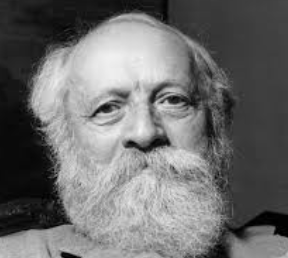
Avoid melancholy with all your might. It hurts the service of God more than sin. Satan takes less pleasure in sin than in a man's melancholy over having sinned again and so feeling that he is a slave to sin. Thus the Evil One has caught the poor soul in the net of despair.
▼
Source
Rabbi Jaacob Yitzchak, p. 7
1 month 4 weeks ago
God ... desires His creature to be able to oppose Him. He has given that creature freedom. ... When man turns away from evil with that whole measure of power with which he is able to rebel against God, then he has truly turned to God.
▼
Source
p. 44
1 month 4 weeks ago
As the oil is in the olive, so is the teshuvah, repentance, hidden within sin.
▼
Source
p. 44
1 month 4 weeks ago
It is the highest service to submit the evil impulse to God through the power of love.
▼
Source
p. 45
1 month 4 weeks ago
God ... demands everything, in order to give everything anew to him who loves Him, after that loving has truly given up all.
▼
Source
p. 45
1 month 4 weeks ago
In the presence of God himself man stands always like a solitary tree in the wilderness.
▼
Source
p. 95
1 month 4 weeks ago
When we desire to lead men to God, we must not simply overthrow their idols. In each of these images we must seek to discover what divine quality he who carved it sought.
▼
Source
p. 117
1 month 4 weeks ago
To be old is a glorious thing when one has not unlearned what it means to begin, this old man had perhaps first learned it thoroughly in old age.
▼
Source
p. 6
1 month 4 weeks ago
The realer religion is, so much the more it means its own overcoming. It wills to cease to be the special domain "Religion" and wills to become life. It is concerned in the end not with specific religious acts, but with redemption from all that is specific.
▼
Source
p. 34
1 month 4 weeks ago
When we rise out of [the night] into the new life and there begin to receive the signs, what can we know of that which - of him who gives them to us? Only what we experience from time to time from the signs themselves. If we name the speaker of this speech God, then it is always the God of a moment, a moment God.
▼
Source
p. 15
1 month 4 weeks ago
Dialogue and monologue are silenced. Bundled together, men march without Thou and without I, those of the left who want to abolish memory, and those of the right who want to regulate it: hostile and separated hosts, they march into the common abyss.
▼
Source
p. 33
1 month 4 weeks ago
Greatness by nature includes a power, but not a will to power.
▼
Source
p. 150
1 month 4 weeks ago
The great man, whether we comprehend him in the most intense activity of his work or in the restful equipoise of his forces, is powerful, involuntarily and composedly powerful, but he is not avid for power. What he is avid for is the realization of what he has in mind, the incarnation of the spirit.
▼
Source
p. 151
1 month 4 weeks ago
So long as a man's power, that is, his capacity to realize what he has in mind, is bound to the goal, to the work, to the calling, it is, considered in itself, neither good nor evil, it is only a suitable or unsuitable instrument. But as soon as this bond with the goal is broken off or loosened, and the man ceases to think of power as the capacity to do something, but thinks of it as a possession, that is, thinks of power in itself, then his power, being cut off and self-satisfied, is evil; it is power withdrawn from responsibility, power which betrays the spirit, power in itself.
▼
Source
p. 152
1 month 4 weeks ago
You do not attain to knowledge by remaining on the shore and watching the foaming waves, you must make the venture and cast yourself in, you must swim, alert and with all your force, even if a moment comes when you think you are losing consciousness; in this way, and in no other, do you reach anthropological insight.
▼
Source
p. 148
1 month 4 weeks ago
The concept of guilt is found most powerfully developed even in the most primitive communal forms which we know: ... the man is guilty who violates one of the original laws which dominate the society and which are mostly derived from a divine founder; the boy who is accepted into the tribal community and learns its laws, which bind him thenceforth, learns to promise; this promise is often given under the sign of death, which is symbolically carried out on the boy, with a symbolical rebirth.
▼
Source
p. 178
1 month 4 weeks ago
Every morning I shall concern myself anew about the boundary Between the love-deed-Yes and the power-deed-No And pressing forward honor reality. We cannot avoid Using power, Cannot escape the compulsion To afflict the world, So let us, cautious in diction And mighty in contradiction, Love powerfully.
▼
Source
"Power and Love"
1 month 4 weeks ago
Life, in that it is life, necessarily entails justice.
▼
Source
"Politics and Morality" in Be'ayot (April 1945), as published in A Land of Two Peoples : Martin Buber on Jews and Arabs (1983) edited by Paul Mendes-Flohr, p. 169
1 month 4 weeks ago
Before his death, Rabbi Zusya said, "In the coming world, they will not ask me: 'Why were you not Moses?' They will ask me: 'Why were you not Zusya?'"
▼
Source
Tales of the Hasidim (1947), 1991 Ebook edition, p.251, as quoted in Jewish Currents.
1 month 4 weeks ago
To win a truly great life for the people of Israel, a great peace is necessary, not a fictitious peace, the dwarfish peace that is no more than a feeble intermission, but a true peace with the neighboring peoples, which alone can render possible a common development of this portion of the earth as the vanguard of the awakening Near East.
▼
Source
"Our Reply" (September 1945), as published in A Land of Two Peoples : Martin Buber on Jews and Arabs (1983) edited by Paul Mendes-Flohr, p. 178
1 month 4 weeks ago
All journeys have secret destinations of which the traveler is unaware.
▼
Source
The Legend of the Baal-Shem (1955),1995 edition, p. 36
1 month 4 weeks ago
The prophet is appointed to oppose the king, and even more: history.
▼
Source
BBC radio broadcast (1962), as quoted in The Great Thoughts (1984) by George Seldes
1 month 4 weeks ago
I do not accept any absolute formulas for living. No preconceived code can see ahead to everything that can happen in a man's life. As we live, we grow and our beliefs change. They must change. So I think we should live with this constant discovery. We should be open to this adventure in heightened awareness of living. We should stake our whole existence on our willingness to explore and experience.
▼
Source
As quoted in Martin Buber : An Intimate Portrait (1971), p. 56
CivilSimian.com created by AxiomaticPanic, CivilSimian, Kalokagathia