
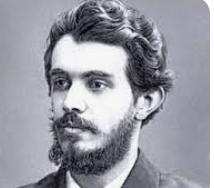
1 month 3 weeks ago
I do not think discursively. It is not so much that I arrive at truth as that I take my start from it.
▼
Source
Introduction
1 month 3 weeks ago
Objectification is above all exteriorization, the alienation of spirit from itself.
▼
Source
p. 63
1 month 3 weeks ago
What one needs to do at every moment of one's life is to put an end to the old world and to begin a new world.
1 month 3 weeks ago
I see myself immersed in the depths of human existence and standing in the face of the ineffable mystery of the world and of all that is. And in that situation, I am made poignantly and burningly aware that the world cannot be self-sufficient, that there is hidden in some still greater depth a mysterious, transcendent meaning. This meaning is called God. Men have not been able to find a loftier name, although they have abused it to the extent of making it almost unutterable. God can be denied only on the surface; but he cannot be denied where human experience reaches down beneath the surface of flat, vapid, commonplace existence.
▼
Source
As translated in In Love with Eternity : Philosophical Essays and Fragments (2005) by Richard Schain, p. 47
1 month 3 weeks ago
There is no objective reality. But there is only an illusion of consciousness, there is only an objectivication of reality, which was created by the spirit. The origin of life is creativity, freedom; and the personality, subject, and spirit are the representatives of that origin, but not the nature, not the object.
▼
Source
As translated at Gallery of Russian Thinkers ... selected by Dmitry Olshansky
1 month 3 weeks ago
This was once revealed to me in a dream.
1 month 3 weeks ago
Fate and freedom alike play a part in history; and there are times, as in wars and revolutions, when fate is the stronger of the two. Freedom - the freedom of man and of nations - could never have been the origin of two world wars. These latter were brought about by fate, which exercises its power owing to the weakness and decline of freedom and of the creative spirit of man. Almost all contemporary political ideologies, with their characteristic tendency to state-idolatry, are likewise largely a product of two world wars, begotten as they are of the inexorability's of fate.
▼
Source
p. 32
1 month 3 weeks ago
A real reconciliation of East and West is impossible and inconceivable on the basis of a materialistic Communism, or of a materialistic Capitalism, or indeed of a materialistic Socialism. The third way will neither be "anti-Communist" nor "anti-Capitalist". It will recognize the truth in liberal democracy, and it will equally recognize the truth in Communism. A critique of Communism and Marxism does not entail an enmity towards Soviet Russia, just as a critique of liberal democracy is not entail enmity towards the west. ... But the final and most important justification of a "third way" is that there must be a place from which we may boldly testify to, and proclaim, truth, love and justice. No one today likes truth: utility and self interest have long ago been substituted for truth.
▼
Source
p. 80
1 month 3 weeks ago
We live in a nightmare of falsehoods, and there are few who are sufficiently awake and aware to see things as they are. Our first duty is to clear away illusions and recover a sense of reality. If war should come, it will do so on account of our delusions, for which our hag-ridden conscience attempts to find moral excuses. To recover a sense of reality is to recover the truth about ourselves and the world in which we live, and thereby to gain the power of keeping this world from flying asunder.
▼
Source
p. 80
1 month 3 weeks ago
Religion for [Berdyaev] is a social phenomenon and is adapted to the needs of the masses; as such, it is embodied in visible institutions and in authoritative formulas. The mystic, on the other hand, is aristocratic in temperament and never quite at home where the masses are catered for. He cannot remain in the world of form and convention and second-hand truths which is all about us and with which official religion has to come to terms; he aspires to a contact with spiritual reality as it is, a return to the ultimate sources of his being.
▼
Source
Edgar Leonard Allen (1893-1961), Freedom in God: A Guide to the Thought of Nicholas Berdyaev
1 month 3 weeks ago
It is difficult to fit the work of Nikolai Berdyaev into any neat category. The label that was used most frequently to characterize him was that of an "existential Christian philosopher" but ... his voice is equally relevant to psychology and psychoanalysis and it also constitutes a uniquely original commentary on the very nature of the person in our postmodern world especially in relation to spirituality.
▼
Source
Renos K. Papadopoulos, in C.G. Jung and Nikolai Berdyaev: Individuation and the Person (2011) by Georg Nicolaus, Foreword, p. xiii
1 month 3 weeks ago
The life of Berdyaev spans the momentous events of the first half of the twentieth century in Europe. He was no ivory tower philosopher but was intimately affected by these events throughout his life and drew his inspirations from them regarding the nature of the human condition. His writings bear the imprint of the catastrophic situations within which he was destined to live.
▼
Source
Richard Schain, in In Love with Eternity : Philosophical Essays and Fragments (2005), Ch. 7 : Nikolai Alexandrovich Berdyaev - A Champion of the Spirit, p. 43
1 month 3 weeks ago
Surprisingly, Berdyaev was able to write, lecture and publish for five years after the October Revolution of 1917. He was once detained and interviewed by the fearsome head of the Cheka, Felix Dzerzhinsky. Although he was released, the Bolsheviks gradually realized that Berdyaev was unassimilable to their cause and gave him a choice, along with a group of other intellectuals, of exile or execution. Reluctantly, Berdyaev chose exile to Berlin. He was never again to return to Russia.
▼
Source
Richard Schain, in In Love with Eternity : Philosophical Essays and Fragments (2005), Ch. 7 : Nikolai Alexandrovich Berdyaev - A Champion of the Spirit, p. 44
1 month 3 weeks ago
Berdyaev has been categorized as a Christian existentialist and a mystical philosopher. He never avoided the label of "mystic" since he felt it was the mystics of the world who came closest to understanding the role of spirit. Many of the philosophers he quoted were mystics - Meister Eckhart, Angelus Silesius and especially Jacob Boehme. The influence of Dostoevsky was central to his thought. Nevertheless, Berdyaev is not a naively irrational thinker; he brings an enormous fund of philosophical knowledge combined with the profundity of his own thought to support his view of existence. There are no dogmas in his writings to offend one's intellectual conscience.
▼
Source
Richard Schain, in In Love with Eternity : Philosophical Essays and Fragments (2005), Ch. 7 : Nikolai Alexandrovich Berdyaev - A Champion of the Spirit, p. 47
1 month 3 weeks ago
He was arrested twice; he was taken in 1922 for a midnight interrogation with Dzerjinsky; Kamenev was also there. ... But Berdyaev did not humiliate himself, he did not beg, he firmly professed the moral and religious principles by virtue of which he did not adhere to the party in power; and not only did they judge that there was no point in putting him on trial, but he was freed. Now there is a man who had a "point of view"!
▼
Source
Richard Schain, in In Love with Eternity : Philosophical Essays and Fragments (2005), Ch. 7 : Nikolai Alexandrovich Berdyaev - A Champion of the Spirit, p. 47
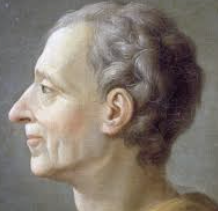
1 month 3 weeks ago
If one only wished to be Sad, this could be horrible for the rest of civilisation; but we wish to be happier than other people, and this is always difficult, for we believe others to be happier than they are.
▼
Source
As quoted in A Dictionary of Thoughts : Being a Cyclopedia of Laconic Quotations from the Best Authors, Both Ancient and Modern (1891) edited by Tryon Edwards.
1 month 3 weeks ago
In a free nation, it matters not whether individuals reason well or ill; it is sufficient that they do reason. Truth arises from the collision and from hence springs liberty, which is a security from the effects of reasoning.
▼
Source
Quoted by Thomas Erskine in the trial of Thomas Paine, 1792
1 month 3 weeks ago
The laws of Rome had wisely divided public power among a large number of magistracies, which supported, checked and tempered each other. Since they all had only limited power, every citizen was qualified for them, and the people - seeing many persons pass before them one after the other - did not grow accustomed to any in particular. But in these times the system of the republic changed. Through the people the most powerful men gave themselves extraordinary commissions - which destroyed the authority of the people and magistrates, and placed all great matters in the hands of one man, or a few.
▼
Source
Chapter XI.
1 month 3 weeks ago
No tyranny is more cruel than the one practiced in the shadow of the laws and under color of justice - when, so to speak, one proceeds to drown the unfortunate on the very plank by which they had saved themselves.
▼
Source
See Chap. XIV of Considérations sur les causes de la grandeur des Romains et de leur décadence. Considerations on the Causes of the Greatness of the Romans and their Decline (1734), p. 89.
1 month 3 weeks ago
Not to be loved is a misfortune, but it is an insult to be loved no longer.
▼
Source
No. 3. (Zachi writing to Usbek)
1 month 3 weeks ago
The Ottoman Empire whose sick body was not supported by a mild and regular diet, but by a powerful treatment, which continually exhausted it.
▼
Source
No. 19. (Usbek writing to Rustan)
1 month 3 weeks ago
The Pope will make the king believe that three are only one, that the bread he eats is not bread...and a thousand other things of the same kind.
▼
Source
No. 24. (Rica writing to Ibben)
1 month 3 weeks ago
I can assure you that no kingdom has ever had as many civil wars as the kingdom of Christ.
▼
Source
No. 29. (Rica writing to Ibben)
1 month 3 weeks ago
Do you think that God will punish them for not practicing a religion which he did not reveal to them?
▼
Source
No. 35. (Usbek writing to Gemchid)
1 month 3 weeks ago
A man should be mourned at his birth, not at his death.
▼
Source
No. 40. (Usbek writing to Ibben)
1 month 3 weeks ago
In France there are three kinds of professions: the church, the sword, and the long robe. Each hath a sovereign contempt for the other two. For example, a man who ought to be despised only for being a fool is often so because he is a lawyer.
▼
Source
No. 44 (Usbek writing to Rhedi)
1 month 3 weeks ago
People here argue about religion interminably, but it appears that they are competing at the same time to see who can be the least devout.
▼
Source
No. 46. (Usbek writing to Rhedi)
1 month 3 weeks ago
Oh, how empty is praise when it reflects back to its origin!
▼
Source
No. 50. (Rica writing to * * *)
1 month 3 weeks ago
Christians are beginning to lose the spirit of intolerance which animated them: experience has shown the error of the expulsion of the Jews from Spain, and of the persecution of those Christians in France whose belief differed a little from that of the king. They have realized that zeal for the advancement of religion is different from a due attachment to it; and that in order to love it and fulfill its behests, it is not necessary to hate and persecute those who are opposed to it.
▼
Source
No. 60. (Usbek writing to Ibben)
1 month 3 weeks ago
History is full of religious wars; but, we must take care to observe, it was not the multiplicity of religions that produced these wars, it was the intolerating spirit which animated that one which thought she had the power of governing.
▼
Source
No. 65. (Usbek writing to his wives)
1 month 3 weeks ago
And yet there is nothing so badly imagined: nature seems to have provided, that the follies of men should be transient, but they by writing books render them permanent. A fool ought to content himself with having wearied those who lived with him: but he is for tormenting future generations; he is desirous that his folly should triumph over oblivion, which he ought to have enjoyed as well as his grave; he is desirous that posterity should be informed that he lived, and that it should be known for ever that he was a fool. Commonly paraphrased as "An author is a fool who, not content with having bored those who have lived with him, insists on boring future generations".
▼
Source
No. 66. (Rica writing to * * *)
1 month 3 weeks ago
Of all kind of authors there are none I despise more than compilers, who search every where for shreds of other men's works, which they join to their own, like so many pieces of green turf in a garden: they are not at all superior to compositors in a printing house, who range the types, which, collected together, make a book, towards which they contribute nothing but the labours of the hand. I would have original writers respected, and it seems to me a kind of profanation to take those pieces from the sanctuary in which they reside, and to expose them to a contempt they do not deserve. When a man hath nothing new to say, why does not he hold his tongue? What business have we with this double employment?"
▼
Source
No. 66.
1 month 3 weeks ago
I write to thee on this subject, friend, because I am angry at a book which I have just left, which is so large, that it seems to contain universal science, but it hath almost split my head, without teaching me anything.
▼
Source
No. 66.
1 month 3 weeks ago
Life was given to me as a favor, so I may abandon it when it is one no longer.
▼
Source
No. 76. (Usbek writing to Ibben)
1 month 3 weeks ago
I acknowledge that history is full of religious wars: but we must distinguish; it is not the multiplicity of religions which has produced wars; it is the intolerant spirit animating that which believed itself in the ascendant.
▼
Source
No. 86. (Usbek writing to Mirza)
1 month 3 weeks ago
There are only two cases in which war is just: first, in order to resist the aggression of an enemy, and second, in order to help an ally who has been attacked.
▼
Source
No. 95. (Usbek writing to Rhedi)
1 month 3 weeks ago
There is only one thing that can form a bond between men, and that is gratitude...we cannot give someone else greater power over us than we have ourselves.
▼
Source
No. 104. (Usbek writing to Ibben)
1 month 3 weeks ago
I have read descriptions of Paradise that would make any sensible person stop wanting to go there.
▼
Source
No. 125. (Usbek writing to Rhedi)
1 month 3 weeks ago
Raillery is a mode of speaking in favor of one's wit at the expense of one's better nature.
1 month 3 weeks ago
The success of most things depends upon knowing how long it will take to succeed.
1 month 3 weeks ago
I have always observed that to succeed in the world one should appear like a fool but be wise.
1 month 3 weeks ago
Horace and Aristotle told us of the virtues of their fathers, and the vices of their own time, and authors down through the centuries have told us the same. If they were right, men would now be bears.
1 month 3 weeks ago
If I knew of something that could serve my nation but would ruin another, I would not propose it to my prince, for I am first a man and only then a Frenchman, because I am necessarily a man, and only accidentally am I French.
▼
Source
I.
1 month 3 weeks ago
You have to study a great deal to know a little.
▼
Source
I
1 month 3 weeks ago
One must give one power a ballast, so to speak, to put it in a position to resist another.
▼
Source
Book V, Chapter 14.
1 month 3 weeks ago
Democratic and aristocratic states are not in their own nature free. Political liberty is to be found only in moderate governments; and even in these it is not always found. It is there only when there is no abuse of power. But constant experience shows us that every man who has power is inclined to abuse it; he goes until he finds limits. Is it not strange, though true, to say that virtue itself has need of limits?.To prevent this abuse, it is necessary that, by the arrangement of things, power shall stop power. A government may be so constituted, as no man shall be compelled to do things to which the law does not oblige him, nor forced to abstain from things which the law permits.
▼
Source
Book XI, Chapter 4.
1 month 3 weeks ago
It is a paralogism to say, that the good of the individual should give way to that of the public; this can never take place, except when the government of the community, or, in other words, the liberty of the subject is concerned; this does not affect such cases as relate to private property, because the public good consists in everyone's having his property, which was given him by the civil laws, invariably preserved.
▼
Source
Book XXVI, Chapter 15.
1 month 3 weeks ago
Useless laws weaken the necessary laws.
▼
Source
Book XXIX: Of the Manner of Composing Laws, Chapter 16: Things to be Observed in the Composing of Laws
1 month 3 weeks ago
The Spirit of the Laws became the nobleman's Bible all over Europe.
▼
Source
Catherine Behrens, The Ancien Régime (1967), p. 78

1 month 3 weeks ago
And the soul, my soul at least, longs for something else, not absorption, not quietude, not peace, not appeasement, it longs ever to approach and never to arrive, it longs for the never-ending longing, for an eternal hope which is eternally renewed but never wholly fulfilled. And together with all this, it longs for an eternal lack of something and an eternal suffering. A suffering, a pain, thanks to which it grows without ceasing in consciousness and longing. Do not write upon the gate of heaven that sentence which Dante placed over the threshold of hell, Lasciate ogni speranza! [Lasciate ogne speranza, voi ch'intrate: All hope abandon, ye who enter in] Do not destroy time!
CivilSimian.com created by AxiomaticPanic, CivilSimian, Kalokagathia