

1 month 3 weeks ago
Disciplinary society is still governed by no. Its negativity produces madmen and criminals. In contrast, achievement society creates depressives and losers.
▼
Source
Source: Page 8
1 month 3 weeks ago
However, the disappearance of domination does not entail freedom. Instead, it makes freedom and constraint coincide. Thus, the achievement-subject gives itself over to compulsive freedom--that is, to the free constraint of maximizing achievement. Excess work and performance escalate into auto-exploitation.
▼
Source
Source: Page 11
1 month 3 weeks ago
Depression is a narcissistic malady.
1 month 3 weeks ago
Eros and depression are opposites.
1 month 3 weeks ago
Eros, erotic desire, conquers depression. It delivers us from the inferno of the same to the utopia, indeed utopia, of the wholly other.
1 month 3 weeks ago
Catastrophic fatality abruptly switches over into salvation.
1 month 3 weeks ago
Eros conquers depression.
1 month 3 weeks ago
Whatever is merely positive is lifeless. Negativity is essential to vitality.
1 month 3 weeks ago
Happiness is the proof that time can accommodate eternity.
1 month 3 weeks ago
What is obscene about pornography is not an excess of sex, but the fact that it contains no sex at all.
1 month 3 weeks ago
The pornographic face says nothing. It has no expressivity or mystery.
1 month 3 weeks ago
The erotic is never free of secrecy.
1 month 3 weeks ago
Pornography completes the deritualization of love.
1 month 3 weeks ago
The inner music of things sounds only when you close your eyes.
1 month 3 weeks ago
Money, as a matter of principle, makes everything the same.
1 month 3 weeks ago
The eros-driven soul produces beautiful things, and, above all, beautiful actions, which have a universal value.
1 month 3 weeks ago
There is no such thing as data-driven thinking.
1 month 3 weeks ago
Thinking is an expedition into quietness.
1 month 3 weeks ago
Logos is powerless without the force of eros.
1 month 3 weeks ago
Rituals are symbolic acts. They represent, and pass on, the values and orders on which a community is based. They bring forth a community without communication; today, however, communication without community prevails.
1 month 3 weeks ago
We can define rituals as symbolic techniques of making oneself at home in the world. They transforming being at home to being in the world. They turn the world into a reliable place. They are to time what a home is to space. They render time habitable.
1 month 3 weeks ago
Ritual practices ensure that we treat not only other people but also things in beautiful ways, that there is an affinity between us and other people as well as things.
1 month 3 weeks ago
Rituals are also symbolic practices... in the sense that they bring people together to create an alliance, a wholeness, a community.
1 month 3 weeks ago
Those who devote themselves to rituals must ignore themselves. Rituals produce a distance from the self, a self-transcendence.
1 month 3 weeks ago
Every religious practice is an exercise in attention. A temple is the highest degree of attention.
1 month 3 weeks ago
The 'intense life' advertised by the neoliberal regime is in truth simply a life of intense consumption.
1 month 3 weeks ago
Rituals are processes of embodiment and bodily performances. In them, the valid order and values of a community are physically experienced and solidified.
1 month 3 weeks ago
Today, tattoos lack symbolic power. All they do is point toward the uniqueness of the bearer. The body is neither a ritual stage nor a surface of projection; rather, it is an advertising space.
1 month 3 weeks ago
Sabbath rest does not follow creation; it brings creation to completion.
1 month 3 weeks ago
When we subordinate rest to work, we ignore the divine.
1 month 3 weeks ago
Silent listening unites a people and creates community without communication.
1 month 3 weeks ago
In contrast to festivals, events do not create community.
1 month 3 weeks ago
Capitalism lacks narrativity.
1 month 3 weeks ago
Capitalism dislikes silence.
1 month 3 weeks ago
Sovereignty, the freedom unto death, is threatening to a society that is organized around work and production.
1 month 3 weeks ago
It is a sign of sovereignty to risk one's life, that is, to turn life into a game.
1 month 3 weeks ago
Following Foucault, we may define the art of life as a practice of suicide, of giving oneself to death, of depsychologizing oneself, of playing.
1 month 3 weeks ago
Those who say that all historical accounts are ideological constructs (which is one version of the idea that there is really no historical truth) rely on some story which must itself claim historical truth. They show that supposedly "objective" historians have tendentiously told their stories from some particular perspective; they describe, for example, the biasses that have gone into constructing various histories of the United States. Such an account, as a particular piece of history, may very well be true, but truth is a virtue that is embarrassingly unhelpful to a critic who wants not just to unmask past historians of America but to tell us that at the end of the line there is no historical truth. It is remarkable how complacent some "deconstructive" histories are about the status of the history that they deploy themselves.
▼
Source
p. 2
1 month 3 weeks ago
A further turn is to be found in some "unmasking" accounts of natural science, which aim to show that its pretensions to deliver the truth are unfounded, because of social forces that control its activities. Unlike the case of history, these do not use truths of the same kind; they do not apply science to the criticism of science. They apply the social sciences, and typically depend on the remarkable assumption that the sociology of knowledge is in a better position to deliver truth about science than science is to deliver truth about the world.
▼
Source
p. 2
1 month 3 weeks ago
If the passion for truthfulness is merely controlled and stilled without being satisfied, it will kill the activities it is supposed to support. This may be one of the reasons why, at the present time, the study of the humanities runs a risk of sliding from professional seriousness, through professionalization, to a finally disenchanted careerism.
▼
Source
p. 3
1 month 3 weeks ago
Deniers do not get their views just from simple mistakes about language and truth. Rather, they believe that there is something to worry about in important areas of our thought and in traditional interpretations of those areas; they sense that it has something to do with truth; and (no doubt driven by the familiar desire to say something at once hugely general, deeply important, and reassuringly simple) they extend their worry to the notion of truth itself.
▼
Source
p. 6
1 month 3 weeks ago
Positivism ... implies the double falsehood that no interpretation is needed, and that it is not needed because the story which the positivist writer tells, such as it is, is obvious. The story he or she tells is usually a bad one, and its being obvious only means that it is familiar.
▼
Source
p. 12
1 month 3 weeks ago
There continue to be complex debates about what Nietzsche understood truth to be. Quite certainly, he did not think, in pragmatist spirit, that beliefs are true if they serve our interests or welfare: we have just seen some of his repeated denials of this idea. The more recently fashionable view is that he was the first of the deniers, thinking that there is no such thing as truth, or that truth is what anyone thinks it is, or that it is a boring category that we can do without. This is also wrong, and more deeply so. Nietzsche did not think that the ideal of truthfulness went into retirement when its metaphysical origins were discovered, and he did not suppose, either, that truthfulness could be detached from a concern for the truth. Truthfulness as an ideal retains its power, and so far from his seeing truth as dispensable or malleable, his main question is how it can be made bearable.
▼
Source
p. 16
1 month 3 weeks ago
Nietzsche ... did not settle for a demure civic conversation in the style of Richard Rorty's ironist, or saunter off with the smug nod that registers a deconstructive job neatly done. He was aware that his own criticisms and exposures owed both their motivation and their effect to the spirit of truthfulness. His aim was to see how far the values of truth could be revalued, how they might be understood in a perspective quite different from the Platonic and Christian metaphysics which had provided their principal source in the West up to now.
▼
Source
p. 18
1 month 3 weeks ago
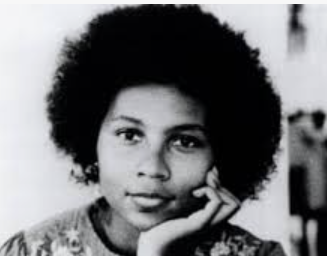
Today's mic-hogging, fast-talking, contentious young (and old) lefties continue to hawk little books and pamphlets on revolution, always with choice words or documents from Marx, Mao, even Malcolm. But I've never seen a broadside with "A Black Feminist Statement or even the writings of Angela Davis or June Jordan or Barbara Omolade or Flo Kennedy or Audre Lorde or bell hooks or Michelle Wallace, at least not from the groups who call themselves leftist. These women's collective wisdom has provided the richest insights into American radicalism's most fundamental questions: How can we build a multiracial movement? Who are the working class and what do they desire? How do we resolve the Negro Question and the Woman Question? What is freedom?
▼
Source
Robin Kelley Freedom Dreams
1 month 3 weeks ago
Plagued by Western habits of either-or, dualistic thinking, we all may fail to understand that race, class and gender interconnect to sustain a corporate ruling class. In the language of African-American essayist bell hooks, they are interlocking systems of oppression. Neither Latina nor Anglo women should yield to the temptation of making a hierarchy of oppressions where battles are fought over whether racism is "worse" than sexism, or class oppression is "deeper" than racism, etc. Instead of hierarchies we need bridges which, after all, exist to make two ends meet.
▼
Source
Elizabeth Martinez, De Colores Means All of Us
1 month 3 weeks ago
Hooks is a contentious writer, and I don't always agree with her contentions, but Ain't I a Woman has an intellectual vitality and daring that should set new standards for the discussion of race and sex.
▼
Source
Ellen Willis in No More Nice Girls: Countercultural Essays
1 month 3 weeks ago
I have wanted them to have this simple definition to read again and again so they know: Feminism is a movement to end sexism, sexist exploitation, and oppression.
▼
Source
Feminism is for Everybody: Passionate Politics (2014), p.XII
1 month 3 weeks ago
Today's fashion magazines may carry an article about the dangers of anorexia while bombarding its readers with images of emaciated young bodies representing the height of beauty and desirability.
▼
Source
As quoted in Feminism is for Everybody: Passionate Politics (2014), p.34
1 month 3 weeks ago
Creation spirituality replaced a patriarchal spirituality rooted in notions of fall and redemption.
▼
Source
Feminism is for Everybody: Passionate Politics (2014), p.106.
CivilSimian.com created by AxiomaticPanic, CivilSimian, Kalokagathia