
2 months 1 week ago
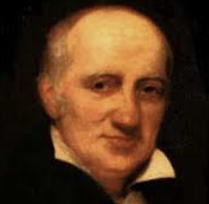
The evil of marriage, as is it practiced in the European countries, extends further than we have yet described. The method is for a thoughtless and romantic youth of each sex, to come together, to see each other, for a few times, and under circumstances full of delusion and then to vow eternal attachment. What is the consequence of this? In almost every instance they find themselves deceived. They are reduced to make the best of an irretrievable mistake. They are led to conceive it their wiser policy, to shut their eyes upon realities, happy, if by any perversion of intellect, they can persuade themselves that they were right in their first crude opinion of each other. Thus the institution of marriage is made a system of fraud; and men who carefully mislead their judgement in the daily affair of their life, must be expected to have a crippled judgement in every other concern.
2 months 1 week ago
To conceive that compulsion and punishment are the proper means of reformation, is the sentiment of a barbarian; civilisation and science are calculated to explode so ferocious an idea. It was once universally admitted and approved; it is now necessarily upon the decline.
▼
Source
Vol. 2, bk. 7, ch. 5
2 months 1 week ago
Mankind will never be, in an eminent degree, virtuous and happy till each man shall possess that portion of distinction and no more, to which he is entitled by his personal merits. The dissolution of aristocracy is equally the interest of the oppressor and the oppressed. The one will be delivered from the listlessness of tyranny, and the other from the brutalizing operation of servitude.
▼
Source
Book V, Chapter 11, "Moral Effects of Aristocracy"
2 months 1 week ago
Men may one day feel that they are partakers of a common nature, and that true freedom and perfect equity, like food and air, are pregnant with benefit to every constitution.
▼
Source
Vol. 1, bk. 1, ch. 3
2 months 1 week ago
The plebeian must expect to find himself neglected and despised in proportion as he is remiss in cultivation the objects of esteem; the lord will always be surrounded with sycophants and slaves. The lord therefore has no motive to industry and exertion; no stimulus to rouse him from the lethargic 'oblivious pool', out of which every human intellect originally arose.
▼
Source
Book V, Chapter 10, "Of Hereditary Distinction"
2 months 1 week ago
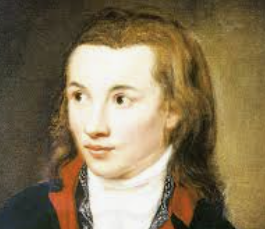
Only the most perfect human being can design the most perfect philosophy.
▼
Source
Fichte Studies § 651
2 months 1 week ago
Now to Some it appears not at all worth while to follow out the endless divisions of Nature; and moreover a dangerous undertaking, without fruit and issue. As we can never reach, say they, the absolutely smallest grain of material bodies, never find their simplest compartments, since all magnitude loses itself, forwards and backwards, in infinitude; so likewise is it with the species of bodies and powers; here too one comes on new species, new combinations, new appearances, even to infinitude. These seem only to stop, continue they, when our diligence tires; and so it is spending precious time with idle contemplations and tedious enumerations; and this becomes at last a true delirium, a real vertigo over the horrid Deep.
2 months 1 week ago
Nothing is more indispensable to true religiosity than a mediator that links us with divinity.
▼
Source
Fragment No. 74
2 months 1 week ago
Man is a Sun; his Senses are the Planets.
2 months 1 week ago
Blood will stream over Europe until the nations become aware of the frightful madness which drives them in circles. And then, struck by celestial music and made gentle, they approach their former altars all together, hear about the works of peace, and hold a great celebration of peace with fervent tears before the smoking altars.
▼
Source
As quoted in the Fourth Leaflet of the White Rose
2 months 1 week ago
The seat of the soul is where the inner world and the outer world meet. Where they overlap, it is in every point of the overlap.
2 months 1 week ago
Imagination places the future world for us either above or below or in reincarnation. We dream of travels throughout the universe: is not the universe within us? We do not know the depths of our spirit. The mysterious path leads within. In us, or nowhere, lies eternity with its worlds, the past and the future. Fragment No. 16 Variant translations: We dream of a journey through the universe. But is the universe then not in us? We do not know the depths of our spirit. Inward goes the secret path. Eternity with its worlds, the past and the future, is in us or nowhere.
▼
Source
As translated in "Bildung in Early German Romanticism" by Frederick C. Beiser, in Philosophers on Education : Historical Perspectives (1998) by Amélie Rorty, p. 294
2 months 1 week ago
Man is the higher Sense of our Planet; the star which connects it with the upper world; the eye which it turns towards Heaven.
2 months 1 week ago
Our life is no dream, but it should and perhaps will become one.
▼
Source
Fragmente I, Magische Philosophie Variant: "Our life is no dream; but it ought to become one, and perhaps will." George MacDonald, Phantastes, epigraph to Chapter XXV
2 months 1 week ago
Most observers of the French Revolution, especially the clever and noble ones, have explained it as a life-threatening and contagious illness. They have remained standing with the symptoms and have interpreted these in manifold and contrary ways. Some have regarded it as a merely local ill. The most ingenious opponents have pressed for castration. They well noticed that this alleged illness is nothing other than the crisis of beginning puberty.
▼
Source
Fragment No. 105
2 months 1 week ago
A character is a completely fashioned will.
▼
Source
(vollkommen gebildeter Wille).
2 months 1 week ago
Every stage of education begins with childhood. That is why the most educated person on earth so much resembles a child.
▼
Source
"Miscellaneous Observations," Philosophical Writings, M. Stolijar, trans. (Albany: 1997) #48
2 months 1 week ago
Nature too remains, so far as we have yet come, ever a frightful Machine of Death: everywhere monstrous revolution, inexplicable vortices of movement; a kingdom of Devouring, of the maddest tyranny; a baleful Immense: the few light-points disclose but a so much the more appalling Night, and terrors of all sorts must palsy every observer.
2 months 1 week ago
Tools arm the man. One can well say that man is capable of bringing forth a world; he lacks only the necessary apparatus, the corresponding armature of his sensory tools. The beginning is there. Thus the principle of a warship lies in the idea of the shipbuilder, who is able to incorporate this thought by making himself into a gigantic machine, as it were, through a mass of men and appropriate tools and materials. Thus the idea of a moment often required monstrous organs, monstrous masses of materials, and man is therefore a potential, if not an actual creator.
▼
Source
Fragment No. 88
2 months 1 week ago
Man has ever expressed some symbolical Philosophy of his Being in his Works and Conduct; he announces himself and his Gospel of Nature; he is the Messiah of Nature.
2 months 1 week ago
Poetry heals the wounds inflicted by reason.
▼
Source
As quoted in Quote, Unquote (1989) by Jonathan Williams, p. 136
2 months 1 week ago
No explanation is required for Holy Writing. Whoso speaks truly is full of eternal life, and wonderfully related to genuine mysteries does his Writing appear to us, for it is a Concord from the Symphony of the Universe.
2 months 1 week ago
Self-alienation is the source of all degradation as well as, on the contrary, the basis of all true elevation. The first step will be a look inward, an isolating contemplation of our self. Whoever remains standing here proceeds only halfway. The second step must be an active look outward, an autonomous, determined observation of the outer world. Fragment No. 24 Variant translation: The first step is to look within, the discriminating contemplation of the self. He who remains at this point only half develops. The second step must be a telling look without, independent, sustained contemplation of the external world.
2 months 1 week ago
Life is a disease of the spirit; a working incited by Passion. Rest is peculiar to the spirit.
2 months 1 week ago
There are ideal series of events which run parallel with the real ones. They rarely coincide. Men and circumstances generally modify the ideal train of events, so that it seems imperfect, and its consequences are equally imperfect. Thus with the Reformation; instead of Protestantism came Lutheranism.
▼
Source
Epigraph, "The Mystery Of Marie Rogêt" (1842) by Edgar Allan Poe, adapted from Fragments from German Prose Writers (1841) by Sarah Austin
2 months 1 week ago
The normal present connects the past and the future through limitation. Contiguity results, crystallization by means of solidification. There also exists, however, a spiritual present that identifies past and future through dissolution, and this mixture is the element, the atmosphere of the poet.
▼
Source
Fragment No. 109
2 months 1 week ago
There is, properly speaking, no Misfortune in the world. Happiness and Misfortune stand in continual balance. Every Misfortune is, as it were, the obstruction of a stream, which, after overcoming this obstruction, but bursts through with the greater force.
2 months 1 week ago
Philosophy ... bears witness to the deepest love of reflection, to absolute delight in wisdom.
▼
Source
"Logological Fragments," Philosophical Writings, M. Stolijar, trans. (Albany: 1997) #12
2 months 1 week ago
Someone arrived there - who lifted the veil of the goddess, at Sais. - But what did he see? He saw - wonder of wonders - himself. Novalis here alludes to Plutarch's account of the shrine of the goddess Minerva, identified with Isis, at Sais, which he reports had the inscription "I am all that hath been, and is, and shall be; and my veil no mortal has hitherto raised."
2 months 1 week ago
Building worlds is not enough for the deeper urging mind; but a loving heart sates the striving spirit.
▼
Source
Fragment No. 91
2 months 1 week ago
Plants are Children of the Earth; we are Children of the Æther. Our Lungs are properly our Root; we live, when we breathe; we begin our life with breathing.
2 months 1 week ago
The world must be romanticized. In this way the originary meaning may be found again.
▼
Source
As quoted in The Experience of the Foreign : Culture and Translation in Romantic Germany (1992) by Antoine Berman Variant translation: Romanticize the world.
2 months 1 week ago
Surely this voice meant our Teacher; for it is he that can collect the indications which lie scattered on all sides. A singular light kindles in his looks, when at length the high Rune lies before us, and he watches in our eyes whether the star has yet risen upon us, which is to make the Figure visible and intelligible.
2 months 1 week ago
We are on a mission: we are called to the cultivation of the earth.
▼
Source
Fragment No. 32
2 months 1 week ago
What is Nature? An encyclopedical, systematic Index or Plan of our Spirit. Why will we content us with the mere catalogue of our Treasures? Let us contemplate them ourselves, and in all ways elaborate and use them.
2 months 1 week ago
Fate and temperament are the names of a concept.
▼
Source
As quoted in Demian (1972) by Hermann Hesse, trans. W.J. Strachan
2 months 1 week ago
The art of writing books is not yet invented. But it is at the point of being invented. Fragments of this nature are literary seeds. There may be many an infertile grain among them: nevertheless, if only some come up!
▼
Source
Fragment No. 114
2 months 1 week ago
The ideal of Morality has no more dangerous rival than the ideal of highest Strength, of most powerful life; which also has been named (very falsely as it was there meant) the ideal of poetic greatness. It is the maximum of the savage; and has, in these times, gained, precisely among the greatest weaklings, very many proselytes. By this ideal, man becomes a Beast-Spirit, a Mixture; whose brutal wit has, for weaklings, a brutal power of attraction.
2 months 1 week ago
The poem of the understanding is philosophy.
▼
Source
"Logological Fragments," Philosophical Writings, M. Stolijar, trans. (Albany: 1997) #24
2 months 1 week ago
Philosophy can bake no bread; but she can procure for us God, Freedom, Immortality. Which, then, is more practical, Philosophy or Economy?
▼
Source
The first sentence of this was used by William Torrey Harris for the motto of the Journal of Speculative Philosophy
2 months 1 week ago
Before abstraction everything is one, but one like chaos; after abstraction everything is united again, but this union is a free binding of autonomous, self-determined beings. Out of a mob a society has developed, chaos has been transformed into a manifold world.
▼
Source
Fragment No. 95
2 months 1 week ago
Nature is an Æolian Harp, a musical instrument; whose tones again are keys to higher strings in us.
2 months 1 week ago
To romanticize the world is to make us aware of the magic, mystery and wonder of the world; it is to educate the senses to see the ordinary as extraordinary, the familiar as strange, the mundane as sacred, the finite as infinite.
▼
Source
As quoted in "Bildung in Early German Romanticism" by Frederick C. Beiser, in Philosophers on Education : Historical Perspectives (1998) by Amélie Rorty, p. 294
2 months 1 week ago
I shall in no time forget that moment. We felt as if we had had in our souls a clear passing glimpse into this wondrous World.
2 months 1 week ago
Every beloved object is the center point of a paradise.
▼
Source
Fragment No. 51; Jeder geliebte Gegenstand ist der Mittelpunkt eines Paradieses. Variant translations:
2 months 1 week ago
If our Bodily Life is a burning, our Spiritual Life is a being burnt, a Combustion (or, is precisely the inverse the case?); Death, therefore, perhaps a Change of Capacity.
2 months 1 week ago
Fate and temperament are two words for one and the same concept.
▼
Source
As quoted in Demian (1965) by Hermann Hesse, trans. Michael Roloff and Michael Lebeck
2 months 1 week ago
Love works magic. It is the final purpose Of the world story, The Amen of the universe.
2 months 1 week ago
The spirit of Poesy is the morning light, which makes the Statue of Memnon sound.
2 months 1 week ago
Friends, the soil is poor, we must sow seeds in plenty for us to garner even modest harvests.
▼
Source
Motto
CivilSimian.com created by AxiomaticPanic, CivilSimian, Kalokagathia