

3 months 1 week ago
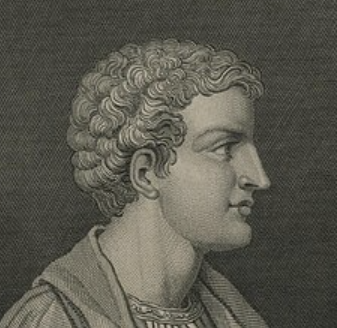
The man who is tenacious of purpose in a rightful cause is not shaken from his firm resolve by the frenzy of his fellow citizens clamoring for what is wrong, or by the tyrant's threatening countenance.
▼
Source
source
Book III, ode iii, line 1
2 months 1 week ago
Once the needs of hunger are satisfied - and they are soon satisfied - the vanity, the necessity - for it is a necessity - arises of imposing ourselves upon and surviving in others. Man habitually sacrifices his life to his purse, but he sacrifices his purse to his vanity. He boasts even of his weakness and his misfortunes, for want of anything better to boast of, and is like a child who, in order to attract attention, struts about with a bandaged finger.
2 months 2 weeks ago
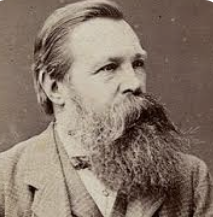
History has proved us, and all who thought like us, wrong. It has made it clear that the state of economic development on the Continent at that time was not, by a long way, ripe for the removal of capitalist production.
▼
Source
source
Introduction (1895) to Marx's The Class Struggles in France
2 weeks ago
There is no idea so obscure that someone could not come to regard it as self-evident.
▼
Source
source
Chapter Seven, Pragmatism and Positivism, p. 156

3 months 3 weeks ago
The natural effort of every individual to better his own condition, when suffered to exert itself with freedom and security is so powerful a principle that it is alone, and without any assistance, not only capable of carrying on the society to wealth and prosperity, but of surmounting a hundred impertinent obstructions with which the folly of human laws too often incumbers its operations; though the effect of these obstructions is always more or less either to encroach upon its freedom, or to diminish its security.
▼
Source
source
Chapter V, paragraph 82.
2 months 1 week ago
Necessity resides in the way we talk about things, not in the things we talk about.
▼
Source
source
Ways of Paradox and Other Essays (1976), p. 174

6 days ago
Press on, therefore, as you have begun; perhaps you will be led to perfection, or to a point which you alone understand is still short of perfection.
2 months 2 weeks ago
For it is not the bare Words, but the Scope of the writer that giveth true light, by which any writing is to bee interpreted; and they that insist upon single Texts, without considering the main Designe, can derive no thing from them clearly; but rather by casting atomes of Scripture, as dust before mens eyes, make everything more obscure than it is; an ordinary artifice of those who seek not the truth, but their own advantage.
▼
Source
source
The Third Part, Chapter 43, p. 331
2 months 1 week ago
I must avert here once again to my view of the opposition that exists between individuality and personality, notwithstanding the fact that the one demands the other. Individuality is, if I may so express it, the container or thing which contains, personality the content or thing contained, or I might say that my personality is in a certain sense my comprehension, that which I comprehend or embrace within myself - which is in a certain way the whole Universe - and that my individuality is my extension; the one my infinite, the other my finite.

4 months 2 weeks ago
Art, at least, teaches us that man cannot be explained by history alone and that he also finds a reason for his existence in the order of nature.

3 months 4 weeks ago
Women . . . have . . . small and narrow chests, and broad hips, to the end they should remain at home, sit still, keep house, and bear and bring up children. . . . A woman is, or at least should be, a friendly, courteous, and a merry companion in life . . . the honor and ornament of the house, and inclined to tenderness, for thereunto are they chiefly created, to bear children, and to be the pleasure, joy and solace of their husbands.
▼
Source
source
-- Table Talk, quoted in Luther On "Woman"

3 months 3 weeks ago
There are many kinds of gods. Therefore there are many kinds of men.
▼
Source
source
"One and Many," p. 3
2 months 3 weeks ago
The revolution must end and the republic must begin. In our constitution, right must take the place of duty, welfare that of virtue, and self-defense that of punishment. Everyone must be able to prevail and to live according to one's own nature.
▼
Source
source
Act I.

3 months 3 weeks ago
For the prevision is allied Unto the thing so signified; Or say, the foresight that awaits Is the same Genius that creates.
▼
Source
source
Fate
2 months 2 weeks ago
Affection requires a firmer foundation than sympathy, and few people have a principle of action sufficiently stable to produce rectitude of feeling; for in spite of all the arguments I have heard to justify deviations from duty, I am persuaded that even the most spontaneous sensations are more under the direction of principle than weak people are willing to allow.
▼
Source
source
Letter 17
2 months 6 days ago
The human body is an instrument for the production of art in the life of the human soul.
▼
Source
source
p. 349.

3 months 3 weeks ago
The unconsciousness of man is the consciousness of God.

2 months 1 week ago
Any madness in us gains from being expressed, because in this way one gives a human form to what separates us from humanity.
▼
Source
source
p. 76
2 months 6 days ago
The greatest invention of the nineteenth century was the invention of the method of invention.
▼
Source
source
Ch. 6: "The Nineteenth Century", p. 136
1 month 2 weeks ago
What ideas individuals may attach to the term "Millennium" I know not; but I know that society may be formed so as to exist without crime, without poverty, with health greatly improved, with little, if any misery, and with intelligence and happiness increased a hundredfold; and no obstacle whatsoever intervenes at this moment except ignorance to prevent such a state of society from becoming universal.

2 months 3 weeks ago
Furthermore, when citizens are all almost equal, it becomes difficult for them to defend their independence against the aggressions of power.
▼
Source
source
Chapter III.

4 months 1 week ago
How great is the path proper to the Sage! Like overflowing water, it sends forth and nourishes all things, and rises up to the height of heaven. All-complete is its greatness! It embraces the three hundred rules of ceremony, and the three thousand rules of demeanor. It waits for the proper man, and then it is trodden. Hence it is said, "Only by perfect virtue can the perfect path, in all its courses, be made a fact."
4 months 1 week ago
This is one of the most intricate problems of religion. For if you look into the traditional arguments (Hadith) about this problem you will find them contradictory; such also being the case with arguments of reason. The contradiction in the arguments of the first kind is found in the Qur'an and the Hadith.
3 months 3 weeks ago
A gun gives you the body, not the bird.
▼
Source
source
Quoted by Ralph Waldo Emerson, in C. J. Woodbury (ed.) Talks with Ralph Waldo Emerson, 1890
3 months 1 week ago
As money grows, care follows it and the hunger for more.
▼
Source
source
Book III, ode xvi, line 17
2 months 2 weeks ago
Fashion is something barbarous, for it produces innovation without reason and imitation without benefit.
▼
Source
source
Ch. VII
2 weeks 2 days ago
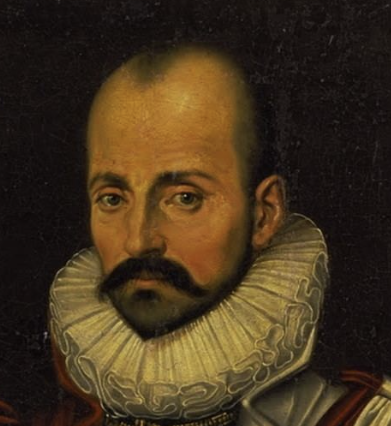
From all these indignities, such as the very beasts of the field would not endure, you can deliver yourselves if you try, not by taking action, but merely by willing to be free.
6 days ago
The one is ready even to sacrifice itself for the good of others, the other to plunge into peril provided it drags others with it.
1 month 1 week ago
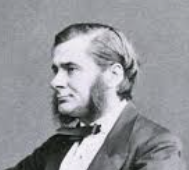
M. Comte's philosophy, in practice, might be compendiously described as Catholicism minus Christianity.
▼
Source
source
On the Physical Basis of Life

2 months 4 weeks ago
Time is the father of truth, its mother is our mind.
▼
Source
source
Quote as translated in The Encyclopedia of Religion Vol. 11 (1987), by Mircea Eliade, p. 459

2 months 3 weeks ago
The wise will determine from the gravity of the case; the irritable from sensibility to oppression; the high-minded from disdain and indignation at abusive power in unworthy hands.

2 months 2 weeks ago
We dread the future only when we are not sure we can kill ourselves when we want to.

3 months 2 weeks ago
I have no need for good souls: an accomplice is what I wanted.
▼
Source
source
Electra to her brother Orestes, Act 2
3 months 3 weeks ago
Enthusiasm is supernatural serenity.
▼
Source
source
Pearls of Thought (1881) p. 74
2 weeks 1 day ago
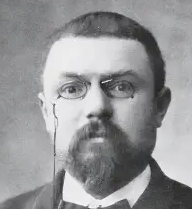
Everyone is sure of this [that errors are normally distributed], Mr. Lippman told me one day, since the experimentalists believe that it is a mathematical theorem, and the mathematicians that it is an experimentally determined fact.
▼
Source
source
Calcul des probabilités (2nd ed., 1912), p. 171
4 months 3 weeks ago
A tragedy, then, is the imitation of an action that is serious and also, as having magnitude, complete in itself; in language ... not in a narrative form; with incidents arousing pity and fear, wherewith to accomplish its catharsis of such emotions.
1 month 3 weeks ago
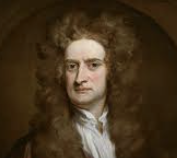
Bullialdus wrote that all force respecting the Sun as its center & depending on matter must be reciprocally in a duplicate ratio of the distance from the center.
▼
Source
source
Letter to Edmund Halley (June 20, 1686) quoted in I. Bernard Cohen and George E. Smith, ed.s, The Cambridge Companion to Newton (2002) p. 204
1 week 6 days ago
If you let people follow their feelings, they will be able to do good. This is what is meant by saying that human nature is good.
▼
Source
source
Book 6, pt. 1, v. 6

3 months 3 weeks ago
Deep in the man sits fast his fate To mould his fortunes, mean or great.
▼
Source
source
Fate
3 months 3 weeks ago
As the strata of the earth preserve in succession the living creatures of past epochs, so the shelves of libraries preserve in succession the errors of the past and their expositions, which like the former were very lively and made a great commotion in their own age but now stand petrified and stiff in a place where only the literary palaeontologist regards them.
▼
Source
source
Vol. 2 "On Books and Writing" as translated in Essays and Aphorisms (1970), as translated by R. J. Hollingdale

3 months 3 weeks ago
Let us maintain inviolably equality in the sacred right of suffrage: public security can never have a basis more solid.
▼
Source
source
Author's Inscription: French Edition
3 months 3 weeks ago
The film concludes with ... the most nauseatingly luscious, the most penetratingly vulgar mammy song that it has ever been my lot to hear. My flesh crept as the loud speaker poured out those sodden words, the greasy, sagging melody. I felt ashamed of myself for listening to such things, for even being a member of the species to which such things are addressed.
▼
Source
source
"Silence is Golden," p. 62
2 months 2 weeks ago
That a man be willing, when others are so too, as farre-forth, as for Peace, and defence of himself he shall think it necessary, to lay down this right to all things; and be contented with so much liberty against other men, as he would allow other men against himself.
▼
Source
source
The First Part, Chapter 14, p. 64-65

3 months 3 weeks ago
A people that sells its own children is more condemnable than the buyer; this commerce demonstrates our superiority; he who gives himself a master was born to have one.
▼
Source
source
Essai sur les Moeurs et l'Espit des Nations (1753)

2 months 1 week ago
Modern empiricism has been conditioned in large part by two dogmas. One is a belief in some fundamental cleavage between truths which are analytic, or grounded in meanings independently of matters of fact, and truths which are synthetic, or grounded in fact. The other dogma is reductionism: the belief that each meaningful statement is equivalent to some logical construct upon terms which refer to immediate experience. Both dogmas, I shall argue, are ill-founded. One effect of abandoning them is, as we shall see, a blurring of the supposed boundary between speculative metaphysics and natural science. Another effect is a shift toward pragmatism.
▼
Source
source
"Two dogmas of Empiricism"

4 months 6 days ago
Custom renders love attractive; for that which is struck by oft-repeated blows however lightly, yet after long course of time is overpowered and gives way. See you not too that drops of water falling on rocks after long course of time scoop a hole through these rocks?
▼
Source
source
Book IV, lines 1283-1287 (tr. Munro)
2 months 1 week ago
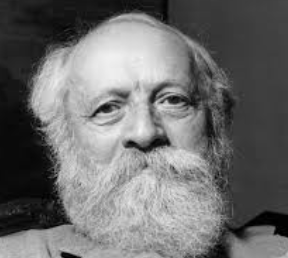
God ... demands everything, in order to give everything anew to him who loves Him, after that loving has truly given up all.
▼
Source
source
p. 45
2 months 2 weeks ago
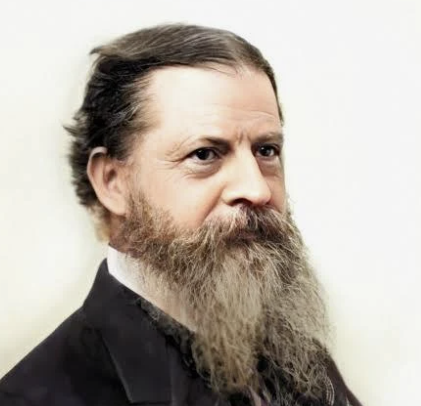
Accordingly, time logically supposes a continuous range of intensity of feeling. It follows then, from the definition of continuity, that when any particular kind of feeling is present, an infinitesimal continuum of all feelings differing infinitesimally from that, is present.
CivilSimian.com created by AxiomaticPanic, CivilSimian, Kalokagathia