


3 months 3 weeks ago
In its beginnings, the credit system sneaks in as a modest helper of accumulation and draws by invisible threads the money resources scattered all over the surface of society into the hands of individual or associated capitalists. But soon it becomes a new and formidable weapon in the competitive struggle, and finally it transforms itself into an immense social mechanism for the centralisation of capitals.
▼
Source
source
Vol. I, Ch. 25, Section 2, pg. 687.
3 months 2 weeks ago
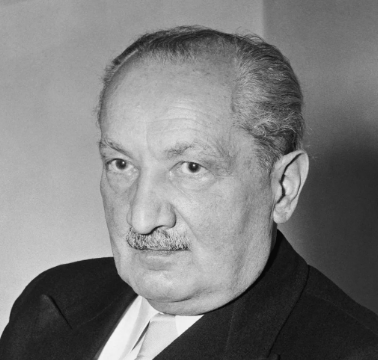
Everywhere we remain unfree and chained to technology, whether we passionately affirm or deny it. But we are delivered over to it in the worst possible way when we regard it as something neutral; for this conception of it, to which today we particularly like to do homage, makes us utterly blind to the essence of technology.
▼
Source
source
The Question Concerning Technology
2 months 3 weeks ago
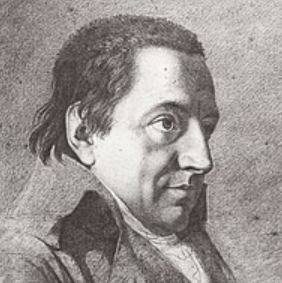
The Doctrine of Knowledge, apart from all special and definite knowing, proceeds immediately upon Knowledge itself, in the essential unity in which it recognises Knowledge as existing; and it raises this question in the first place - How this Knowledge can come into being, and what it is in its inward and essential Nature? The following must be apparent: - There is but One who is absolutely by and through himself, - namely, God; and God is not the mere dead conception to which we have thus given utterance, but he is in himself pure Life. He can neither change nor determine himself in aught within himself, nor become any other Being; for his Being contains within it all his Being and all possible Being, and neither within him nor out of him can any new Being arise.

3 months 3 weeks ago
This avidity alone, of acquiring goods and possessions for ourselves and our nearest friends, is insatiable, perpetual, universal, and directly destructive of society.
▼
Source
source
Part 2, Section 2

2 months 3 weeks ago
The Indian knew how to live without wants, to suffer without complaint, and to die singing.
▼
Source
source
Chapter I.

2 months 4 weeks ago
The wise soul feareth not death; rather she sometimes striveth for death, she goeth beyond to meet her. Yet eternity maintaineth her substance throughout time, immensity throughout space, universal form throughout motion.
▼
Source
source
I 1

2 months 2 weeks ago
"I am like a broken puppet whose eyes have fallen inside." This remark of a mental patient weighs more heavily than a whole stack of works on introspection.

3 months 3 weeks ago
The profit of books is according to the sensibility of the reader. The profoundest thought or passion sleeps as in a mine until an equal mind and heart finds and publishes it.
▼
Source
source
Quotation and Originality

1 month 2 weeks ago
It is always the psychic and social grounds, brought into play by each medium or technology, that readjust the balance of the hemispheres and of human sensibilities into equilibrium with those grounds.
▼
Source
source
p. 82
2 months 2 weeks ago
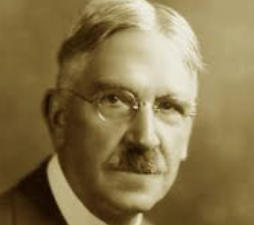
I do not think that the dancing and singing of even little children can be explained wholly on the basis of unlearned and unformed responses to then existing objective conditions. Clearly there must be something in the present to evoke happiness. But the act is expressive only a there is in it a unison of something stored from past experience, something therefore generalized, with present conditions. In the case of expressions of happy children the marriage of past values and present incidents takes place easily; there are few obstructions to be overcome, few wounds to heal, few conflicts to resolve. With maturer persons, the reverse is the case. Accordingly the achievement of complete unison is rare; but when it occurs it is so on a deeper level and with a fuller content of meaning. And then, even though after long incubation and after precedent pangs of labor, the final expression may issue with the spontaneity of the cadenced speech or rhythmic movement of happy childhood.
▼
Source
source
p. 74

2 months 5 days ago
I must confess that my estimate of Lovecraft would not have pleased his most ardent admirers. The view I expressed in that book was that, while Lovecraft was distinctly a creative genius in his own way, his pessimism should not be taken too seriously; that it was the pessimism of a sick recluse, and had about it an element of rassentiment, a kind of desire to take revenge on the world that rejected him. In short, Lovecraft was a 19th century romantic, born in the wrong time. Most men of genius dislike their own age, but the really great ones impose their own vision on the age. The weak ones turn away into a world of gloomy fantasy.
▼
Source
source
p. 2

1 week ago
When we leave you and assemble together by ourselves, we talk freely about his sayings and doings, treating them with the respect which they deserve: in your presence deep silence is observed about him, and thus you lose that greatest of pleasures, the hearing the praises of your son, which I doubt not you would be willing to hand down to all future ages, had you the means of so doing, even at the cost of your own life.
1 week 1 day ago
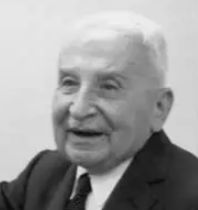
Socialism is the watchword and the catchword of our day. The socialist idea dominates the modem spirit. The masses approve of it. It expresses the thoughts and feelings of all; it has set its seal upon our time. When history comes to tell our story it will write above the chapter "The Epoch of Socialism." As yet, it is true, Socialism has not created a society which can be said to represent its ideal. But for more than a generation the policies of civilized nations have been directed towards nothing less than a gradual realization of Socialism.
▼
Source
source
Introduction : The Success of Socialist Ideas
1 month 2 weeks ago
Everybody knows there is no fineness or accuracy of suppression; if you hold down one thing, you hold down the adjoining.
▼
Source
source
Ch. 1
2 months 2 weeks ago
Life creates itself in delirium and is undone in ennui.
2 months 5 days ago
Yet it must be acknowledged that there is a fundamental difference between the sexual impulse in men and women. Her need is for a lover, a protector, a father for her children. His desire is for mastery, conquest, to be allowed to use her body for his own satisfaction. He feels like a bee, burying itself in a flower, apparently doing nothing for the flower but taking its sweetness. If he loves her, then his desire is mixed with a kind of pity.
3 months 3 weeks ago
So that it will be found that the fundamental fault in the character of women is that they have no "sense of justice ." This arises from their deficiency in the power of reasoning already referred to, and reflection, but is also partly due to the fact that Nature has not destined them, as the weaker sex, to be dependent on strength but on cunning; this is why they are instinctively crafty, and have an ineradicable tendency to lie.
▼
Source
source
On Women

2 months 4 weeks ago
Pursue Virtue virtuously.
▼
Source
source
These words also appear in Christian Morals, Part I, Section I

3 months 2 weeks ago
You must always be puzzled by mental illness. The thing I would dread most, if I became mentally ill, would be your adopting a common sense attitude; that you could take it for granted that I was deluded.
▼
Source
source
Conversation of 1947 or 1948
4 months 1 week ago
When I see someone in anxiety, I say to myself, What can it be that this fellow wants? For if he did not want something that was outside of his control, how could he still remain in anxiety?
▼
Source
source
Book II, ch. 13, 1.
4 months 1 week ago
For human beings, the measure of every action is the impression of the senses.
▼
Source
source
Book I, ch. 28, 10
3 months 2 weeks ago
"Here is the chalk." This is a truth; and here and the now hereby characterize the chalk so that we emphasize by saying; the chalk, which means "this." We take a scrap of paper and we write the truth down: "Here is the chalk." We lay this written statement beside the thing of which it is the truth. After the lecture is finished both doors are opened, the classroom is aired, there will be a draft, and the scrap of paper, let us suppose, will flutter out into the corridor. A student finds it on his way to the cafeteria, reads the sentence. "Here is the chalk," and ascertains that this is not true at all. Through the draft the truth has become an untruth. Strange that a truth should depend on a gust of wind. ... We have made the truth about the chalk independent of us and entrusted it to a scrap of paper.
▼
Source
source
p. 29-30

3 months 3 weeks ago
Hatred and anger are the greatest poison to the happiness of a good mind.
▼
Source
source
Section II, Chap. III.
2 months 2 weeks ago
In reality, the law always contains less than the fact itself, because it does not reproduce the fact as a whole but only in that aspect of it which is important for us, the rest being intentionally or from necessity omitted.
▼
Source
source
"The Economical Nature of Physical Inquiry," in Popular Scientific Lectures (1898), p. 192

2 months 3 weeks ago
He laid it down as a maxim, that monarchy was the basis of all good government and the nearer to monarchy any government approached, the more perfect it was, and vice versa; and he certainly in his wildest moments, never had so far forgotten the nature of government, as to argue that we ought to wish for a constitution that we could alter at pleasure, and change like a dirty shirt. He was by no means anxious for a monarchy with a dash of republicanism to correct it. But the French constitution was the exact opposite of the English in every thing, and nothing could be so dangerous as to set it up to the view of the English, to mislead and debauch their minds.
▼
Source
source
Speech in the House of Commons (6 May 1791), quoted in The Parliamentary History of England, From the Earliest Period to the Year 1803, Vol. XXIX (1817), column 385

3 months 3 weeks ago
To be without some of the things you want is an indispensable part of happiness.

2 months 4 weeks ago
Knowledge that is not Infallible is not certain knowledge.
▼
Source
source
I. Introduction, p. 7.

4 months 3 weeks ago
Man is a synthesis of psyche and body, but he is also a synthesis of the temporal and the eternal. In the former, the two factors are psyche and body, and spirit is the third, yet in such a way that one can speak of a synthesis only when the spirit is posited. The latter synthesis has only two factors, the temporal and the eternal. Where is the third factor? And if there is no third factor, there really is no synthesis, for a synthesis that is a contradiction cannot be completed as a synthesis without a third factor, because the fact that the synthesis is a contradiction asserts that it is not. What, then, is the temporal?
2 weeks 4 days ago
The real question is not whether machines think but whether men do. The mystery which surrounds a thinking machine already surrounds a thinking man.
▼
Source
source
Contingencies of Reinforcement: A Theoretical Analysis
2 days ago
It is not sufficient to say, "God spake and it was so." For the natures of things that are created ought to harmonise with the commands of God. I will say more clearly what I mean. Did God ordain that fire should mount upwards by chance and earth sink down? Was it not necessary, in order that the ordinance of God should be fulfilled, for the former to be light and the latter to weigh heavy? And in the case of other things also this is equally true.
2 months 3 weeks ago
If there ever are great revolutions there, they will be caused by the presence of the blacks upon American soil. That is to say, it will not be the equality of social conditions but rather their inequality which may give rise thereto.
▼
Source
source
Book Three, Chapter XXI.

2 months 2 weeks ago
No one should forget: Eros alone can fulfill life; knowledge, never. Only Eros makes sense; knowledge is empty infinity; - for thoughts, there is always time; life has its time; there is no thought that comes too late; any desire can become a regret.
4 months 3 weeks ago
The reason I cannot really say that I positively enjoy nature is that I do not quite realize what it is that I enjoy. A work of art, on the other hand, I can grasp. I can - if I may put it this way - find that Archimedian point, and as soon as I have found it, everything is readily clear for me. Then I am able to pursue this one main idea and see how all the details serve to illuminate it.

1 month 3 weeks ago
Honest work is much better than a mansion.
▼
Source
source
p. 82
2 months 2 weeks ago
In every man sleeps a prophet, and when he wakes there is a little more evil in the world.
4 months 1 week ago
If names be not correct, language is not in accordance with the truth of things. Paraphrased as a chinese proverb stating "The beginning of wisdom is to call things by their proper name."
2 months 3 weeks ago
The "I" who speaks in this book is by no means the author. Rather, the author wishes that the reader may come to see himself in this "I": that the reader may not simply relate to what is said here as he would to history, but rather that while reading he will actually converse with himself, deliberate back and forth, deduce conclusions, make decisions like his representative in the book, and through his own work and reflection, purely out of his own resources, develop and build within himself the philosophical disposition that is presented to him in this book merely as a picture.
▼
Source
source
P. Preuss, trans. (1987), p. 2
1 month 2 weeks ago
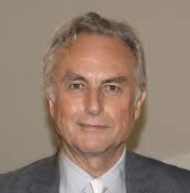
Never say, and never take seriously anyone who says, "I cannot believe that so-and-so could have evolved by gradual selection". I have dubbed this kind of fallacy "the Argument from Personal Incredulity". Time and again, it has proven the prelude to an intellectual banana-skin experience.

3 months 3 weeks ago
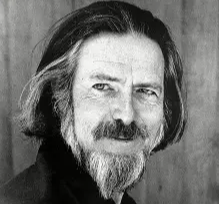
Possibilities that fail to get realized are, for determinism, pure illusions: they never were possibilities at all. There is nothing inchoate, it says, about this universe of ours, all that was or is or shall be actual having been from eternity virtually there. The cloud of alternatives our minds escort this mass of actuality withal is a cloud of sheer deceptions, to which 'impossibilities' is the only name that rightfully belongs.
▼
Source
source
The Dilemma of Determinism in "The Will to Believe" p. 151
3 days ago
Camus said there is only really one serious philosophical question, which is whether or not to commit suicide. I think there are four or five serious philosophical questions: The first one is: Who started it? The second is: Are we going to make it? The third is: Where are we going to put it? The fourth is: Who's going to clean up? And the fifth: Is it serious?
▼
Source
source
Out Of Your Mind (2004), Audio lecture 1: The Nature of Consciousness: A Game That's Worth The Candle
3 months 3 weeks ago
Consider the Koran... this wretched book was sufficient to start a world-religion, to satisfy the metaphysical need of countless millions for twelve hundred years, to become the basis of their morality and of a remarkable contempt for death, and also to inspire them to bloody wars and the most extensive conquests. In this book we find the saddest and poorest form of theism. Much may be lost in translation, but I have not been able to discover in it one single idea of value.
▼
Source
source
E. Payne, trans., Vol. II, Ch. XVII: On Man's Need for Metaphysics
1 month 3 weeks ago
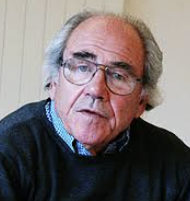
Picturing others and everything which brings you closer to them is futile from the instant that 'communication' can make their presence immediate.
▼
Source
source
(p. 42)

3 months 3 weeks ago
We may become the makers of our fate when we have ceased to pose as its prophets.
▼
Source
source
Introduction

3 months 1 week ago
He who abhors and shuns the light of the Sun, He who refuses to behold with respect the living creation of God, He who leads the good to wickedness, He who makes the meadows waterless and the pastures desolate, He who lets fly his weapon against the innocent, An enemy of my faith, a destroyer of Thy principles is he, O Lord!
▼
Source
source
Ahunuvaiti Gatha; Yasna 32, 10.
3 months 3 weeks ago
Thought is all light, and publishes itself to the universe. It will speak, though you were dumb, by its own miraculous organ. It will flow out of your actions, your manners, and your face. It will bring you friendships. It will impledge you to truth by the love and expectation of generous minds. By virtue of the laws of that Nature, which is one and perfect, it shall yield every sincere good that is in the soul, to the scholar beloved of earth and heaven.
1 week ago
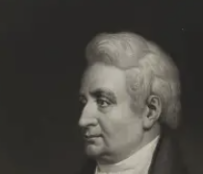
Bishop Berkeley destroyed this world in one volume octavo; and nothing remained after his time, but mind - which experienced a similar fate from the hand of Mr. Hume, in 1737.
▼
Source
source
Introduction
1 month 3 weeks ago
Descartes may have made a lot of mistakes, but he was right about this: you cannot doubt the existence of your own consciousness. That's the first feature of consciousness, it's real and irreducible. You cannot get rid of it by showing that it's an illusion in a way that you can with other standard illusions.

4 months 1 week ago
But there is nothing sweeter than to dwell in towers that rise On high, serene and fortified with teachings of the wise, From which you may peer down upon the others as they stray This way and that, seeking the path of life, losing their way: The skirmishing of wits, the scramble for renown, the fight, Each striving harder than the next, and struggling day and night, To climb atop a heap of riches and lay claim to might.
▼
Source
source
Book II, lines 7-13 (tr. Stallings)

3 months 6 days ago
If two right lines cut one another, they will form the angles at the vertex equal. ...This... is what the present theorem evinces, that when two right lines mutually cut each other, the vertical angles are equal. And it was first invented according to Eudemus by Thales...
▼
Source
source
Proposition XV. Thereom VIII.
CivilSimian.com created by AxiomaticPanic, CivilSimian, Kalokagathia