

3 months 3 days ago
All ordinary expression may be explained causally, but creative expression which is the absolute contrary of ordinary expression, will be forever hidden from human knowledge.
1 month ago
But, one will say, if raw experience can not legitimatize reasoning by recurrence, is it so of experiment aided by induction? We see successively that a theorem is true of the number 1, of the number 2, of the number 3 and so on; the law is evident, we say, and it has the same warranty as every physical law based on observations, whose number is very great but limited. But there is an essential difference. Induction applied to the physical sciences is always uncertain, because it rests on the belief in a general order of the universe, an order outside of us. Mathematical induction, that is, demonstration by recurrence, on the contrary, imposes itself necessarily, because it is only the affirmation of a property of the mind itself.
▼
Source
source
Ch. I. (1905) Tr. George Bruce Halstead

1 month 1 week ago
In a traditional reading eating the apple was the original sin; but, as Gnostics understood the story, the two primordial humans were right to eat the apple. The God that commanded them not to do so was not the true God but only a demiurge, a tyrannical underling exulting in its power, while the serpent came to free them from slavery. True, when they ate the apple Adam and Eve fell from grace. This was indeed the Fall of Man - a fall into the dim world of everyday consciousness. But the Fall need not be final. Having eaten its fill from the Tree of Knowledge, humankind can then rise into a state of conscious innocence. When this happens, Herr C. declares, it will be 'the final chapter in the history of the world'.
▼
Source
source
The Faith of Puppets: The Freedom of the Marionette (p. 8)

3 months 3 weeks ago
Do not repeat slander; you should not hear it, for it is the result of hot temper.
▼
Source
source
Maxim no. 23.

4 months 1 week ago
There are but few points in which the English, as a people, are entitled to the moral pre-eminence with which they are accustomed to compliment themselves at the expense of other nations: but, of these points, perhaps the one of greatest importance is, that the higher classes do not lie, and the lower, though mostly habitual liars, are ashamed of lying. To run any risk of weakening this feeling, a difficult one to create, or, when once gone, to restore, would be a permanent evil too great to be incurred for so very temporary a benefit as the ballot would confer, even on the most exaggerated estimate necessity.
▼
Source
source
Thoughts on Parliamentary Reform (1859), pp. 48-49

1 month 1 day ago
Therefore tolerance of diversity, of people that don't believe the same thing that you do, has always been at the core of this pragmatic project to enable diverse populations to live with one another.
▼
Source
source
9:00

2 months 2 weeks ago
The ideal of human kinship that would brook no injustice or social wrong agave the only meaning and purpose to my life. This ideal I found in anarchism. Not, to be sure, in the distorted image of anarchism presented in the Press and by pseudo-social economists or hounded and persecuted by the powers that be. I found anarchism the moving spirit of beauty-of social harmony-of a free and untrammeled growth of the individual. This became my inspiration and my highest goal.
1 month ago
The advance of science is not comparable to the changes of a city, where old edifices are pitilessly torn down to give place to new, but to the continuous evolution of zoologic types which develop ceaselessly and end by becoming unrecognizable to the common sight, but where an expert eye finds always traces of the prior work of the centuries past. One must not think then that the old-fashioned theories have been sterile or vain.

3 months 2 weeks ago
Envy has been, is, and shall be, the destruction of many. What is there, that Envy hath not defamed, or Malice left undefiled? Truly, no good thing.

3 weeks 6 days ago
It is all work and forgotten work, this peopled, clothed, articulate-speaking, high-towered, wide-acred World. The hands of forgotten brave men have made it a World for us; they,- honour to them; they, in spite of the idle and the dastard. This English Land, here and now, is the summary of what was found of wise, and noble, and accordant with God's Truth, in all the generations of English Men. Our English Speech is speakable because there were Hero-Poets of our blood and lineage; speakable in proportion to the number of these. This Land of England has its conquerors, possessors, which change from epoch to epoch, from day to day; but its real conquerors, creators, and eternal proprietors are these following, and their representatives if you can find them: All the Heroic Souls that ever were in England, each in their degree; all the men that ever cut a thistle, drained a puddle out of England, contrived a wise scheme in England, did or said a true and valiant thing in England.

3 months 2 days ago
I seem to myself, among civilised men, an intruder, a troglodyte enamored of decrepitude, plunged into subversive prayers.
5 months 1 week ago
This fact, that the opposite of sin is by no means virtue, has been overlooked. The latter is partly a pagan view, which is content with a merely human standard, and which for that very reason does not know what sin is, that all sin is before God. No, the opposite of sin is faith.

3 days ago
Whatever happens to you has been waiting to happen since the beginning of time. The twining strands of fate wove both of them together: your own existence and the things that happen to you.
▼
Source
source
V. 8, trans. Gregory Hays

2 months 3 weeks ago
The key to a Christian conception of studies is the realization that prayer consists of attention. It is the orientation of all the attention of which the soul is capable toward God. The quality of the attention counts for much in the quality of the prayer. Warmth of heart cannot make up for it.
▼
Source
source
"Reflections on the Right Use of School Studies with a View to the Love of God"
2 weeks 3 days ago
Students have powerful images of what a perfect body is and pursue it incessantly. But deprived of literary guidance, they no longer have any image of a perfect soul, and hence do not long to have one.
▼
Source
source
p. 67.
4 months 1 week ago
An unbiased reader, on opening one of their [Fichte's, Schelling's or Hegel's] books and then asking himself whether this is the tone of a thinker wanting to instruct or that of a charlatan wanting to impress, cannot be five minutes in any doubt. ... The tone of calm investigation, which had characterized all previous philosophy, is exchanged for that of unshakeable certainty, such as is peculiar to charlatanry of every kind and at all times. ... From every page and every line, there speaks an endeavor to beguile and deceive the reader, first by producing an effect to dumbfound him, then by incomprehensible phrases and even sheer nonsense to stun and stupefy him, and again by audacity of assertion to puzzle him, in short, to throw dust in his eyes and mystify him as much as possible.
▼
Source
source
E. Payne, trans. (1974) Vol. 1, p. 23

5 months 4 days ago
I simply don't think it is reasonable to use IQ tests to produce results of questionable value, which may then serve to justify racists in their own minds and to help bring about the kinds of tragedies we have already witnessed earlier in this century.
2 months 2 weeks ago
In one sense, I do believe I am "like a man," as Parthe [the writer's sister] says. But how? In having sympathy. ... Women crave for being loved, not for loving. They scream out at you for sympathy all day long, they are incapable of giving any in return, for they cannot remember your affairs long enough to do so. ... They cannot state a fact accurately to another, nor can that other attend to it accurately enough for it to become information. Now is not all this the result of want of sympathy?
▼
Source
source
Letter to Madame Mohl
3 months 2 days ago
In every man sleeps a prophet, and when he wakes there is a little more evil in the world.

4 months 2 weeks ago
Let all the 'free-will' in the world do all it can with all its strength; it will never give rise to a single instance of ability to avoid being hardened if God does not give the Spirit, or of meriting mercy if it is left to its own strength.
▼
Source
source
p. 202

2 months 4 days ago
The TV camera has no shutter. It does not deal with aspects or facets of objects in high resolution. It is a means of direct pick-up by the electrical groping over surfaces.
▼
Source
source
Arts in society, Volume 3, 1964, p. 242
3 months 4 days ago
The peoples' revolution .... will arrange its revolutionary organisation from the bottom up and from the periphery to the centre, in keeping with the principle of liberty.

4 months 1 day ago
The usage of the words "public" and "public sphere" betrays a multiplicity of concurrent meanings. Their origins go back to various historical phases and, when applied synchronically to the conditions of a bourgeois society that is industrially advanced and constituted as a social-welfare state, they fuse into a clouded amalgam. Yet the very conditions that make the inherited language seem inappropriate appear to require these words, however confused their employment.
▼
Source
source
p. 1 as cited in: Gandy, M (1997) "Ecology, modernity and the intellectual legacy of the Frankfurt School". In: Light, A and Smith, JM, (eds.) Space, Place and Environmental Ethics. p. 240
2 months 2 days ago
Whenever a system of communication evolves, there is always the danger that some will exploit the system for their own ends.
▼
Source
source
Ch. 4. The Gene machine
1 month 2 weeks ago
[U]nlike positive utilitarianism or so-called preference utilitarianism - neither of which can ever be wholly fulfilled - [negative utilitarianism] seems achievable in full.
▼
Source
source
The Pinprick Argument, BLTC Research, 2005

2 months 2 weeks ago
Of all the inventions of man I doubt whether any was more easily accomplished than that of a Heaven.
▼
Source
source
L 34

4 months 1 week ago
Every commodity is compelled to chose some other commodity for its equivalent.
▼
Source
source
Vol. I, Ch. 1, Section 3, pg. 65.

3 months 3 weeks ago
An evil and foolish and intemperate and irreligious life should not be called a bad life, but rather, dying long drawn out.
2 months 3 weeks ago
Answers determined by the social division of labor become truth as such.
▼
Source
source
p. 50: Describing the pragmatist view
2 months 3 weeks ago
If a captive mind is unaware of being in prison, it is living in error. If it has recognized the fact, even for the tenth of a second, and then quickly forgotten it in order to avoid suffering, it is living in falsehood. Men of the most brilliant intelligence can be born, live and die in error and falsehood. In them, intelligence is neither a good, nor even an asset. The difference between more or less intelligent men is like the difference between criminals condemned to life imprisonment in smaller or larger cells. The intelligent man who is proud of his intelligence is like a condemned man who is proud of his large cell.
▼
Source
source
p. 69
3 months 4 days ago
The great honor of Christianity, its incontestable merit, and the whole secret of its unprecedented and yet thoroughly legitimate triumph, lay in the fact that it appealed to that suffering and immense public to which the ancient world, a strict and cruel intellectual and political aristocracy, denied even the simplest rights of humanity. Otherwise it never could have spread.
▼
Source
source
Dover edition, p. 75

3 months 1 week ago
You may have made a Revolution, but not a Reformation. You may have subverted Monarchy, but not recover'd freedom.
▼
Source
source
Letter to Charles-Jean-François Depont (November 1789), quoted in Alfred Cobban and Robert A. Smith (eds.), The Correspondence of Edmund Burke, Volume VI: July 1789-December 1791 (1967), p. 46

2 months 4 weeks ago
Therefore whoever hears these sayings of Mine, and does them, I will liken him to a wise man who built his house on the rock: and the rain descended, the floods came, and the winds blew and beat on that house; and it did not fall, for it was founded on the rock.

4 months 5 days ago
Existence precedes and rules essence.
▼
Source
source
Part 4, chapter 1
4 months 5 days ago
Social and economic inequalities are to satisfy two conditions: first, they are to be attached to positions and offices open to all under conditions of fair equality of opportunity; and second, they are to be to the greatest benefit to the least-advantaged members of society.
▼
Source
source
p. 6

4 months 1 week ago
It is normal to hate what we fear, and it happens frequently, though not always, that we fear what we hate. I think it may be taken as the rule among primitive men, that they both fear and hate whatever is unfamiliar. They have their own herd, originally a very small one. And within one herd, all are friends, unless there is some special ground of enmity. Other herds are potential or actual enemies; a single member of one of them who strays by accident will be killed. An alien herd as a whole will be avoided or fought according to circumstances. It is this primitive mechanism which still controls our instinctive reaction to foreign nations. The completely untravelled person will view all foreigners as the savage regards a member of another herd. But the man who has travelled, or who has studied international politics, will have discovered that, if his herd is to prosper, it must, to some degree, become amalgamated with other herds.

3 weeks 6 days ago
When the oak-tree is felled, the whole forest echoes with it; but a hundred acorns are planted silently by some unnoticed breeze.
▼
Source
source
On History.

4 months 3 weeks ago
To those whose talents are above mediocrity, the highest subjects may be announced. To those who are below mediocrity, the highest subjects may not be announced.

3 weeks ago
I shall never be ashamed of citing a bad author if the line is good.
▼
Source
source
Alternate translation: I shall never be ashamed to go to a bad author for a good quotation. Chapter 11, Section 8

2 months 2 weeks ago
The evolutionary urge drives man to seek for intenser forms of fulfillment, since his basic urge is for more life, more consciousness, and this contentment has an air of stagnation that the healthy mind rejects. (This recognition lies at the centre of my own 'outsider theory': that there are human beings to whom comfort means nothing, but whose happiness consists in following an obscure inner-drive, an 'appetite for reality'.)
▼
Source
source
p. 32
2 months 4 days ago
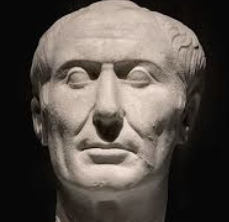
Penitence follows hasty decisions.
▼
Source
source
Maxim 961
3 months 1 week ago
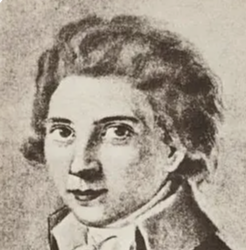
The mind understands something only insofar as it absorbs it like a seed into itself, nurtures it, and lets it grow into blossom and fruit. Therefore scatter holy seeds into the soil of the spirit.
▼
Source
source
"Ideas," Lucinde and the Fragments, P. Firchow, trans. (1991), § 5

2 months 3 weeks ago
Faith feels itself secure neither with universal consent, nor with tradition, nor with authority. It seeks support of its enemy, reason.
3 months 3 weeks ago
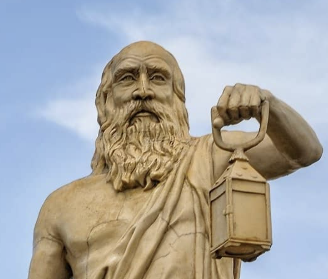
He lit a lamp in broad daylight and said, as he went about, "I am looking for a human."
▼
Source
source
Diogenes Laërtius, vi. 41. This line is frequently translated as "I am looking for an honest man."

3 months 1 week ago
Pray, O pray to God, dear friends, if you are not already asses - that he will cause you to become asses... There is none who praiseth not the golden age when men were asses: they knew not how to work the land. One knew not how to dominate another, one understood no more than another; caves and caverns were their refuge; they were not so well covered nor so jealous nor were they confections of lust and of greed. Everything was held in common.

4 months 3 weeks ago
There is no order between created being and non-being, but there is between created and uncreated being.
▼
Source
source
q. 7, art. 9, ad 8
3 months 2 days ago
Knowledge, having irritated and stimulated our appetite for power, will lead us inexorably to our ruin.

2 months 6 days ago
Truth is ... one approach to the attainment of the good, but in and of itself, it is neither the good nor the beautiful ... Socrates, Pascal, and others regarded knowledge of the truth with regard to purposeless objects as incongruous with the good ... [by] exposing deception, truth destroys illusion, which is the principle attribute of beauty.
4 months 5 days ago
If you die, I will lie down beside you and I will stay there until the end, without eating or drinking, you will rot in my arms and I will love you as carcass: for you love nothing if you do not love everything.
▼
Source
source
Act 10, sc. 2
CivilSimian.com created by AxiomaticPanic, CivilSimian, Kalokagathia