

2 months 1 week ago
Marriage is a union between two persons - one man and one woman. A woman who has given herself up to one, can not give herself up to a second, for her whole dignity requires that she should belong only to this one.
▼
Source
source
p. 406

3 months 2 weeks ago
We are born to inquire after truth; it belongs to a greater power to possess it. It is not, as Democritus said, hid in the bottom of the deeps, but rather elevated to an infinite height in the divine knowledge.
▼
Source
source
Book III, Ch. 8. Of the Art of Conversation

3 months 1 week ago
The fundamental concept in social science is Power, in the same sense in which Energy is the fundamental concept in physics.
▼
Source
source
Ch. 1: The Impulse to Power

3 months 2 days ago
In the old system, the body of the condemned man became the king's property, on which the sovereign left his mark and brought down the effects of his power. Now he will be rather the property of society, the object of a collective and useful appropriation.
▼
Source
source
Chapter Three, The Gentle Way in Punishment
2 months 3 days ago
Philosophy, as I understand the word, is a positive theoretical science, and a science in an early stage of development. As such it has no more to do with belief than any other science. Indeed, I am bound to confess that it is at present in so unsettled a condition, that if the ordinary theorems of molecular physics and of archaeology are but the ghosts of beliefs, then to my mind, the doctrines of the philosophers are little better than the ghosts of ghosts. I know this is an extremely heretical opinion.
▼
Source
source
Lecture II : The Universal Categories, §3. Laws: Nominalism, CP 5.61
2 weeks 2 days ago
Getting rid of predation isn't a matter of moralising. A python who kills a small human child isn't morally blameworthy. Nor is a lion who hunts and kills a terrified zebra. In both cases, the victim suffers horribly. But the predator lacks the empathetic and mind-reading skills needed to understand the implications of what s/he is doing. Some humans still display a similar deficit. From the perspective of the victim, the moral status or (lack of) guilty intent of a human or nonhuman predator is irrelevant. Either way, to stand by and watch the snake asphyxiate a child would be almost as morally abhorrent as to kill the child yourself. So why turn this principle on its head with beings of comparable sentience to human infants and toddlers? With power comes complicity.
▼
Source
source
"The Radical Plan to Phase out Earth's Predatory Species", io9, 30 Jul. 2014


2 months 5 days ago
Life is a disease of the spirit; a working incited by Passion. Rest is peculiar to the spirit.
2 months ago
Loren von Stein thus turned the dialectic into an ensemble of objective laws calling for social reform as the adequate solution of all contradictions and neutralized the critical elements of the dialectic.
▼
Source
source
P. 388
3 months 3 days ago
This is precisely what is decisive in Nietzsche's conception of art, that he sees it in its essential entirety in terms of the artist; this he does consciously and in explicit opposition to that conception of art which represents it in terms of those who "enjoy" and "experience" it.That is a guiding principle of Nietzsche's teaching on art: art must be grasped in terms of creators and producers, not recipients. Nietzsche expresses it unequivocally in the following words (WM, 811): "Our aesthetics heretofore has been a woman's aesthetics, inasmuch as only the recipients of art have formulated their experiences of 'what is beautiful.' In all philosophy to date the artist is missing." Philosophy of art means "aesthetics" for Nietzsche too-but masculine aesthetics, not feminine aesthetics. The question of art is the question of the artist as the productive, creative one; his experiences of what is beautiful must provide the standard.
▼
Source
source
p. 70

4 months 5 days ago
In the course of my fight with the school, I couldn't help but notice that I became a pariah. [...] Once, however, a fellow faculty member, making sure we were unobserved, said to me, "Isaac, the faculty is proud of you for your courage in fighting the administration for academic freedom."I said, "There's no courage involved in it. Don't you know my definition of academic freedom?""No. What's your definition of academic freedom?"I said, "Independent income."
3 months 2 weeks ago
Amongst so many borrowed things, I am glad if I can steal one, disguising and altering it for some new service.
▼
Source
source
Book III, Ch. 12. Of Physiognomy

3 months 3 weeks ago
So it is more useful to watch a man in times of peril, and in adversity to discern what kind of man he is; for then at last words of truth are drawn from the depths of his heart, and the mask is torn off, reality remains.
▼
Source
source
Book III, lines 55-58 (reported in Bartlett's Familiar Quotations)

3 months 1 week ago
Certainly one may, with as much reason and decency, plead for murder, robbery, lewdness, and barbarity, as for this practice: They are not more contrary to the natural dictates of Conscience, and feelings of Humanity; nay, they are all comprehended in it.
1 month ago
The conservative response to modernity is to embrace it, but to embrace it critically, in full consciousness that human achievements are rare and precarious, that we have no God-given right to destroy our inheritance, but must always patiently submit to the voice of order, and set an example of orderly living.
▼
Source
source
"Eliot and Conservatism" (p. 208)
1 day ago
But these labels can only be finite in number. On that score, psychologic time should be discontinuous.

2 months 1 week ago
We too often forget that not only is there "a soul of goodness in things evil," but very generally also, a soul of truth in things erroneous.
▼
Source
source
Pt. I, The Unknowable; Ch. I, Religion and Science; quoting from "There is some soul of goodness in things evil / Would men observingly distil it out", William Shakespeare, Henry V, act iv. sc. i

3 months 1 week ago
These effects of mescalin are the sort of effects you could expect to follow the administration of a drug having the power to impair the efficiency of the cerebral reducing valve. When the brain runs out of sugar, the undernourished ego grows weak, can't be bothered to undertake the necessary chores, and loses all interest in those spatial and temporal relationships which mean so much to an organism bent on getting on in the world. As Mind at Large seeps past the no longer watertight valve, all kinds of biologically useless things start to happen. ... Other persons discover a world of visionary beauty. To others again is revealed the glory, the infinite value and meaningfulness of naked existence, of the given, unconceptualized event.
▼
Source
source
describing his experiment with mescaline, p. 26
1 week ago
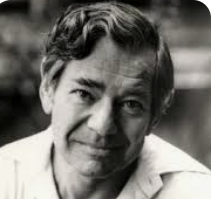
If it does not upset, it is not philosophy.
2 months 1 week ago
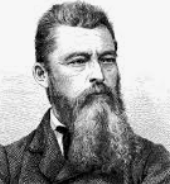
The secret of Hegel's dialectic lies ultimately in this alone, that it negates theology through philosophy in order then to negate philosophy through theology. Both the beginning and the end are constituted by theology; philosophy stands in the middle as the negation of the first positedness, but the negation of the negation is again theology. At first everything is overthrown, but then everything is reinstated in its old place, as in Descartes. The Hegelian philosophy is the last grand attempt to restore a lost and defunct Christianity through philosophy, and, of course, as is characteristic of the modern era, by identifying the negation of Christianity with Christianity itself.
▼
Source
source
Part II, Section 21


3 months 6 days ago
Is anything more certain than that in all those vast times and spaces, if I were allowed to search them, I should nowhere find her face, her voice, her touch? She died. She is dead. Is the word so difficult to learn?

2 months ago
The Spirit of the Lord is on me, because he has anointed me to proclaim good news to the poor. He has sent me to proclaim freedom for the prisoners and recovery of sight for the blind, to set the oppressed free, to proclaim the year of the Lord's favor.
▼
Source
source
Luke 4:18-19 NIV
4 months 1 week ago
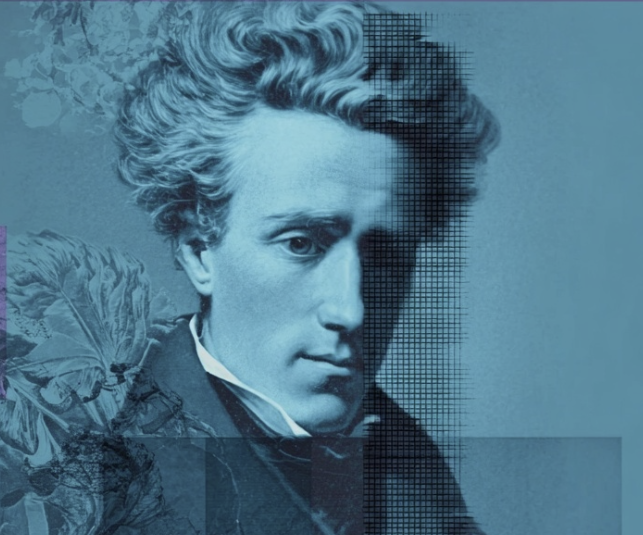
Alas, time comes and time goes, it subtracts little by little; then it deprives a person of a good, the loss of which he indeed feels, and his pain is great. Alas, and he does not discover that long ago it has already taken away from him the most important thing of all-the capacity to make a resolution-and it has made him so familiar with this condition that there is no consternation over it, the last thing that could help gain new power for renewed resolution!
3 months 1 week ago
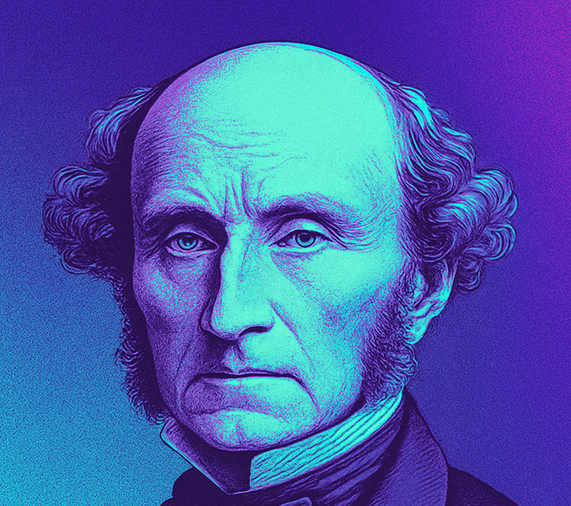
Alike in the highest regions of speculation and in the smaller practical concerns of daily life, her mind was the same perfect instrument, piercing to the very heart and marrow of the matter; always seizing the essential idea or principle. The same exactness and rapidity of operation, pervading as it did her sensitive as well as her mental faculties, would, with her gifts of feeling and imagination, have fitted her to be a consummate artist, as her fiery and tender soul and her vigorous eloquence would certainly have made her a great orator, and her profound knowledge of human nature and discernment and sagacity in practical life, would, in the times when such a carrière was open to women, have made her eminent among the rulers of mankind. Her intellectual gifts did but minister to a moral character at once the noblest and the best balanced which I have ever met with in life.
▼
Source
source
(pp. 186-187)

2 months 3 days ago
Compared to the refined culture of sclerotic forms and frames, which mask everything, the lyrical mode is utterly barbarian in its expression. Its value resides precisely in its savage quality: it is only blood, sincerity, and fire.

1 month 3 weeks ago
We must needs believe in the other life, in the eternal life beyond the grave. ...And we must needs believe in that other life, perhaps, in order that we may deserve it, in order that we may obtain it, for it may be that he neither deserves it nor will obtain it who does not passionately desire it above reason and, if need be, against reason.

1 month 5 days ago
Without an understanding of causality there can be no theory of communication. What passes as information theory today is not communication at all, but merely transportation.
▼
Source
source
(p. 362)
1 month 2 weeks ago
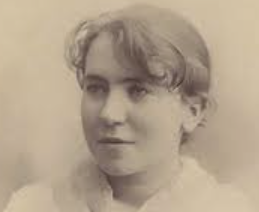
What is patriotism? Is it love of one's birthplace, the place of childhood's recollections and hopes, dreams and aspirations? Is it the place where, in childlike naïveté, we would watch the passing clouds, and wonder why we, too, could not float so swiftly? The place where we would count the milliard glittering stars, terror-stricken lest each one "an eye should be," piercing the very depths of our little souls?
2 months 1 week ago
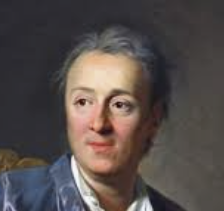
Justice is the first virtue of those who command, and stops the complaints of those who obey.
▼
Source
source
As quoted in The Golden Treasury of Thought : A Gathering of Quotations from the Best Ancient and Modern Authors (1873) by Theodore Taylor, p. 227
1 month 2 weeks ago
My life - I had lived in its heights and its depths, in bitter sorrow and ecstatic joy, in black despair and fervent hope. I had drunk the cup to the last drop. I had lived my life. Would I had the gift to paint the life I had lived!
▼
Source
source
chapter 56

4 months 1 week ago
Every tradition grows ever more venerable — the more remote its origin, the more confused that origin is. The reverence due to it increases from generation to generation. The tradition finally becomes holy and inspires awe.

3 months 3 weeks ago
If you believe what you like in the gospels, and reject what you don't like, it is not the gospel you believe, but yourself.
▼
Source
source
Earliest attribution found in Who Said That?: More than 2,500 Usable Quotes and Illustrations (1995) by George Sweeting. Online sources always attribute the quote to Augustine, but never specify in which of his works it is to be found.
2 months 5 days ago
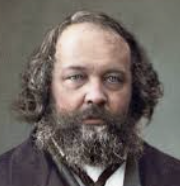
Allow me, Gentlemen, to pose this question in a more serious manner. Do I need to tell you that it is not a question at first of the natural, physiological, ethnographic difference that exists between individuals, but of the social difference, that is produced by the economic organization of society? Give to all the children, from their birth, the same means of maintenance, education, and instruction; give then to all the men thus raised the same social milieu, the same means of earning their living by their own labor, and you will see then that many of these differences, that we believe to be natural differences, will disappear because they are nothing but the effect of an unequal division of the conditions of intellectual and physical development - of the conditions of life.
2 months 3 days ago
Few persons care to study logic, because everybody conceives himself to be proficient enough in the art of reasoning already. But I observe that this satisfaction is limited to one's own ratiocination and does not extend to that of other men. We come to the full possession of our power of drawing inferences the last of all our faculties, for it is not so much a natural gift as a long and difficult art.
▼
Source
source
Illustrations of the Logic of Science First Paper - The Fixation of Belief", in Popular Science Monthly, Vol. 12
1 day ago
One need only open the eyes to see that the conquests of industry which have enriched so many practical men would never have seen the light, if these practical men alone had existed and if they had not been preceded by unselfish devotees who died poor, who never thought of utility, and yet had a guide far other than caprice.As Mach says, these devotees have spared their successors the trouble of thinking.
▼
Source
source
Author's Essay Prefatory to the Translation: "The Choice of Facts," p.4

1 month 3 weeks ago
But if Germany, thanks to Hitler and his successors, were to enslave the European nations and destroy most of the treasures of their past, future historians would certainly pronounce that she had civilized Europe.
▼
Source
source
p. 124
4 months 1 week ago
There are ages in which the rational man and the intuitive man stand side by side, the one in fear of intuition, the other with scorn for abstraction. The latter is just as irrational as the former is inartistic. They both desire to rule over life: the former, by knowing how to meet his principle needs by means of foresight, prudence, and regularity; the latter, by disregarding these needs and, as an "overjoyed hero," counting as real only that life which has been disguised as illusion and beauty.
3 months 6 days ago
Love may forgive all infirmities and love still in spite of them: but Love cannot cease to will their removal.
1 month 3 weeks ago
The recognition of human wretchedness is difficult for whoever is rich and powerful because he is almost invincibly led to believe that he is something. It is equally difficult for the man in miserable circumstances because he is almost invincibly led to believe that the rich and powerful man is something.
▼
Source
source
p. 216
1 month 4 weeks ago
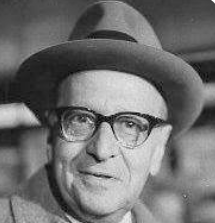
If the subjectivist view hold true, thinking cannot be of any help in determining the desirability of any goal in itself. The acceptability of ideals, the criteria for our actions and beliefs, the leading principles of ethics and politics, all our ultimate decisions are made to depend upon factors other than reason. They are supposed to be matters of choice and predilection, and it has become meaningless to speak of truth in making practical, moral or esthetic decisions.
▼
Source
source
pp. 7-8.
2 weeks 2 days ago
The functional regions of the brain which subserve physical agony, the "pain centres", and the mainly limbic substrates of emotion, appear in phylogenetic terms to be remarkably constant in the vertebrate line. The neural pathways involving serotonin, the periaquaductal grey matter, bradykinin, dynorphin, ATP receptors, the major opioid families, substance P etc all existed long before hominids walked the earth. Not merely is the biochemistry of suffering disturbingly similar where not effectively type-identical across a wide spectrum of vertebrate (and even some invertebrate) species. It is at least possible that members of any species whose members have more pain cells exhibiting greater synaptic density than humans sometimes suffer more atrociously than we do, whatever their notional "intelligence".
▼
Source
source
1.9 The Taste of Depravity

3 months 1 week ago
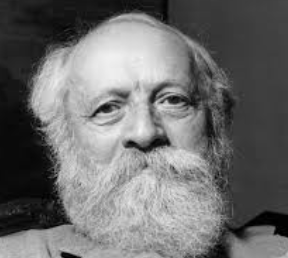
Lincoln's place in the history of the United States and of mankind will, nevertheless, be next to that of Washington!
1 month 4 weeks ago
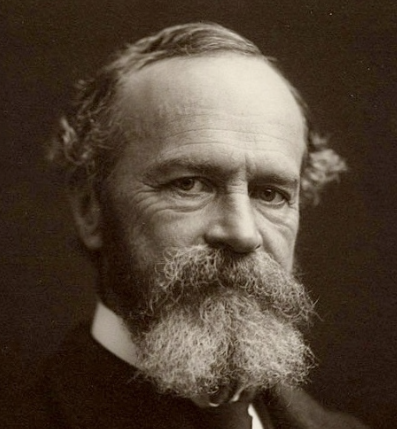
The Thou encounters me by grace - it cannot be found by seeking. But that I speak the basic word to it is a deed of my whole being, is my essential deed.
3 months 1 week ago
Consciousness, then, does not appear to itself chopped up in bits ... A 'river' or a 'stream' are the metaphors by which it is most naturally described. In talking of it hereafter, let us call it the stream of thought, of consciousness, or of subjective life.
▼
Source
source
Ch. 9
3 months 1 week ago
I've got a one-dimensional mind.
▼
Source
source
Said to Rupert Crawshay-Williams; Russell Remembered (1970), p. 31
4 months 1 week ago
The truth is a trap: you can not get it without it getting you; you cannot get the truth by capturing it, only by its capturing you.
3 months 1 week ago
The pursuit of philosophy is founded on the belief that knowledge is good, even if what is known is painful. A man imbued with the philosophic spirit, whether a professional philosopher or not, will wish his beliefs to be as true as he can make them, and will, in equal measure, love to know and hate to be in error. This principle has a wider scope than may be apparent at first sight.
2 months 1 week ago
That the uneducated and the ill-educated should think the hypothesis that all races of beings, man inclusive, may in process of time have been evolved from the simplest monad, a ludicrous one, is not to be wondered at. But for the physiologist, who knows that every individual being is so evolved-who knows, further, that in their earliest condition the germs of all plants and animals whatever are so similar, "that there is no appreciable distinction amongst them, which would enable it to be determined whether a particular molecule is the germ of a Conferva or of an Oak, of a Zoophyte or of a Man";-for him to make a difficulty of the matter is inexcusable.
▼
Source
source
Spencer here references William Benjamin Carpenter, Principles of Comparative Physiology see p. 473

3 months 1 week ago
There as here, passions are the motive of all action, but they are livelier, more ardent, or merely simpler and purer, thereby assuming a totally different character. All the first movements of nature are good and right.
▼
Source
source
First Dialogue; translated by Judith R. Bush, Christopher Kelly, Roger D. Masters
CivilSimian.com created by AxiomaticPanic, CivilSimian, Kalokagathia