

4 months 3 weeks ago
Marxism is a revolutionary worldview that must always struggle for new revelations. Marxism must abhor nothing so much as the possibility that it becomes congealed in its current form. It is at its best when butting heads in self-criticism, and in historical thunder and lightning, it retains its strength.
▼
Source
source
As quoted in Quote Junkie : Political Edition (2008) by Hagopian Institute
5 months 3 weeks ago
The Turks teach women that they have no souls, and are unworthy to enter paradise. The French would persuade them that they have no intellects, and are not made to engage in mental labors, and to tread the paths of art and science.
▼
Source
source
The Theory of Social Organization
6 months 4 weeks ago
The simulacrum is never what hides the truth-it is truth that hides the fact that there is none. The simulacrum is true.
▼
Source
source
- Ecclesiastes "The Precession of Simulacra," p. 1


7 months 1 week ago
Nothing is more impressive than the fact that as mathematics withdrew increasingly into the upper regions of ever greater extremes of abstract thought, it returned back to earth with a corresponding growth of importance for the analysis of concrete fact. ...The paradox is now fully established that the utmost abstractions are the true weapons with which to control our thought of concrete fact.
▼
Source
source
Ch. 2: "Mathematics as an Element in the History of Thought", p. 46
9 months 4 days ago
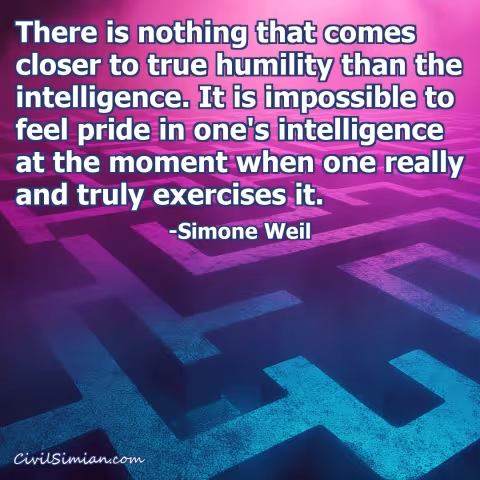
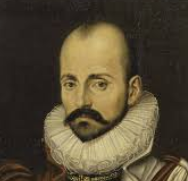
Nothing prints more lively in our minds than something we wish to forget.
▼
Source
source
Book II, Ch. 12
9 months 3 weeks ago
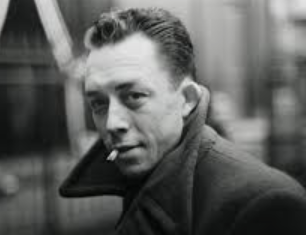
With rebellion, awareness is born.

6 months 3 weeks ago
Art is anything you can get away with.
8 months 3 weeks ago
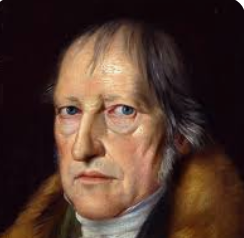
In immediate self-consciousness the simple ego is absolute object, which, however, is for us or in itself absolute mediation, and has as its essential moment substantial and solid independence. The dissolution of that simple unity is the result of the first experience; through this there is posited a pure self-consciousness, and a consciousness which is not purely for itself, but for another, i.e. as an existent consciousness, consciousness in the form and shape of thinghood. Both moments are essential, since, in the first instance, they are unlike and opposed, and their reflexion into unity has not yet come to light, they stand as two opposed forms or modes of consciousness. The one is independent whose essential nature is to be for itself, the other is dependent whose essence is life or existence for another. The former is the Master, or Lord, the latter is the Bondsman.
5 months 2 weeks ago
The scientific enterprise as a whole does from time to time prove useful, open up new territory, display order, and test long-accepted belief. Nevertheless, the individual engaged on a normal research problem is almost never doing any one of these things. Once engaged, his motivation is of a rather different sort. What then challenges him is the conviction that, if only he is skillful enough, he will succeed in solving a puzzle that no one before has solved or solved so well.
▼
Source
source
p. 38.
8 months 1 day ago
Every attempt to refer chemical questions to mathematical doctrines must be considered, now and always, profoundly irrational, as being contrary to the nature of the phenomena. . . . but if the employment of mathematical analysis should ever become so preponderant in chemistry (an aberration which is happily almost impossible) it would occasion vast and rapid retrogradation....

7 months 1 week ago
We can know only one thing about God - that he is what we are not. Our wretchedness alone is an image of this. The more we contemplate it, the more we contemplate him.
▼
Source
source
p. 216
9 months ago
But bounty and hospitality very seldom lead to extravagance; though vanity almost always does.
▼
Source
source
Chapter III, Part V, p. 987.
4 months 3 weeks ago
'Induction' is a term applied to describe the 'process' of a true Colligation of Facts by means of an exact and appropriate Conception. 'An Induction' is also employed to denote the 'proposition' which results from this process. An Induction is not the mere sum of the Facts which are colligated. The Facts are not only brought together, but seen in a new point of view. 'The Consilience of Inductions' takes place when an Induction, obtained from one class of facts, coincides with an Induction, obtained from another different class.
4 months 2 weeks ago
The really good music, whether of the East or of the West, cannot be analyzed.
▼
Source
source
Interview with Rabindranath Tagore (14 April 1930), published in The Religion of Man (1930) by Rabindranath Tagore, p. 222, and in The Tagore Reader (1971) edited by Amiya Chakravarty

7 months 3 weeks ago
When I happen to be busy, I never give a moment's thought to the "meaning" of anything, particularly of whatever it is I am doing. A proof that the secret of everything is in action and not abstention, that fatal cause of consciousness.

8 months 3 weeks ago
Sometimes a scream is better than a thesis.
▼
Source
source
1836

7 months 2 weeks ago
Operational analysis ... cannot raise the decisive question whether the consent itself was not the work of manipulation-a question for which the actual state of affairs provides ample justification. The analysis cannot raise it because it would transcend its terms toward transitive meaning-toward a concept of democracy which would reveal the democratic election as a rather limited democratic process. Precisely such a non-operational concept is the one rejected by the authors as "unrealistic" because it defines democracy on too articulate a level as the clear-cut control of representation by the electorate-popular control as popular sovereignty.
▼
Source
source
p. 116

8 months 3 weeks ago
Ah! Do not judge the gods, young man, they have painful secrets.
▼
Source
source
Jupiter, Act 1

8 months 3 weeks ago
The political, ethical, social, philosophical problem of our day is not to try to liberate the individual from the state and from the state's institutions but to liberate us both from the state and from the type of individualization which is linked to the state. We have to promote new forms of subjectivity through the refusal of this kind of individuality which has been imposed on us for several centuries.
▼
Source
source
p. 785
8 months 3 weeks ago
The Being of the universe, at first hidden and concealed, has no power which can offer resistance to the search for knowledge ; it has to lay itself open before the seeker - to set before his eyes and give for his enjoyment, its riches and its depths.
▼
Source
source
p xii Ibid
6 months 2 weeks ago
It's hard for writers to get on with their work if they are convinced that they owe a concrete debt to experience and cannot allow themselves the privilege of ranging freely through social classes and professional specialties. A certain pride in their own experience, perhaps a sense of the property rights of others in their experience, holds them back.
▼
Source
source
Facts That Put Fancy to Flight (1962), p. 68
5 months 2 weeks ago
These three classes of problems-determination of significant fact, matching of facts with theory, and articulation of theory-exhaust, I think, the literature of normal science, both empirical and theoretical. They do not, of course, quite exhaust the entire literature of science. There are also extraordinary problems, and it may well be their resolution that makes the scientific enterprise as a whole so particularly worthwhile. But extraordinary problems are not to be had for the asking. They emerge only on special occasions prepared by the advance of normal research.
▼
Source
source
p. 34

5 months 1 week ago
Would you know what makes men greedy for the future? It is because no one has yet found himself.
9 months 3 weeks ago
For anyone who is alone, without God and without a master, the weight of days is dreadful. Hence one must choose a master, God being out of style.
5 months 3 weeks ago
This miracle of social concord would result not from direct conciliation, which would be impossible, but from the development of new interests, and especially from the amazement with which the minds of men would be filled on being convinced of the radical falseness of the civilized social order by comparison with the associative or combined, and of the errors in which the social world has been so long plunged - misled by speculative philosophy, which upholds and extols this order with all its defects to the entire neglect of the study of association.
▼
Source
source
The Theory of Social Organization. Harmonian Man: Selected Writings of Charles Fourier, p. 5.
5 months 1 week ago
The men of the future will yet fight their way to many a liberty that we do not even miss.
▼
Source
source
Cambridge 1995, p. 114
7 months 6 days ago
Food probably has a very great influence on the condition of men. Wine exercises a more visible influence, food does it more slowly but perhaps just as surely. Who knows if a well-prepared soup was not responsible for the pneumatic pump or a poor one for a war?
▼
Source
source
A 14

5 months 6 days ago
Above all, the ominous clouds of those phenomena that we are with varying success seeking to explain by means of the quantum of action, are throwing their shadows over the sphere of physical knowledge, threatening no one knows what new revolution.
▼
Source
source
Ch. 3 "Relativity of Space and Time"
7 months 3 weeks ago
The more one is obsessed with God, the less one is innocent. Nobody bothered about him in paradise. The fall brought about this divine torture. It's not possible to be conscious of divinity without guilt. Thus God is rarely to be found in an innocent soul.
9 months 2 weeks ago
Self-sufficiency is the greatest of all wealth.
5 months 1 week ago
When you tell a girl how beautiful she is, she will say, "Now isn't that just like a man! All you men think about is bodies. OK, so I'm beautiful, but I got my body from my parents and it was just luck. I prefer to be admired for myself, not my chassis." Poor little chauffeur! All she is saying is that she has lost touch with her own astonishing wisdom and ingenuity, and wants to be admired for some trivial tricks that she can perform with her conscious attention. And we are all in the same situation, having dissociated ourselves from our bodies and from the whole network of forces in which bodies can come to birth and live.
▼
Source
source
p. 112

8 months 3 days ago
We attest that He is the Willer of all things that are, the ruler of all originated phenomena; there does not come into the visible or invisible world anything meager or plenteous, small or great, good or evil, or any advantage or disadvantage, belief or unbelief, knowledge or ignorance, success or failure, increase or decrease, obedience or disobedience, except by His will. What He wills is, and what He does not, will not; there is not a glance of the eye, nor a stray thought of the heart that is not subject to His will. He is the Creator, the Restorer, the Doer of whatsoever He wills. There is none that rescinds His command, none that supplements His decrees, none that dissuades a servant from disobeying Him, except by His help and mercy, and none has power to obey Him except by His will.
▼
Source
source
Ihyaa 'Ulum al-Deen. Beirut: Dar Ibn Hazm (2005), p. 107.
7 months 1 week ago
This provides us with our first major clue to the solutions of the problem. Even if the left cannot see the world as full of potentiality, it can hold on to the moments of insight and refuse to let go of them. If I know that present difficulties will end in triumph, I am un-discourageable; I merely have to know it intellectually. And if I can 'know' that reality actually has a third dimension, I shall never fall into the mistake of complaining that there is nothing new under the sun and that life is futile.
▼
Source
source
p. 13

5 months 2 weeks ago
Happy the people whose annals are blank in history books!
▼
Source
source
Life of Frederick the Great, Bk. XVI, ch. 1.
9 months 2 weeks ago
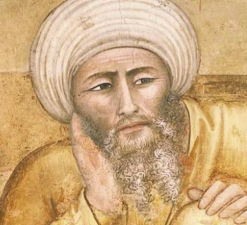
This is one of the most intricate problems of religion. For if you look into the traditional arguments (Hadith) about this problem you will find them contradictory; such also being the case with arguments of reason. The contradiction in the arguments of the first kind is found in the Qur'an and the Hadith.
7 months 1 week ago
Epochs do not rise from the dead.... [W]hereas you can make a replica of an ancient statue, there is no possible replica of an ancient state of mind. There can be no nearer approximation than that which a masquerade bears to real life. There may be understanding of the past, but there is a difference between the modern and the ancient reactions to the same stimuli.
▼
Source
source
Ch. 9: "Science and Philosophy", p. 194

7 months 2 weeks ago
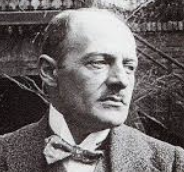
In the ancient notion of love, on the other hand, there is an element of anxiety. The noble fears the descent to the less noble, is afraid of being infected and pulled down. The "sage" of antiquity does not have the same firmness, the same inner certainty of himself and his own value, as the genius and hero of Christian love.
▼
Source
source
L. Coser, trans. (1961), p. 92
5 months 4 days ago
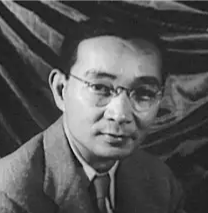
What is patriotism but love of the good things we ate in our childhood? I have said elsewhere that the loyalty to Uncle Sam is the loyalty to doughnuts and ham and sweet potatoes and the loyalty to the German Vaterland is the loyalty to Pfannkuchen and Christmas Stollen. As for international understanding, I feel that macaroni has done more for our appreciation of Italy than Mussolini... in food, as in death, we feel the essential brotherhood of mankind.
▼
Source
source
Ch. IV : On Having A Stomach, p. 46

5 months 3 weeks ago
The legacy of modernity is a legacy of fratricidal wars, devastating "development," cruel "civilization," and previously unimagined violence. Erich Auerbach once wrote that tragedy is the only genre that can properly claim realism in Western literature, and perhaps this is true precisely because of the tragedy Western modernity has imposed on the world.
▼
Source
source
46

8 months 3 weeks ago
Everybody knows that the same sum of money is of much greater value to a poor man that to a rich one. Give £10 a year to the man who has but £10 a year, you double his income, and you nearly double his enjoyments. Add £10 more, you do not add to his enjoyments so much as you did by the first £10. The third £10 is less valuable than the second, and the fourth less valuable than the third. To the possessor of £1,000 a year the addition of £10 would be scarcely perceptible; to the possessor of £10,000 it would not be worth slooping for.The richer a man is the less he is benefited by any further addition to his income. The man of £4,000 a year has four times the income of the man who has but £1,000; but does anybody suppose that he has four times the happiness?
▼
Source
source
John Stuart Mill, Primogeniture, in The Collected Works of John Stuart Mill, Toronto, 1988, vol. 26, p. 336
6 months 3 weeks ago
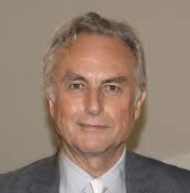
Natural selection is like artificial selection, but without the human chooser. Instead of a human deciding which offspring shall die in which shall reproduce, nature 'decides'. The quotation marks are vital because nature doesn't consciously decide. This might seem too obvious to emphasize, but you'd be surprised by the number of people who think natural selection implies some kind of personal choice. They couldn't be more wrong. It just is the case that some offspring are more likely to die while others have what it takes to survive and reproduce. Therefore, as the generations go by, the average, typical creature in the population becomes ever better at the arts of surviving and reproducing. Ever better, I should specify, when, when measured against some absolute standard.
▼
Source
source
Chapter 1, "Facing Mount Rushmore" (p. 34)

8 months 3 weeks ago
... the attempt to make heaven on earth invariably produces hell. It leads to intolerance. It leads to religious wars, and to the saving of souls through the inquisition. And it is, I believe, based on a complete misunderstanding of our moral duties. It is our duty to help those who need help; but it cannot be our duty to make others happy, since this does not depend on us, and since it would only too often mean intruding on the privacy of those towards whom we have such amiable intentions.
▼
Source
source
Vol. 2, Ch. 24 "Oracular Philosophy and the Revolt against Reason"
9 months 4 days ago
Of all human and ancient opinions concerning religion, that seems to me the most likely and most excusable, that acknowledged God as an incomprehensible power, the original and preserver of all things, all goodness, all perfection, receiving and taking in good part the honour and reverence that man paid him, under what method, name, or ceremonies soever
▼
Source
source
Ch. 12
7 months 1 week ago
I believe that none can "save" his fellow man by making a choice for him. To help him, he can indicate the possible alternatives, with sincerity and love, without being sentimental and without illusion. The knowledge and awareness of the freeing alternatives can reawaken in an individual all his hidden energies and put him on the path to choosing respect for "life" instead of for "death."
4 months 3 weeks ago
It should be remembered, as an axiom of eternal truth in politics, that whatever power in any government is independent, is absolute also; in theory only, at first, while the spirit of the people is up, but in practice, as fast as that relaxes. Independence can be trusted nowhere but with the people in mass. They are inherently independent of all but moral law.
▼
Source
source
Letter to Judge Spencer Roane
7 months 1 week ago
The full expression of personality depends upon its being inflated by social prestige; it is a social privilege.
▼
Source
source
p. 64
CivilSimian.com created by AxiomaticPanic, CivilSimian, Kalokagathia