
3 months 4 weeks ago
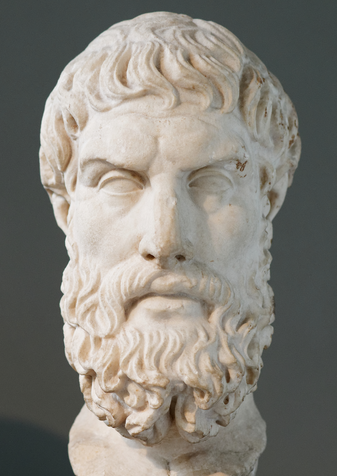
It is impossible for a man who secretly violates the terms of the agreement not to harm or be harmed to feel confident that he will remain undiscovered, even if he has already escaped ten thousand times; for until his death he is never sure that he will not be detected.
3 months 4 weeks ago
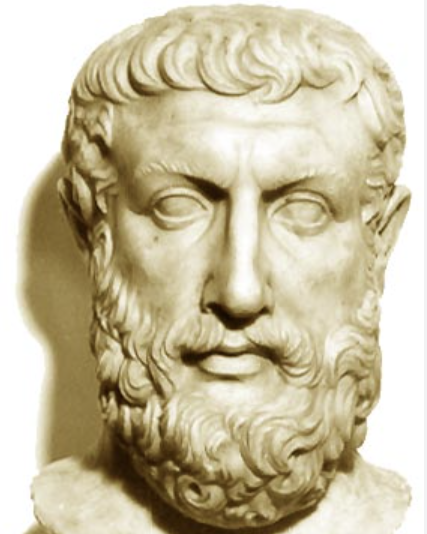
Followers of Parmenides worked themselves into logical knots and mystic raptures over the rather blatant contradiction between point five and everyday experience.
▼
Source
Frank Wilczek, "[https://www.quantamagazine.org/20150910-einstein-insanity/ Einstein’s Parable of Quantum Insanity]" (September 10, 2015)
3 months 4 weeks ago
Terrible times in which priests no longer merit the praise of poets and in which poets have not yet begun to be priests.
▼
Source
On El Poema de Niágara of Pérez Bonalde (1883)

3 months 4 weeks ago
How sad that I returned, how sad,Instead of dying at Baghdad!I say, whene'er things fall amiss,"My coming home hath brought me this."
▼
Source
1. 303, 5

3 months 4 weeks ago
On the other hand, the cheapest form of pride is national pride; for the man affected therewith betrays a want of individual qualities of which he might be proud, since he would not otherwise resort to that which he shares with so many millions. The man who possesses outstanding personal qualities will rather see most clearly the faults of his own nation, for he has them constantly before his eyes. But every miserable fool, who has nothing in the world whereof he could be proud, resorts finally to being proud of the very nation to which he belongs. In this he finds compensation and is now ready and thankful to defend, … all the faults and follies peculiar to it. (From 'Parerga and Paralipomena', Vol. 1, Aphorisms on the Wisdom of Life, 'What A Man Represents', pp. 360)

3 months 4 weeks ago
Each of us believes, quite unconsciously of course, that we alone pursue the truth, which the rest are incapable of seeking out and unworthy of attaining. This madness is so deep-rooted and so useful that it is impossible to realize what would become of each of us if it were someday to disappear.
3 months 4 weeks ago
There can be no racial animosity, because there are no races. The theorist and feeble thinkers string together and warm over the bookshelf races which the well-disposed observer and the fair-minded traveller vainly seek in the justice of Nature where man's universal identity springs forth from triumphant love and the turbulent hunger for life. The soul, equal and eternal, emanates from bodies of different shapes and colors. Whoever foments and spreads antagonism and hate between the races, sins against humanity.
3 months 4 weeks ago
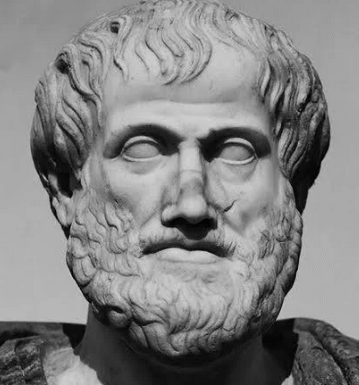
All those... who discourse concerning nature, always subject a certain other nature of... elements, to the infinite... But no one of those who make the elements to be finite introduces infinity. Such, however, as make infinite elements, as Anaxagoras and Democritus, say that the infinite is continuous by contact. ...Rationally, too, do all philosophers consider the infinite as a principle; for it cannot be in vain, nor can any other power be present with it than that of a principle: for all things are either the principle, or from the principle; but of the infinite there is no principle, since otherwise it would have an end. ...it is also unbegotten and uncorruptible, as being a certain principle: for... end is the corruption of everything. ...It likewise appears to comprehend and govern all things, as those assert who do not introduce other causes beside the infinite... It would seem also that this is divine: for it is immortal and indestructible, as Anaximander says, and most of the physiologists.
▼
Source
Book III, Ch. IV, pp. 152-155.

3 months 4 weeks ago
Justice is a virtue, but not one that makes people lovable.
3 months 4 weeks ago
Hatred is a thing of the heart, contempt a thing of the head. Hatred and contempt are decidedly antagonistic towards one another and mutually exclusive. A great deal of hatred, indeed, has no other source than a compelled respect for the superior qualities of some other person; conversely, if you were to consider hating every miserable wretch you met you would have your work cut out: it is much easier to despise them one and all. True, genuine contempt, which is the obverse of true, genuine pride, stays hidden away in secret and lets no one suspect its existence: for if you let a person you despise notice the fact, you thereby reveal a certain respect for him, inasmuch as you want him to know how low you rate him — which betrays not contempt but hatred, which excludes contempt and only affects it. Genuine contempt, on the other hand, is the unsullied conviction of the worthlessness of another.
▼
Source
Vol. 2, Ch. 24, § 324 | Variant translation: Hatred is an affair of the heart; contempt that of the head. | As translated by Eric F. J. Payne
3 months 4 weeks ago
Existing is plagiarism.
3 months 4 weeks ago
The qualities most useful to ourselves are, first of all, superior reason and understanding, by which we are capable of discerning the remote consequences of all our actions, and of foreseeing the advantage or detriment which is likely to result from them: and secondly, self-command, by which we are enabled to abstain from present pleasure or to endure present pain, in order to obtain a greater pleasure or to avoid a greater pain in some future time. In the union of those two qualities consists the virtue of prudence, of all the virtues that which is most useful to the individual
▼
Source
Chap. II.

3 months 4 weeks ago
It would be an endless task to trace the variety of meannesses, cares, and sorrows, into which women are plunged by the prevailing opinion that they were created rather to feel than reason, and that all the power they obtain, must be obtained by their charms and weakness.
▼
Source
Ch. 4
3 months 4 weeks ago
We must now ask how changes of this sort can come about, considering first discoveries, or novelties of fact, and then inventions, or novelties of theory. That distinction between discovery and invention or between fact and theory will, however, immediately prove to be exceedingly artificial.
▼
Source
p. 52 (2012 ed.)

3 months 4 weeks ago
Their minds befogged by fashionable nonsense about globalisation, western leaders believe liberal democracy is spreading unstoppably. The reality is continuing political diversity. Republics, empires, liberal and illiberal democracies, and a wide variety of authoritarian regimes will be with us for the foreseeable future. Globalisation is nothing more than the industrialisation of the planet, and increasing resource nationalism is an integral part of the process. (So is accelerating climate change, but that's another story.) As industrialisation spreads, countries that control natural resources use these resources to advance their strategic objectives.
▼
Source
[http://www.guardian.co.uk/commentisfree/2008/sep/09/russia "Folly of the progressive fairytale,"] The Observer (2008-09-08)
3 months 4 weeks ago
The vocation of every man and woman is to serve other people.
▼
Source
What Is To Be Done? (1886) Chap. XL, as translated in The Novels and Other Works of Lyof N. Tolstoï (1902) edited by Nathan Haskell Dole, p. 281
3 months 4 weeks ago
Talent is a gift that brings with it an obligation to serve the world, and not ourselves, for it is not of our making. To use for our exclusive benefit what is not ours is theft. Culture, which makes talent shine, is not completely ours either, nor can we place it solely at our disposal. Rather, it belongs mainly to our country, which gave it to us, and to humanity, from which we receive it as a birthright. A selfish man is a thief.
3 months 4 weeks ago
As for him who neither possesses nor can acquire them, let him take to heart the words of Hesiod: ‘ He is the best of all who thinks for himself in all things. He, too, is good who takes advice from a wiser (person). But he who neither thinks for himself, nor lays to heart another's wisdom, this is a useless man.’
▼
Source
(Bk. 1, Chapter II)
3 months 4 weeks ago
Under which head do you class those who are at sea?
▼
Source
Having been asked whether the dead or the living were more numerous., as quoted in The Lives and Opinions of Eminent Philosophers by Diogenes Laërtius, as translated by C. D. Yonge, (1853), "Anacharsis" sect. 5, p. 48
3 months 4 weeks ago
There are 80,000 prostitutes in London alone and what are they, if not bloody sacrifices on the altar of monogamy?
▼
Source
"Of Women"
3 months 4 weeks ago
Woe to the book you can read without constantly wondering about the author!
3 months 4 weeks ago
Marriage is encouraged in China, not by the profitableness of children, but by the liberty of destroying them.
▼
Source
Chapter VIII, p. 87.
3 months 4 weeks ago
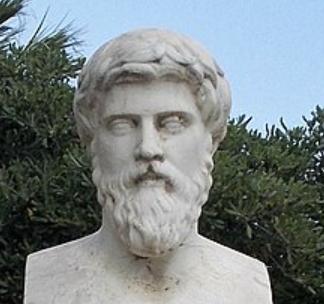
Themistocles being asked whether he would rather be Achilles or Homer, said, "Which would you rather be,—a conqueror in the Olympic games, or the crier that proclaims who are conquerors?"
▼
Source
48 Themistocles
3 months 4 weeks ago
The belief in unity that has fuelled so many utopian dreams is an effort to reconcile the irreconcilable that ends in repression. Berlin suggests we renounce this venerable faith, and learn how to live with intractable conflict.
▼
Source
'Isaiah Berlin: The Value of Decency' (p.106-7)

3 months 4 weeks ago
This book raises issues that might not be apparent from the table of contents. It sketches some of the difficulties faced by our civilization — a civilization which might be perhaps described as aiming at humanness and reasonableness, at equality and freedom; a civilization which is still in its infancy, as it were, and which continues to grow in spite of the fact that it has been so often betrayed by so many of the intellectual leaders of mankind. It attempts to show that this civilization has not yet fully recovered from the shock of its birth — the transition from the tribal or "enclosed society," with its submission to magical forces, to the 'open society' which sets free the critical powers of man. It attempts to show that the shock of this transition is one of the factors that have made possible the rise of those reactionary movements which have tried, and still try, to overthrow civilization and to return to tribalism.
▼
Source
Introduction; part of this has sometimes been paraphrased : Our civilization has not yet fully recovered from the shock of its birth — the transition from the tribal or 'closed society', with its submission to magical forces, to the 'open society' which s
3 months 4 weeks ago
Just then another visitor entered the drawing room: Prince Andrew Bolkónski, the little princess' husband. He was a very handsome young man, of medium height, with firm, clearcut features. Everything about him, from his weary, bored expression to his quiet, measured step, offered a most striking contrast to his quiet, little wife. It was evident that he not only knew everyone in the drawing room, but had found them to be so tiresome that it wearied him to look at or listen to them. And among all these faces that he found so tedious, none seemed to bore him so much as that of his pretty wife. He turned away from her with a grimace that distorted his handsome face, kissed Anna Pávlovna's hand, and screwing up his eyes scanned the whole company.
▼
Source
Bk. I, Ch. IV

3 months 4 weeks ago
But yet, since He knew that it would be good, He created both angels and men free to do that which is righteous, and He appointed periods of time during which He knew it would be good for them to have the exercise of free-will; and because He likewise knew it would be good, He made general and particular judgments; each one’s freedom of will, however, being guarded.
▼
Source
Dialogue with Trypho, chapter CII. In ANF1, that is, Roberts A, Donaldson J and Coxe AC (1885) Ante-Nicene Fathers, Vol 1. [Cf chapter LXXXVIII.]
3 months 4 weeks ago
After these matters we ought perhaps next to discuss pleasure. For it is thought to be most intimately connected with our human nature, which is the reason why in educating the young we steer them by the rudders of pleasure and pain; it is thought, too, that to enjoy the things we ought and to hate the things we ought has the greatest bearing on virtue of character. For these things extend right through life, with a weight and power of their own in respect both to virtue and to the happy life, since men choose what is pleasant and avoid what is painful; and such things, it will be thought, we should least of all omit to discuss, especially since they admit of much dispute.
▼
Source
Book X, 1172a.17

3 months 4 weeks ago
Poetry teaches the enormous force of a few words, and, in proportion to the inspiration, checks loquacity.
▼
Source
Parnassus (1874) Preface

3 months 4 weeks ago
The vicious circle linking poverty, police, courts and prison is an integral element of ghetto existence.
3 months 4 weeks ago
You are not an evil human; you are not without intellect and education; you have everything that could make you a credit to human society. Moreover, I am acquainted with your heart and know that few are better, but you are nevertheless irritating and unbearable, and I consider it most difficult to live with you.All of your good qualities become obscured by your super-cleverness and are made useless to the world merely because of your rage at wanting to know everything better than others; of wanting to improve and master what you cannot command. With this you embitter the people around you, since no one wants to be improved or enlightened in such a forceful way, least of all by such an insignificant individual as you still are; no one can tolerate being reproved by you, who also still show so many weaknesses yourself, least of all in your adverse manner, which in oracular tones, proclaims this is so and so, without ever supposing an objection.If you were less like you, you would only be ridiculous, but thus as you are, you are highly annoying.
▼
Source
Letter from Schopenhauer's mother, Johanna Schopenhauer, to her son. November 6, 1807.
3 months 4 weeks ago
The more one has suffered, the less one demands. To protest is a sign one has traversed no hell.
3 months 4 weeks ago
Avarice and injustice are always shortsighted, and they did not foresee how much this regulation must obstruct improvement, and thereby hurt in the long-run the real interest of the landlord.
▼
Source
Chapter II, p. 426-427.
3 months 4 weeks ago
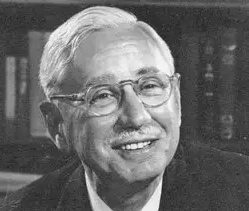
I felt more keenly than before the need of a philosophy that would do justice to the infinite vitality of nature. In the inexhaustible activity of the atom, in the endless resourcefulness of plants, in the teeming fertility of animals, in the hunger and movement of infants, in the laughter and play of children, in the love and devotion of youth, in the restless ambition of fathers and the lifelong sacrifice of mothers, in the undiscourageable researches of scientists and the sufferings of genius, in the crucifixion of prophets and the martyrdom of saints — in all things I saw the passion of life for growth and greatness, the drama of everlasting creation. I came to think of myself, not as a dance and chaos of molecules, but as a brief and minute portion of that majestic process... I became almost reconciled to mortality, knowing that my spirit would survive me enshrined in a fairer mold... and that my little worth would somehow be preserved in the heritage of men. In a measure the Great Sadness was lifted from me, and, where I had seen omnipresent death, I saw now everywhere the pageant and triumph of life.
▼
Source
Transition (1927)
3 months 4 weeks ago
Agesilaus was very fond of his children; and it is reported that once toying with them he got astride upon a reed as upon a horse, and rode about the room; and being seen by one of his friends, he desired him not to speak of it till he had children of his own.
▼
Source
Of Agesilaus the Great
3 months 4 weeks ago
Echoing the Christian faith in free will, humanists hold that human beings are – or may someday become – free to choose their lives. They forget that the self that does the choosing has not itself been chosen.
▼
Source
Beyond the Last Thought: Freud's cigars and the long way round to Nirvana (p. 86)
3 months 4 weeks ago
Besides, we should never attempt to balance anybody's misery against somebody else's happiness.
▼
Source
pp. 486-487
3 months 4 weeks ago
All his life Alexey Alexandrovitch had lived and worked in official spheres, having to do with the reflection of life. And every time he had stumbled against life itself he had shrunk away from it. Now he experienced a feeling akin to that of a man who, wile calmly crossing a precipice by a bridge, should suddenly discover that the bridge is broken, and that there is a chasm below. That chasm was life itself, the bridge that artificial life in which Alexey Alexandrovitch had lived.
▼
Source
Part II, Chapter 8

3 months 4 weeks ago
Nothing ought to be said or done which could create the impression that unbiased reconsideration of the most elementary premises of philosophy is a merely academic or historical affair.
▼
Source
p. 31
3 months 4 weeks ago
Suffering becomes beautiful when anyone bears great calamities with cheerfulness, not through insensibility but through greatness of mind.
▼
Source
Widely attributed since the mid to late 19th century, this apparently derives from a gloss or commentary on the following passage from Aristotle's Nicomachean Ethics (c. 325 BC), Book 1, Ch. XI (Bekker No. 1100b.13–14): | ὅμως δὲ καὶ ἐν τούτοις διαλάμπει
3 months 4 weeks ago
I owed a magnificent day to the Bhagavad Gita. It was the first of books; it was as if an empire spoke to us, nothing small or unworthy, but large, serene, consistent, the voice of an old intelligence which in another age and climate had pondered and thus disposed of the same questions which exercise us.
▼
Source
October 1, 1848
3 months 4 weeks ago
Paradoxically, demands for parity with men's prisons, instead of creating greater educational, vocational, and health opportunities for women prisoners, often have led to more repressive conditions for women. This is not only a consequence of deploying liberal - that is, formalistic - notions of equality, but of, more dangerous, allowing male prisons to function as the punishment norm.
▼
Source
Chapter Four
3 months 4 weeks ago
If you don't want to explode with rage, leave your memory alone, abstain from burrowing there.
3 months 4 weeks ago
In public, as well as in private expences, great wealth may, perhaps, frequently be admitted as an apology for great folly.
▼
Source
Chapter V, p. 563.
3 months 4 weeks ago
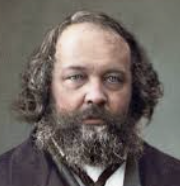
As we are convinced that the real attainment of liberty, of justice, and of peace in the world will be impossible so long as the immense majority of the populations are dispossessed of property, deprived of education and condemned to political and social nonbeing and a de facto if not a de jure slavery, through their state of misery as well as their need to labor without rest or leisure, in producing all the wealth in which the world is glorying today, and receiving in return but a small portion hardly sufficient for their daily bread; As we are convinced that for all these populations, hitherto so terribly maltreated through the centuries, the question of bread is the question of intellectual emancipation, of liberty, and of humanity; As we are convinced that liberty without socialism is privilege, injustice; and that socialism without liberty is slavery and brutality; Now therefore, the League highly proclaims the need for a radical social and economic reform, whose aim shall be the deliverance of the people's labor from the yoke of capital and property, upon a foundation of the strictest justice — not juridical, not theological, not metaphysical, but simply human justice, of positive science and the most absolute liberty.
▼
Source
Variant translation: We are convinced that freedom without Socialism is privilege and injustice, and that Socialism without freedom is slavery and brutality. | As quoted in The Political Philosophy of Bakunin: Scientific Anarchism (1953) edited by Grigori
3 months 4 weeks ago
The news of this barbaric orgy of military sadism was kept from the world for half a year. A belated commission of inquiry was appointed by the Government. A committee appointed by the Indian National Congress made a more through investigation and reported 1,200 killed, and 3,600 wounded. Gen. Dyer was censured by the House of Commons, exonerated by the House of Lords, and was retired on a pension. Thinking this was insufficient the militarists of the Empire raised a fund of $150,000 for him and presented him with a jeweled sword of honor. (source: The Case for India - By Will Durant Simon and Schuster, New York. 1930 p. This book was banned by the British Government. Durant held the view that no part of the world suffered so much poverty andoppression as India did and that this was largely due to British imperialism).

3 months 4 weeks ago
Charity, by which God and neighbor are loved, is the most perfect friendship.
▼
Source
[http://dhspriory.org/thomas/QDdeVirtutibus2.htm#4 Quaestiones disputatae: De caritate] (Disputed Questions: On Charity, c. 1270)

3 months 4 weeks ago
I think that when friendship and perception of kinship ruled everything, no one killed any creature, because people thought the other animals were related to them.
▼
Source
2, 22, 1
3 months 4 weeks ago
Ignorance is not a simple lack of knowledge but an active aversion to knowledge, the refusal to know, issuing from cowardice, pride or laziness of mind.
▼
Source
Principle attributed to Popper by Ryszard Kapiscinski in New York Times obituary, 1995.
3 months 4 weeks ago
Science may fall back on its stupid excuse that science works for science, and that when it has been developed by the scientists it will become accessible to the people also; but art, if it be art, should be accessible to all, and particularly to those for whom it is produced. And the position of our art strikingly arraigns the producers of art for not wishing, not knowing how, and being unable, to serve the people.
CivilSimian.com created by AxiomaticPanic, CivilSimian, Kalokagathia