


9 months 2 weeks ago
At least two thirds of our miseries spring from human stupidity, human malice, and those great motivators and justifiers of malice and stupidity, idealism, dogmatism and proselytizing zeal on behalf of religious or political idols.
▼
Source
source
Tomorrow and Tomorrow and Tomorrow, 1952

9 months 2 weeks ago
His imperial muse tosses the creation like a bauble from hand to hand to embody any capricious thought that is uppermost in her mind. The remotest spaces of nature are visited, and the farthest sundered things are brought together by a subtle spiritual connection.
▼
Source
source
p. 237
9 months 3 weeks ago
Now as we call every thing custom, which proceeds from a past repetition, without any new reasoning or conclusion, we may establish it as a certain truth, that all the belief, which follows upon any present impression, is deriv'd solely from that origin.
▼
Source
source
Part 3, Section 8

8 months 1 week ago
Who does not believe in Fate proves that he has not lived.



8 months ago
The evolutionary urge drives man to seek for intenser forms of fulfillment, since his basic urge is for more life, more consciousness, and this contentment has an air of stagnation that the healthy mind rejects. (This recognition lies at the centre of my own 'outsider theory': that there are human beings to whom comfort means nothing, but whose happiness consists in following an obscure inner-drive, an 'appetite for reality'.)
▼
Source
source
p. 32

8 months 3 days ago
If people were told: what makes carnal desire imperious in you is not its pure carnal element. It is the fact that you put into it the essential part of yourself-the need for Unity, the need for God - they wouldn't believe it. To them it seems obvious that the quality of imperious need belongs to the carnal desire as such. In the same way it seems obvious to the miser that the quality of desirability belongs to gold as such, and not to its exchange value.
6 months 3 weeks ago
The biology of suffering in intelligent agents is a deep underlying source of existential risk - and one that can potentially be overcome.
▼
Source
source
"Unsorted Postings", pre-2014

8 months 2 days ago
With the sense of sight, the idea communicates the emotion, whereas, with sound, the emotion communicates the idea, which is more direct and therefore more powerful.
▼
Source
source
Ch. 29, June 10, 1943.

9 months 2 weeks ago
Obscenity is whatever happens to shock some elderly and ignorant magistrate.
▼
Source
source
Quoted in Look (New York, 23 February 1954). Cf. Russell (1928), Sceptical Essays
5 months 2 weeks ago
The fundamental terms of a system of Nomenclature may "be conveniently borrowed from casual or arbitrary circumstances.

9 months 1 week ago
A confession has to be part of your new life.
▼
Source
source
p. 18e

8 months 1 week ago
Foxes have their dens and birds have their nests, but human beings have no place to lay down and rest.

5 months 2 weeks ago
There is no act, however virtuous, for which ingenuity may not find some bad motive.
▼
Source
source
Letter to Edward Dowse
9 months 2 weeks ago
So our self-feeling in this world depends entirely on what we back ourselves to be and do.
▼
Source
source
Ch. 10
10 months 2 days ago
Why, then, do we wonder any longer that, although in material things we are thoroughly experienced, nevertheless in our actions we are dejected, unseemly, worthless, cowardly, unwilling to stand the strain, utter failures one and all? .
▼
Source
source
Book II, ch. 16, 18


1 year 1 month ago
The wreck of the Titanic functions as a sublime object: a positive, material object elevated to the status of the impossible Thing. And perhaps all the effort to articulate the metaphysical meaning of the Titanic is nothing but an attempt to escape this terrifying impact of the Thing, an attempt to domesticate the Thing by reducing it to its symbolic status, by providing it with a meaning. We usually say that the fascinating presence of a Thing obscures its meaning; here, the opposite is true: the meaning obscures the terrifying impact of its presence.
6 months 1 week ago
If we study the history of science we see happen two inverse phenomena... Sometimes simplicity hides under complex appearances; sometimes it is the simplicity which is apparent, and which disguises extremely complicated realities....No doubt, if our means of investigation should become more and more penetrating, we should discover the simple under the complex, then the complex under the simple, then again the simple under the complex, and so on, without our being able to foresee what will be the last term. We must stop somewhere, and that science may be possible, we must stop when we have found simplicity. This is the only ground on which we can rear the edifice of our generalizations.

8 months 1 week ago
Even a minor event in the life of a child is an event of that child's world and thus a world event.
▼
Source
source
The Phoenix, a Linguistic Phenomenon, ch. 1

8 months ago
The principle of brotherhood expounded by the agitator of Nazareth preserved the germ of life, of truth and justice, so long as it was the beacon light of the few. The moment the majority seized upon it, that great principle became a shibboleth and harbinger of blood and fire, spreading suffering and disaster. The attack on the omnipotence of Rome was like a sunrise amid the darkness of the night, only so long as it was made by the colossal figures of a Huss, a Calvin, or a Luther. Yet when the mass joined in the procession against the Catholic monster, it was no less cruel, no less bloodthirsty than its enemy. Woe to the heretics, to the minority, who would not bow to its dicta. After infinite zeal, endurance, and sacrifice, the human mind is at last free from the religious phantom; the minority has gone on in pursuit of new conquests, and the majority is lagging behind, handicapped by truth grown false with age.

7 months 1 week ago
For the first half of geological time our ancestors were bacteria. Most creatures still are bacteria, and each one of our trillions of cells is a colony of bacteria.
6 months 3 days ago
You have the courage to tell the masses what no politician told them: you are inferior and all the improvements in your conditions which you simply take for granted you owe to the effort of men who are better than you. If this be arrogance, as some of your critics observed, it is still the truth that had to said in the age of the Welfare State.
▼
Source
source
Mises' letter to Ayn Rand praising Atlas Shrugged,(23 January 1958), quoted in Mises: The Last Knight of Liberalism (2007).
8 months 1 week ago
The moment we believe we've understood everything grants us the look of a murderer.
8 months 1 week ago
Religion comforts us for the defeat of our will to power. It adds new worlds to ours, and thus brings us hope of new conquests and new victories. We are converted to religion out of fear of suffocating within the narrow confines of this world.

7 months 4 weeks ago
Suffering, sad "female humanity!" What are these feelings which they are taught to consider as disgraceful, to deny to themselves? What form do the Chinese feet assume when denied their proper development? If the young girls of the "higher classes," who never commit a false step, whose justly earned reputations were never sullied even by the stain which the fruit of mere "knowledge of good and evil" leaves behind, were to speak, and say what are their thoughts employed upon, their thoughts, which alone are free, what would they say?

8 months 2 weeks ago
It is vain to expect virtue from women till they are in some degree independent of men; nay, it is vain to expect that strength of natural affection which would make them good wives and mothers. Whilst they are absolutely dependent on their husbands they will be cunning, mean, and selfish.
▼
Source
source
Ch. 9

5 months 2 weeks ago
External things are not the problem. It's your assessment of them. Which you can erase right now.
▼
Source
source
(Hays translation) VIII, 47
10 months 1 week ago
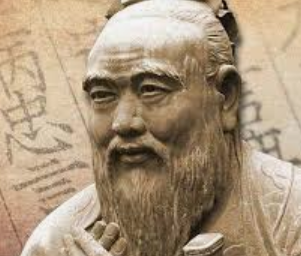
How great is the path proper to the Sage! Like overflowing water, it sends forth and nourishes all things, and rises up to the height of heaven. All-complete is its greatness! It embraces the three hundred rules of ceremony, and the three thousand rules of demeanor. It waits for the proper man, and then it is trodden. Hence it is said, "Only by perfect virtue can the perfect path, in all its courses, be made a fact."

8 months 1 week ago
Sudden Glory, is the passion which maketh those Grimaces called LAUGHTER.
▼
Source
source
The First Part, Chapter 6, p. 27 (italics and spelling as per text)
7 months 2 weeks ago
Well, what does "good" mean anyway...? As Wittgenstein suggested, "good," like "game," has a family of meanings. Prominent among them is this one: "meets the criteria or standards of assessment or evaluation."
▼
Source
source
P. 152.
8 months 1 week ago
Once we begin to want, we fall under the jurisdiction of the Devil.
6 months 3 weeks ago
Some days will be sublime. Others will be merely wonderful. But critically, there will be one particular texture ("what it feels like") of consciousness that will be missing from our lives; and that will be the texture of nastiness.
▼
Source
source
"Feeling Groovy, Forever", Institute for Ethics and Emerging Technologies, 14 Mar. 2012
8 months 1 week ago
My path was not the normal one of professors of philosophy. I did not intend to become a doctor of philosophy by studying philosophy (I am in fact a doctor of medicine) nor did I by any means, intend originally to qualify for a professorship by a dissertation on philosophy. To decide to become a philosopher seemed as foolish to me as to decide to become a poet. Since my schooldays, however, I was guided by philosophical questions. Philosophy seemed to me the supreme, even the sole, concern of man. Yet a certain awe kept me from making it my profession.

6 months 3 weeks ago
With new technologies of surveillance, economies of scale overcome problems of cost. Since all their electronic communications can be accessed, it is no longer necessary to segregate the inmates from one another. As there is no outside world, escape becomes unimaginable. Technological progress has brought into being a system of surveillance more far-reaching than any Bentham could have conceived. Enclosing the entire population in a virtual Panopticon might seem the ultimate invasion of freedom. But universal confinement need not be experienced as a privation. If they know nothing else, most are likely to accept it as normal. If the technology through which surveillance operates also provides continuous entertainment, they may soon find any other way of living intolerable.
▼
Source
source
In the Puppet Theatre: A Universal Panopticon (p. 125)
9 months 1 week ago
What we are destroying is nothing but houses of cards and we are clearing up the ground of language on which they stood.
▼
Source
source
§ 118
8 months ago
In fact, we had a number of extreme leftists and trade unionists among us, and they seemed to take it for granted that we all agreed that the rich must somehow be forced to surrender their ill-gotten gains. Yet there was an air of good humor about their idealism that made me feel they would not be too offended if I admitted that I regard socialists as well-meaning but muddle-headed brigands.
▼
Source
source
p. 30
10 months 2 weeks ago
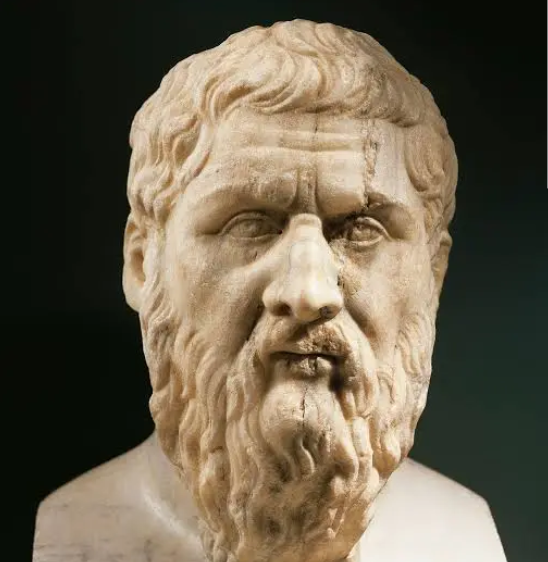
Neither family, nor privilege, nor wealth, nor anything but Love can light that beacon which a man must steer by when he sets out to live the better life.


8 months 2 weeks ago
It is a general popular error to suppose the loudest complainers for the publick to be the most anxious for its welfare.
▼
Source
source
Observations on a Late Publication on the Present State of the Nation

9 months 2 weeks ago
Childish and altogether ludicrous is what you yourself are and all philosophers; and if a grown-up man like me spends fifteen minutes with fools of this kind, it is merely a way of passing the time. I've now got more important things to do. Goodbye!
▼
Source
source
Thrasymachus, in On the Indestructibility of our Essential Being by Death, in Essays and Aphorisms (1970) as translated by R. J. Hollingdale, p. 76
9 months 2 weeks ago
The world would be a happier place than it is if acquisitiveness were always stronger than rivalry. But in fact, a great many men will cheerfully face impoverishment if they can thereby secure complete ruin for their rivals. Hence the present level of taxation. Vanity is a motive of immense potency. Anyone who has much to do with children knows how they are constantly performing some antic, and saying "Look at me." "Look at me" is one of the most fundamental desires of the human heart. It can take innumerable forms, from buffoonery to the pursuit of posthumous fame.
5 months 2 weeks ago
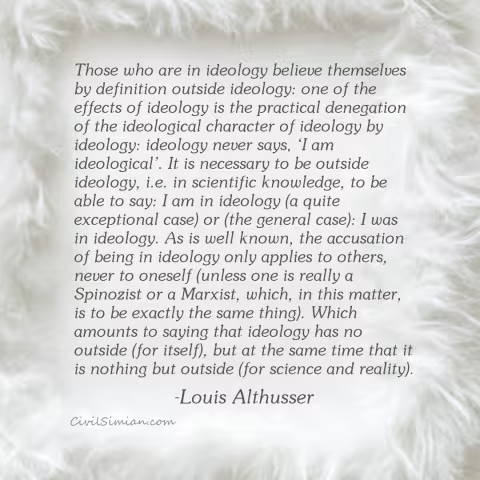
Things that have a common quality ever quickly seek their kind.
▼
Source
source
IX, 9
8 months 3 days ago
The dressing up and puffing up of the individual erases the lineaments of protest.
▼
Source
source
p. 283

9 months 2 weeks ago
He chooses the most feared, most hated man in order to worship him as a god, feeling sure that he is alone in perceiving the god's secret virtues.
▼
Source
source
p. 165
8 months 3 days ago
No human being escapes the necessity of conceiving some good outside himself towards which his thought turns in a movement of desire, supplication, and hope. consequently, the only choice is between worshipping the true God or an idol. Every atheist is an idolater - unless he is worshipping the true God in his impersonal aspect. The majority of the pious are idolaters.
▼
Source
source
Last Notebook (1942) p. 308
9 months 2 weeks ago
Rascals are always sociable - more's the pity! and the chief sign that a man has any nobility in his character is the little pleasure he takes in others' company.
▼
Source
source
Vol. 1, Ch. 5, § 9
CivilSimian.com created by AxiomaticPanic, CivilSimian, Kalokagathia