

5 months 1 week ago
Every word is an Ark of the Covenant around which we dance and shudder, divining God to be its dreadful inhabitant. You shall never be able to establish in words that you live in ecstasy. But struggle unceasingly to establish it in words. Battle with myths, with comparisons, with allegories, with rare and common words, with exclamations and rhymes, to embody it in flesh, to transfix it! God, the Great Ecstatic, works in the same way. He speaks and struggles to speak in every way He can, with seas and with fires, with colors, with wings, with horns, with claws, with constellations and butterflies, that he may establish His ecstasy. Like every other living thing, I also am in the center of the Cosmic whirlpool.

7 months 3 weeks ago
As an empiricist I continue to think of the conceptual scheme of science as a tool, ultimately, for predicting future experience in the light of past experience. Physical objects are conceptually imported into the situation as convenient intermediaries-not by definition in terms of experience, but simply as irreducible posits comparable, epistemologically, to the gods of Homer. For my part I do, qua lay physicist, believe in physical objects and not in Homer's gods; and I consider it a scientific error to believe otherwise. But in point of epistemological footing the physical objects and the gods differ only in degree and not in kind. Both sorts of entities enter our conception only as cultural posits. The myth of physical objects is epistemologically superior to most in that it has proved more efficacious than other myths as a device for working a manageable structure into the flux of experience.
▼
Source
source
"Two Dogmas of Empiricism"

6 months 1 day ago
What's interesting about the world today is that the fundamental division is... a... sociological one between people that have better educations, that live in big urban agglomerations, that then can then benefit from... a global economy, versus people who live in... smaller cities and towns, or in the countryside... with more traditional values. That division exists almost universally, in Turkey... Hungary... the United States, in Britain... It does reflect different economic opportunities, but more fundamentally... it reflects a... way of life, that in the urban case is... liberal and open, but in some cases... people would say a little... too open and too tolerant of... people that want to break traditional norms that are still maintained by... other parts of the population. So it's really that cultural fight... that's at the center of populism, related to,.. but certainly not fundamentally driven by economic inequality.
▼
Source
source
52:39:00
5 months 1 week ago
Cursed be all those on land and sea who eat their fill,cursed be all those who starve yet raise no hand in protest,cursed be all the bread, the wine, the meat which day by daydescends deep in the entrails of the exploited manand turns not into freedom's cry, the murderer's ruthless knife!
▼
Source
source
Prayer of three revolutionaries, Book X, line 391

8 months 1 week ago
It is almost never when a state of things is the most detestable that it is smashed, but when, beginning to improve, it permits men to breathe, to reflect, to communicate their thoughts with each other, and to gauge by what they already have the extent of their rights and their grievances. The weight, although less heavy, seems then all the more unbearable.
▼
Source
source
Letter to Pierre Freslon, 23 September 1853 Selected Letters, p. 296 as cited in Toqueville's Road Map p. 103
7 months 3 weeks ago
All the world's not a stage.
▼
Source
source
E. Jephcott, trans. (1974), § 94

9 months 6 days ago
A man builds a fine house; and now he has a master, and a task for life: he is to furnish, watch, show it, and keep it in repair, the rest of his days.
▼
Source
source
Works and Days

9 months 2 days ago
What I hold fast to is not one proposition but a nest of propositions.

9 months 5 days ago
Critics who treat adult as a term of approval, instead of as a merely descriptive term, cannot be adult themselves. To be concerned about being grown up, to admire the grown up because it is grown up, to blush at the suspicion of being childish; these things are the marks of childhood and adolescence. And in childhood and adolescence they are, in moderation, healthy symptoms. Young things ought to want to grow. But to carry on into middle life or even into early manhood this concern about being adult is a mark of really arrested development. When I was ten, I read fairy tales in secret and would have been ashamed if I had been found doing so. Now that I am fifty I read them openly. When I became a man I put away childish things, including the fear of childishness and the desire to be very grown up.
▼
Source
source
"On Three Ways of Writing for Children" (1952) - in Of Other Worlds: Essays and Stories (1967), p. 25
5 months 3 weeks ago
Credit expansion can bring about a temporary boom. But such a fictitious prosperity must end in a general depression of trade, a slump.
8 months 2 weeks ago
When a reasonable Soul forsaketh his divine nature, and becometh beast-like, it dieth. For though the substance of the Soul be incorruptible: yet, lacking the use of Reason, it is reputed dead; for it loseth the Intellective Life.
8 months 1 week ago
As one digs deeper into the national character of the Americans, one sees that they have sought the value of everything in this world only in the answer to this single question: how much money will it bring in?
▼
Source
source
Letter to Ernest de Chabrol, 9 June 1831 Selected Letters, ed. Roger Boesche, UofC Press 1985, p. 39.
9 months 2 weeks ago
There are and can be only two ways of searching into and discovering truth. The one flies from the senses and particulars to the most general axioms, and from these principles, the truth of which it takes for settled and immovable, proceeds to judgment and to the discovery of middle axioms. And this way is now in fashion. The other derives axioms from the senses and particulars, rising by a gradual and unbroken ascent, so that it arrives at the most general axioms last of all. This is the true way, but as yet untried.
▼
Source
source
Aphorism 19
9 months 5 days ago
I was your luxury. For nineteen years I have been put in your man's world and was forbidden to touch anything and you made me think that all was going very well and that I did not have to worry about anything but putting flowers in vases. Why did you lie to me? Why did you keep me ignorant, if it was to admit to me one day that this world is cracking and that you are all powerless and to make me choose between a suicide and a murder?
▼
Source
source
Jessica to Hugo, Act 5, sc. 2

5 months 3 weeks ago
I do not trust my eyes to tell me what a man is: I have a better and more trustworthy light by which I can distinguish what is true from what is false: let the mind find out what is good for the mind.
▼
Source
source
De Vita Beata (On the Happy Life): cap. 2, line 2 Alternate translation: I do not distinguish by the eye, but by the mind, which is the proper judge of the man. (translator unknown).
9 months 1 week ago
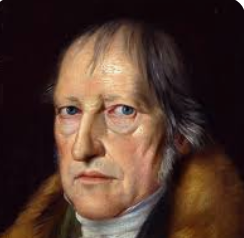
The external embodiment of an act is composed of many parts, and may be regarded as capable of being divided into an infinite number of particulars. An act may be looked on as in the first instance coming into contact with only one of these particulars. But the truth of the particular is the universal. A definite act is not confined in its content to one isolated point of the varied external world, but is universal, including these varied relations within itself. The purpose, which is the product of thought and embraces not the particular only but also the universal side, is intention.
▼
Source
source
Georg Wilhelm Friedrich Hegel, Philosophy of Right translated by SW Dyde Queen's University Canada 1896 p. 114-115
7 months 4 days ago
Everything is worth what its purchaser will pay for it.
▼
Source
source
Maxim 847
7 months 2 weeks ago
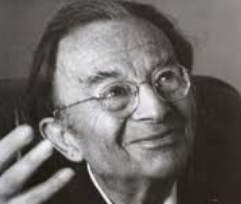
Happiness is the indication that man has found the answer to the problem of human existence: the productive realization of his potentialities and thus, simultaneously, being one with the world and preserving the integrity of his self. In spending his energy productively he increases his powers, he "burns without being consumed."
▼
Source
source
p.189

9 months 1 week ago
The pursuit of knowledge is, I think, mainly actuated by love of power. And so are all advances in scientific technique. In politics, also, a reformer may have just as strong a love of power as a despot. It would be a complete mistake to decry love of power altogether as a motive. Whether you will be led by this motive to actions which are useful, or to actions which are pernicious, depends upon the social system, and upon your capacities.
9 months 1 week ago
All movements go too far.

8 months 6 days ago
Every pleasure raises the tide of life; every pain lowers the tide of life.
▼
Source
source
Ch. 6, The Biological View

5 months 3 days ago
Do not think that what is hard for you to master is humanly impossible; but if a thing is humanly possible, consider it to be within your reach.
▼
Source
source
VI, 19

9 months 1 week ago
Since the great foundation of fear is pain, the way to harden and fortify children against fear and danger is to accustom them to suffer pain. This 'tis possible will be thought, by kind parents, a very unnatural thing towards their children; and by most, unreasonable...
▼
Source
source
Sec. 115
9 months 3 weeks ago
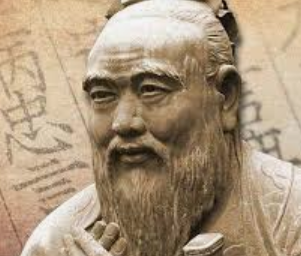
If names be not correct, language is not in accordance with the truth of things. Paraphrased as a chinese proverb stating "The beginning of wisdom is to call things by their proper name."
7 months 4 weeks ago
The transition from Hegel to Marx is, in all respects, a transition to an essentially different order of truth, no to be interpreted in terms of philosophy. We shall see that all the philosophical concepts of Marxian theory are social and economic categories, whereas Hegel's social and economic categories are all philosophical concepts.
▼
Source
source
P. 258

5 months 3 weeks ago
With his sharp power of vision, resolute power of action, I doubt not he could have learned to write Books withal, and speak fluently enough;-he did harder things than writing of Books. This kind of man is precisely he who is fit for doing manfully all things you will set him on doing.
5 months 4 days ago
Never have nations been civilized, except by religion.
▼
Source
source
XXXIII, p. 99
7 months 3 weeks ago
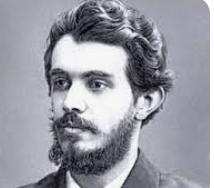
There is absolute truth in anarchism and it is to be seen in its attitude to the sovereignty of the state and to every form of state absolutism. ... The religious truth of anarchism consists in this, that power over man is bound up with sin and evil, that a state of perfection is a state where there is no power of man over man, that is to say, anarchy. The Kingdom of God is freedom and the absence of such power... the Kingdom of God is anarchy.
▼
Source
source
Slavery and Freedom (1939), p. 147
9 months 5 days ago
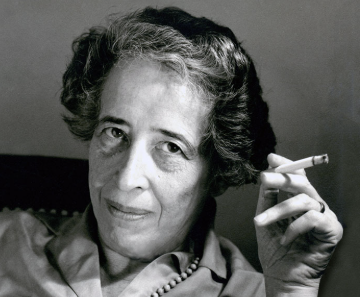
The law of progress holds that everything now must be better than what was there before. Don't you see if you want something better, and better, and better, you lose the good? The good is no longer even being measured.
▼
Source
source
Interview with French writer Roger Errera in New York Review of Books

7 months 3 weeks ago
To know something is to make this something that I know myself; but to avail myself of it, to dominate it, it has to remain distinct from myself.
5 months 5 days ago
We hear only ourselves.

8 months 1 week ago
They that endeavour to abolish vice destroy also virtue, for contraries, though they destroy one another, are yet the life of one another.
▼
Source
source
Section 4

7 months 4 weeks ago
O my Father, if this cup may not pass away from me, except I drink it, thy will be done.
▼
Source
source
26:42 (KJV)
9 months 3 weeks ago
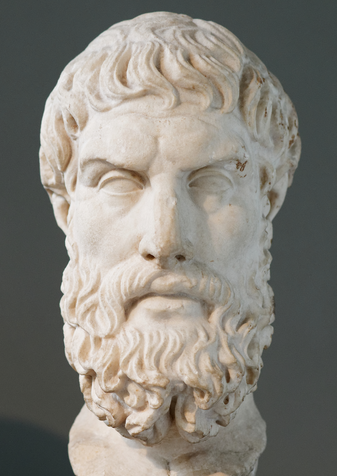
Pleasure, or pain, is not only good, or evil, in itself, but the measure of what is good or evil, in every object of desire or aversion; for the ultimate reason why we pursue one thing, and avoid another, is because we expect pleasure from the former, and apprehend pain from the latter. If we sometimes decline a present pleasure, it is not because we are averse to pleasure itself, but because we conceive, that in the present instance, it will be necessarily connected with a greater pain. In like manner, if we sometimes voluntarily submit to a present pain, it is because we judge that it is necessarily connected with a greater pleasure.
9 months 1 week ago
The universe is the bible of a true Theophilanthropist. It is there that he reads of God. It is there that the proofs of his existence are to be sought and to be found. As to written or printed books, by whatever name they are called, they are the works of man's hands, and carry no evidence in themselves that God is the author of any of them. It must be in something that man could not make, that we must seek evidence for our belief, and that something is the universe; the true bible; the inimitable word, of God.
▼
Source
source
A Discourse, &c. &c.
5 months 3 weeks ago
What is not supposed to be my concern! First and foremost, the Good Cause, then God's cause, the cause of mankind, of truth, of freedom, of humanity, of justice; further, the cause of my people, my prince, my fatherland; finally, even the cause of Mind, and a thousand other causes. Only my cause is never to be my concern. "Shame on the egoist who thinks only of himself!"
▼
Source
source
Cambridge 1995, p. 5

7 months 4 days ago
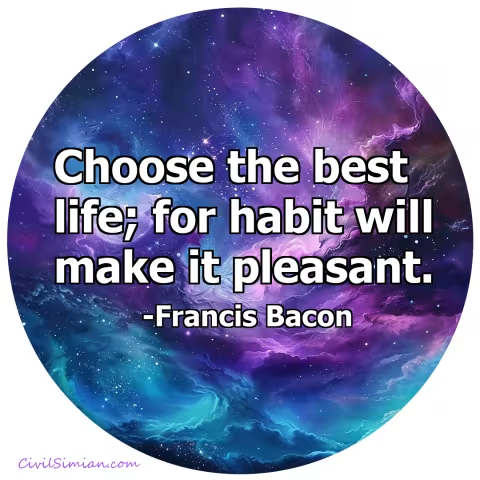
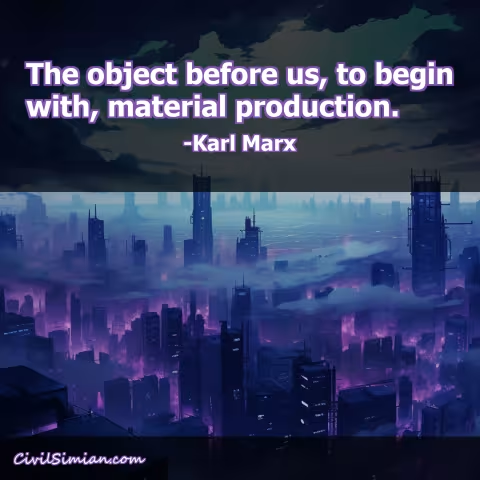
After childhood, the senses specialize via the channels of dominant technologies and social weaponries.
▼
Source
source
Letter to The Listener October 1971, Letters of Marshall McLuhan (1987), p. 443
5 months 3 days ago
Always take the short cut; and that is the rational one. Therefore say and do everything according to soundest reason.
▼
Source
source
IV, 51
9 months 1 week ago
The law of causality, I believe, like much that passes muster among philosophers, is a relic of a bygone age, surviving, like the monarchy, only because it is erroneously supposed to do no harm.
▼
Source
source
Ch. 9: On the Notion of Cause
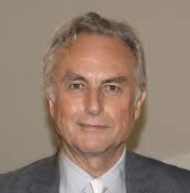
7 months 2 days ago
The fact that life evolved out of nearly nothing, some 10 billion years after the universe evolved out of literally nothing, is a fact so staggering that I would be mad to attempt words to do it justice.
▼
Source
source
From tail to tale on the path of pilgrims in life, The Scotsman
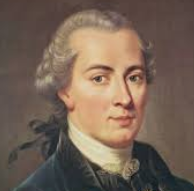
9 months 1 week ago
I have in this treatise followed the mathematical method, if not with all strictness, at least imitatively, not in order, by a display of profundity, to procure a better reception for it, but because I believe such a system to be quite capable of it, and that perfection may in time be obtained by a cleverer hand, if stimulated by this sketch, mathematical investigators of nature should find it not unimportant to treat the metaphysical portion, which anyway cannot be got rid of, as a special fundamental department of general physics, and to bring it into unison with the mathematical doctrine of motion.
▼
Source
source
Preface, Tr. Bax, 1883
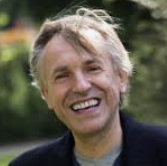
6 months 2 weeks ago
[H]uman nature as encoded in our DNA isn't immutable. Mankind's barbaric track-record to date is an unreliable guide to the future. If Homo sapiens' nastier alleles and their more sinister combinations can be silenced or edited out of the genome, and new improved code-sequences inserted instead, then the pessimists will be confounded. A major discontinuity in the development of life lies ahead. Providentially, we've learned that the DNA-driven world isn't written in God-given proprietary code it would be hubris to tamper with, but in bug-ridden open source amenable to improvement.
▼
Source
source
Utopian Pharmacology: Mental Health in the Third Millennium MDMA and Beyond, BLTC Research, last updated 2020

9 months 1 week ago
No greater mistake can be made than to imagine that what has been written latest is always the more correct; that what is written later on is an improvement on what was written previously; and that every change means progress. Men who think and have correct judgment, and people who treat their subject earnestly, are all exceptions only. Vermin is the rule everywhere in the world: it is always at hand and busily engaged in trying to improve in its own way upon the mature deliberations of the thinkers.

9 months 2 weeks ago
In my opinion, all things in nature occur mathematically.
▼
Source
source
Sources: Correspondence with Mersenne note for line 7 (1640), page 36, Die Wiener Zeit page 532 (2008); StackExchange Math Q/A Where did Descartes write...

CivilSimian.com created by AxiomaticPanic, CivilSimian, Kalokagathia