

2 months 1 week ago
My path was not the normal one of professors of philosophy. I did not intend to become a doctor of philosophy by studying philosophy (I am in fact a doctor of medicine) nor did I by any means, intend originally to qualify for a professorship by a dissertation on philosophy. To decide to become a philosopher seemed as foolish to me as to decide to become a poet. Since my schooldays, however, I was guided by philosophical questions. Philosophy seemed to me the supreme, even the sole, concern of man. Yet a certain awe kept me from making it my profession.

2 months 2 weeks ago
Get thee behind me, Satan: thou art an offence unto me: for thou savourest not the things that be of God, but those that be of men.
▼
Source
source
16:23 (KJV)
3 days ago
This is the real secret of life-to be completely engaged with what you are doing in the here and now. And instead of calling it work, realize it is play.
▼
Source
source
The Essence of Alan Watts

3 months 3 weeks ago
The past treatment of Africans must naturally fill them with abhorrence of Christians; lead them to think our religion would make them more inhuman savages, if they embraced it; thus the gain of that trade has been pursued in opposition to the Redeemer's cause, and the happiness of men: Are we not, therefore, bound in duty to him and to them to repair these injuries, as far as possible, by taking some proper measures to instruct, not only the slaves here, but the Africans in their own countries? Primitive Christians laboured always to spread their Divine Religion; and this is equally our duty while there is an Heathen nation: But what singular obligations are we under to these injured people!

4 months 3 weeks ago
As for the life of money-making, it is one of constraint, and wealth is manifestly not the good of which we are in search, for it is only useful as a means to something else, and for this reason there is less to be said for it than for the ends mentioned before, which are, at any rate, desired for their own sakes.
1 day ago
The Americans' "open-mindedness", which is sometimes cited in their favor, is the other side of their interior formlessness. The same goes for their "individualism". Individualism and personality are not the same: the one belongs to the formless world of quantity, the other to the world of quality and hierarchy. The Americans are the living refutation of the Cartesian axiom, "I think, therefore I am": Americans do not think, yet they are. The American "mind", puerile and primitive, lacks characteristic form and is therefore open to every kind of standardization.
▼
Source
source
American "Civilization" (1945) · Excerpts

3 months 2 weeks ago
Frazer is much more savage than most of his savages, for they are not as far removed from the understanding of spiritual matter as a twentieth-century Englishman. His explanations of primitive practices are much cruder than the meaning of these practices themselves.
▼
Source
source
Ch. 7 : Remarks on Frazer's Golden Bough, p. 131
3 months 3 weeks ago
The process of being brought up, however well it is done, cannot fail to offend.
1 month 1 day ago
If I'm a cruel satirist at least I'm not a hyprocrite: I never judge what other people do. Neither a politician nor a priest, I never censor what others do. Neither a philospher nor a psychiatrist, I never bother trying to analyze or resolve my fears and neuroses.
▼
Source
source
"Hypocrisy"
2 months 3 weeks ago
If any ask me what a free Government is, I answer, that, for any practical purpose, it is what the people think so, - and that they, and not I, are the natural, lawful, and competent judges of this matter.
2 months 2 weeks ago
A common mortal periodically selected by his fellow-citizens to watch over their own interests, can never be supposed to possess this stupendous virtue.
▼
Source
source
Book III, Chapter 9
1 month 1 week ago
That mysterious independent variable of political calculation, Public Opinion.
▼
Source
source
Universities, Actual and Ideal
4 months 1 week ago
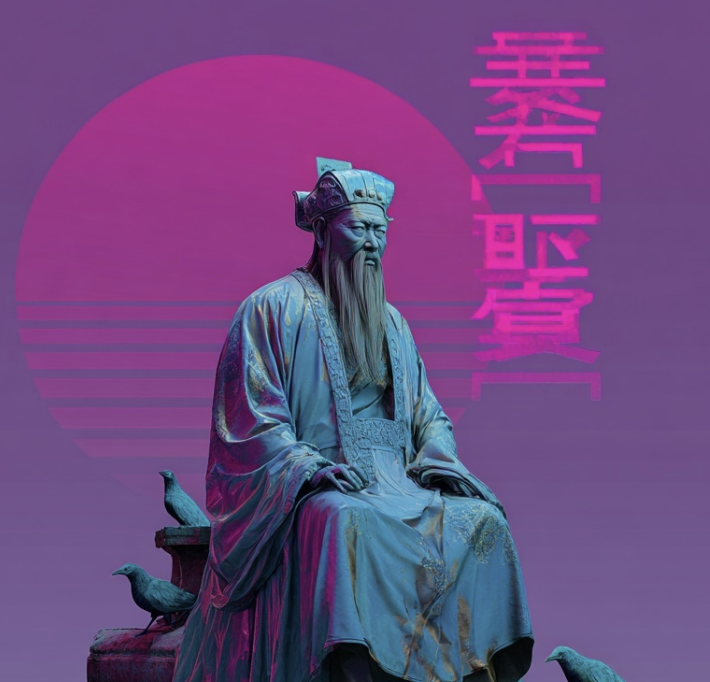
When you serve your mother and father it is okay to try to correct them once in a while. But if you see that they are not going to listen to you, keep your respect for them and don't distance yourself from them. Work without complaining.
2 months 2 weeks ago
Man is the higher Sense of our Planet; the star which connects it with the upper world; the eye which it turns towards Heaven.

3 months 2 weeks ago
The Democratic Party is beyond redemption at this point when it comes to seriously speaking to the needs of poor and working people... The neofascism that's escalating is predicated on the rottenness of a system in which the Democratic Party facilitates that frustration and desperation because it can't present an alternative... If America is unable to present an alternative to the Democratic Party, then we're going fascist.
1 month 3 weeks ago
You need to know at least one foreign language well enough so that you can read the best literature that that language has produced in the original, and so you carry on a reasonable conversation and have dreams in that language. There are several reasons why this is crucial, but the most important is perhaps this: you can never understand one language until you understand at least two.
1 month 3 weeks ago
[In cloning,] the Father and the Mother have disappeared, not in the service of an aleatory liberty of the subject, but in the service of a matrix called code.
▼
Source
source
"Clone Story," p. 96
2 months 1 day ago
The capacity of the human mind for formulating and solving complex problems is very small compared with the size of the problems whose solution is required for objectively rational behavior in the real world-or even for a reasonable approximation to such objective rationality.
▼
Source
source
p. 198; Cited in: P. Slovic (1972) From Shakespeare to Simon: Speculations - And Some Evidence About Man's Ability to Process Information. Oregon Research Institute Monograph, 1972. p. 1.
1 month 2 weeks ago
It is only the ignorant who despise education.
▼
Source
source
Maxim 571

4 months 1 day ago
Wherever you encounter truth, look upon it as Christianity.
▼
Source
source
As quoted in Erasmus of Rotterdam (1934) by Stefan Zweig, Eden Paul, and Cedar Paul, p. 91; reprinted in Erasmus - The Right to Heresy (2008) by Stefan Zweig, p. 62
3 months 3 weeks ago
Inuring children gently to suffer some degrees of pain without shrinking, is a way to gain firmness to their minds, and lay a foundation for courage and resolution in the future part of their lives.
▼
Source
source
Sec. 115

2 months 5 days ago
The pathos of it all is that the America which is to be protected by a huge military force is not the America of the people, but that of the privileged class; the class which robs and exploits the masses, and controls their lives from the cradle to the grave. No less pathetic is it that so few people realize that preparedness never leads to peace, but that it is indeed the road to universal slaughter.
2 months 1 week ago
Little can be hoped for from a ruler... who has not at some time or other been preoccupied, even if only confusedly, with the first beginning and ultimate end of all things, and above all of man, with the "why" of his origin and the "wherefore" of his destiny.
3 months 3 weeks ago
"Then those people are right who say that Heaven and Hell are only states of mind?" "Hush," he said sternly. "Do not blaspheme. Hell is a state of mind - ye never said a truer word. And every state of mind, left to itself, every shutting up of the creature within the dungeon of its own mind - is, in the end, Hell. But Heaven is not a state of mind. Heaven is reality itself. All that is fully real is Heavenly."
▼
Source
source
Ch. 9
1 month 2 weeks ago
The greatest of empires, is the empire over one's self.
▼
Source
source
Maxim 891
2 weeks 1 day ago
Nothing is great but truth, and the smallest truth is great. The other day I had a thought, which I put like this: Even a harmful truth is useful, for it can be harmful only for the moment and will lead to other truths, which must always become useful, very much so. Conversely, even a useful error is harmful, for it can be useful only for the moment, enticing us into other errors, which become more and more harmful.
▼
Source
source
Letter to Charlotte von Stein (1787) in Goethe's World View: Presented in His Reflections and Maxims (1963), Edited with an Introduction by Frederick Ungar, Translated by Heinz Norden, pp. 72-73, Frederick Ungar Publishing Company, New York.
3 months 1 week ago
If I knew that it was fated for me to be sick, I would even wish for it; for the foot also, if it had intelligence, would volunteer to get muddy.
▼
Source
source
As quoted by Epictetus, Discourses, ii. 6. 10.

2 weeks 5 days ago
One whose intentions and thoughts are cultivated will disregard wealth and nobility. One whose greatest concern is for the Way and righteousness will take lightly kings and dukes. It is simply that when one examines oneself on the inside, external goods carry little weight. A saying goes, "The gentleman makes things his servants. The petty man is servant to things.
▼
Source
source
Readings in Classical Chinese Philosophy (2001), p. 263

3 months 3 weeks ago
Leave this hypocritical prating about the masses. Masses are rude, lame, unmade, pernicious in their demands and influence, and need not to be flattered, but to be schooled. I wish not to concede anything to them, but to tame, drill, divide, and break them up, and draw individuals out of them.
▼
Source
source
Considerations by the Way
3 months 3 weeks ago
The example of the Jews, in many things, may not be imitated by us; they had not only orders to cut off several nations altogether, but if they were obliged to war with others, and conquered them, to cut off every male; they were suffered to use polygamy and divorces, and other things utterly unlawful to us under clearer light.

4 months 1 week ago
The necessary connexion of movement and time is real and time is something the soul constructs in movement.

2 months 3 weeks ago
Americans cleave to the things of this world as if assured that they will never die,... They clutch everything but hold nothing fast, and so lose grip as they hurry after some new delight. ... Death steps in in the end and stops him before he has grown tired of this futile pursuit of that complete felicity which always escapes him. At first sight there is something astonishing in this spectacle of so many lucky men restless in the midst of abundance. But it is a spectacle as old as the world; all that is new is to see a whole people performing in it.
▼
Source
source
Book Two, Chapter XIII.

4 months 2 weeks ago
In the course of my fight with the school, I couldn't help but notice that I became a pariah. [...] Once, however, a fellow faculty member, making sure we were unobserved, said to me, "Isaac, the faculty is proud of you for your courage in fighting the administration for academic freedom."I said, "There's no courage involved in it. Don't you know my definition of academic freedom?""No. What's your definition of academic freedom?"I said, "Independent income."
3 months 3 weeks ago
Good and evil, reward and punishment, are the only motives to a rational creature: these are the spur and reins whereby all mankind are set on work, and guided.
▼
Source
source
Sec. 54
3 days ago
We came to a tree which was still bare, and on which the birds were singing out gaily in the morning, without any fear of us. Then stooping over like an Indian on the hunt, my companion placed a pebble in the leather of his sling and stretched it. Obeying his peremptory glance I did the same, with frightful twinges of conscience, vowing firmly that I would shoot when he did. At that very moment the church bells began to sound, mingling with the song of the birds in the sunshine. It was the warning bell that came a half-hour before the main bell. For me it was a voice from heaven. I threw the sling down, scaring the birds away, so that they were safe from my companion's sling, and fled home. And ever afterwards when the bells of Holy Week ring out amidst the leafless trees in the sunshine I remember with moving gratitude how they rang into my heart at that time the commandment: Thou shalt not kill.
2 months 5 days ago
The cravings of love and sex are met with absolute ignorance by the majority of parents, who consider it as something indecent and improper, something disgraceful, almost criminal, to be suppressed and fought like some terrible disease. The love and tender feelings in the young plant are turned into vulgarity and coarseness through the stupidity of those surrounding it, so that everything fine and beautiful is either crushed altogether or hidden in the innermost depths, as a great sin, that dares not face the light.
2 months 2 weeks ago
All liberation depends on the consciousness of servitude, and the emergence of this consciousness is always hampered by the predominance of needs and satisfactions which, to a great extent, have become the individual's own.
▼
Source
source
p. 7
3 months 2 weeks ago
What do I know about God and the purpose of life? I know that this world exists. That I am placed in it like my eye in its visual field. That something about it is problematic, which we call its meaning. This meaning does not lie in it but outside of it. That life is the world. That my will penetrates the world. That my will is good or evil. Therefore that good and evil are somehow connected with the meaning of the world. The meaning of life, i.e. the meaning of the world, we can call God. And connect with this the comparison of God to a father. To pray is to think about the meaning of life.
▼
Source
source
Journal entry (11 June 1916), p. 72e and 73e

2 months 1 week ago
Christians are beginning to lose the spirit of intolerance which animated them: experience has shown the error of the expulsion of the Jews from Spain, and of the persecution of those Christians in France whose belief differed a little from that of the king. They have realized that zeal for the advancement of religion is different from a due attachment to it; and that in order to love it and fulfill its behests, it is not necessary to hate and persecute those who are opposed to it.
▼
Source
source
No. 60. (Usbek writing to Ibben)
2 months 1 week ago
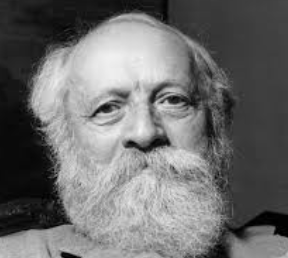
The great man, whether we comprehend him in the most intense activity of his work or in the restful equipoise of his forces, is powerful, involuntarily and composedly powerful, but he is not avid for power. What he is avid for is the realization of what he has in mind, the incarnation of the spirit.
▼
Source
source
p. 151

3 months 3 weeks ago
It is wrong to think that belief in freedom always leads to victory; we must always be prepared for it to lead to defeat. If we choose freedom, then we must be prepared to perish along with it. Poland fought for freedom as no other country did. The Czech nation was prepared to fight for its freedom in 1938; it was not lack of courage that sealed its fate. The Hungarian Revolution of 1956 - the work of young people with nothing to lose but their chains - triumphed and then ended in failure. ... Democracy and freedom do not guarantee the millennium. No, we do not choose political freedom because it promises us this or that. We choose it because it makes possible the only dignified form of human coexistence, the only form in which we can be fully responsible for ourselves. Whether we realize its possibilities depends on all kinds of things - and above all on ourselves.
3 months 2 weeks ago
A pupil and a teacher. The pupil will not let anything be explained to him, for he continually interrupts with doubts, for instance as to the existence of things, the meaning for words, etc. The teacher says "Stop interrupting me and do as I tell you. So far your doubts don't make sense at all."
2 months 3 weeks ago
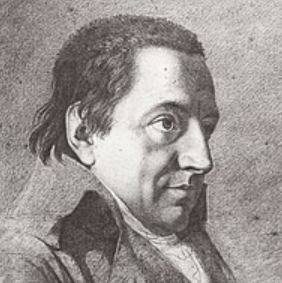
We cannot hope to give here a final clarification of the essence of fact, judgement, object, property; this task leads into metaphysical abysses; about these one has to seek advice from men whose name cannot be stated without earning a compassionate smile-e.g.
▼
Source
source
Fichte. Hermann Weyl, Das Kontinuum. Kritische Untersuchungen uber die Grundlagen der Analysis (1918)

4 months 3 weeks ago
Everything which distinguishes man from the animals depends upon this ability to volatilize perceptual metaphors in a schema, and thus to dissolve an image into a concept. For something is possible in the realm of these schemata which could never be achieved with the vivid first impressions: the construction of a pyramidal order according to castes and degrees, the creation of a new world of laws, privileges, subordinations, and clearly marked boundaries, a new world, one which now confronts that other vivid world of first impressions as more solid, more universal, better known, and more human than the immediately perceived world, and thus as the regulative and imperative world.
2 months 3 weeks ago
The Scientific discourse extracts truths from the errors which surround and oppose it on all sides and in every form; and, by demolition of these opposing views as error, and as impossible to true thought, shows the truth as that which alone remains after their withdrawal, and therefore as the only possible truth:--and in this separation of opposites, and elucidation of the truth from the confused chaos in which truth and error lie mingled together, consists the peculiar and characteristic nature of the Scientific discourse. This method creates and produces truth, before our eyes, out of a world full of error.
▼
Source
source
P. 26-27
1 month 3 weeks ago
Nothing is wholly obvious without becoming enigmatic. Reality itself is too obvious to be true.

2 months 1 day ago
Rationality requires a choice among all possible alternative behaviors. In actual behavior, only a very few of all these possible alternatives come to mind.
3 months 3 weeks ago
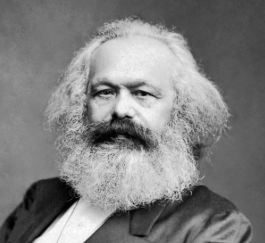
The career a young man should choose should be] one that is most consonant with our dignity, one that is based on ideas of whose truth we are wholly convinced, one that offers us largest scope in working for humanity and approaching that general goal towards which each profession offers only one of the means: the goal of perfection ... If he works only for himself he can become a famous scholar, a great sage, an excellent imaginative writer [Dichter], but never a perfected, a truly great man.
▼
Source
source
in Karl Marx and World Literature (1976) by S. S. Prawer, p. 2.
2 months 1 week ago
Spirit is never an object; nor a spiritual reality an objective one. In the so-called objective world there's no such nature, thing, or objective reality as spirit. Hence it is easy to deny the reality of spirit. God is spirit because he is not object, because he is subject.
▼
Source
source
p. 10
CivilSimian.com created by AxiomaticPanic, CivilSimian, Kalokagathia