
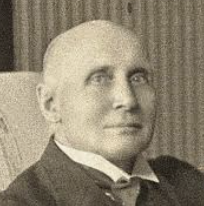
1 month 3 weeks ago
All science must start with some assumptions as to the ultimate analysis of the facts with which it deals. These assumptions are justified partly by their adherence to the types of occurrence of which we are directly conscious, and partly by their success in representing the observed facts with a certain generality, devoid of ad hoc suppositions.
▼
Source
Ch. 8: "The Quantum Theory", p. 189
1 month 3 weeks ago
Epochs do not rise from the dead.... [W]hereas you can make a replica of an ancient statue, there is no possible replica of an ancient state of mind. There can be no nearer approximation than that which a masquerade bears to real life. There may be understanding of the past, but there is a difference between the modern and the ancient reactions to the same stimuli.
▼
Source
Ch. 9: "Science and Philosophy", p. 194
1 month 3 weeks ago
Every human being is the natural guardian of his own importance.
▼
Source
Ch. 9: "Science and Philosophy", p. 195
1 month 3 weeks ago
The ancient world takes its stand upon the drama of the Universe, the modern world upon the inward drama of the Soul.
▼
Source
Ch. 9: "Science and Philosophy", p. 196
1 month 3 weeks ago
Often things realised in thought are more vivid than than the same things in inattentive physical experience. But the things apprehended as mental are always subject to the condition that we come to a stop when we come to explore ever higher grades of complexity in their realised relationships. We always find tat we have thought of just this - whatever it may be - and of no more.
▼
Source
Ch. 10: "Abstraction", p. 239
1 month 3 weeks ago
No reason can be given for the nature of God, because that nature is the ground of all rationality.
▼
Source
Ch. 11: "God", p. 250
1 month 3 weeks ago
He has been named respectively, Jehovah, Allah, Brahma, Father in Heaven, Order of Heaven, First Cause, Supreme Being, Chance. Each name corresponds to a system of thought derived from the experiences of those who have used it.Among medieval and modern philosophers, anxious to establish the religious significance of God, an unfortunate habit has prevailed of paying Him metaphysical compliments. He has been conceived as the foundation of the metaphysical situation with its ultimate activity. If this conception be adhered to, there can be no alternative except to discern in Him the origin of all evil as well as of all good. He is then the supreme author of the play, and to Him must therefore be ascribed its shortcomings as well as its success.
▼
Source
Ch. 11: "God", pp. 250-251
1 month 3 weeks ago
It belongs to the self-respect of intellect to pursue every tangle of thought to its final unravelment.
▼
Source
Ch. 12: "Religion and Science", p. 258
1 month 3 weeks ago
A clash of doctrines is not a disaster - it is an opportunity.
▼
Source
Ch. 12: "Religion and Science", p. 259
1 month 3 weeks ago
In formal logic, a contradiction is the signal of a defeat; but in the evolution of real knowledge it marks the first step in progress towards a victory.
▼
Source
Ch. 12: "Religion and Science", p. 260
1 month 3 weeks ago
We cannot think first and act afterwards. From the moment of birth we are immersed in action, and can only fitfully guide it by taking thought.
▼
Source
Ch. 12: "Religion and Science", p. 261
1 month 3 weeks ago
In the first place for over two centuries religion has been on the defensive, and on a weak defensive. The result of the repetition of this undignified retreat, during many generations, has at last almost entirely destroyed the intellectual authority of religious thinkers. Consider this contrast: when Darwin or Einstein proclaim theories which modify our ideas, it is a triumph for science. We do not go about saying that there is another defeat for science, because its old ideas have been abandoned. We know that another step of scientific insight has been gained.Religion will not regain its old power until it can face change in the same spirit as does science. Its principles may be eternal, but the expression of those principles requires continual development.
▼
Source
Ch. 12: "Religion and Science", p. 263
1 month 3 weeks ago
I now come to the second reason for the modern fading of interest in religion. Religion is the reaction of human nature to its search for God. The presentation of God under the aspect of power awakens every modern instinct of critical reaction. This is fatal; for religion collapses unless its main positions command immediacy of assent. In this respect the old phraseology is at variance with the psychology of modern civilisations. This change in psychology is largely due to science, and is one of the chief ways in which the advance of science has weakened the hold of the old religious forms of expression.
▼
Source
Ch. 12: "Religion and Science", pp. 266-267
1 month 3 weeks ago
Religion is the vision of something which stands beyond, behind and within the passing flux of immediate things; something which is real, and yet waiting to be realized; something which is a remote possibility, and yet the greatest of present facts; something that gives meaning to all that passes, and yet eludes apprehension; something whose possession is the final good, and yet is beyond all reach; something which is the ultimate ideal, and the hopeless quest.
▼
Source
Ch. 12: "Religion and Science", pp. 267-268
1 month 3 weeks ago
The fact of the religious vision, and its history of persistent expansion, is our one ground for optimism. Apart from it, human life is a flash of occasional enjoyments lighting up a mass of pain and misery, a bagatelle of transient experience.
▼
Source
Ch. 12: "Religion and Science", p. 268
1 month 3 weeks ago
The power of God is the worship He inspires. The worship of God is not a rule of safety - it is an adventure of the spirit, a flight after the unattainable. The death of religion comes with the repression of the high hope of adventure.
▼
Source
Ch. 12: "Religion and Science", pp. 268-269
1 month 3 weeks ago
There is something between the gross specialised values of the mere practical man, and the thin specialised values of the mere scholar. Both types have missed something; and if you add together the two sets of values, you do not obtain the missing elements.
▼
Source
Ch. 13: "Requisites for Social Progress", p. 279
1 month 3 weeks ago
Sensitiveness without impulse spells decadence, and impulse without sensitiveness spells brutality.
▼
Source
Ch. 13: "Requisites for Social Progress", p. 280
1 month 3 weeks ago
Fertilisation of the soul is the reason for the necessity of art.
▼
Source
Ch. 13: "Requisites for Social Progress", p. 283
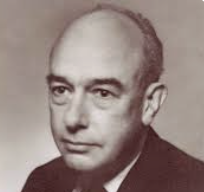
1 month 3 weeks ago
How are we to adjudicate among rival ontologies? Certainly the answer is not provided by the semantical formula "To be is to be the value of a variable"; this formula serves rather, conversely, in testing the conformity of a given remark or doctrine to a prior ontological standard.
▼
Source
"On What There Is"
1 month 3 weeks ago
Nonbeing must in some sense be, otherwise what is it that there is not? This tangled doctrine might be nicknamed Plato's beard; historically it has proved tough, frequently dulling the edge of Occam's razor.
▼
Source
"On What There Is"
1 month 3 weeks ago
Wyman's overpopulated universe is in many ways unlovely. It offends the aesthetic sense of us who have a taste for desert landscapes.
▼
Source
"On What There Is", p. 4. a humorous comment on the idea "unactualized possible".
1 month 3 weeks ago
Modern empiricism has been conditioned in large part by two dogmas. One is a belief in some fundamental cleavage between truths which are analytic, or grounded in meanings independently of matters of fact, and truths which are synthetic, or grounded in fact. The other dogma is reductionism: the belief that each meaningful statement is equivalent to some logical construct upon terms which refer to immediate experience. Both dogmas, I shall argue, are ill-founded. One effect of abandoning them is, as we shall see, a blurring of the supposed boundary between speculative metaphysics and natural science. Another effect is a shift toward pragmatism.
▼
Source
"Two dogmas of Empiricism"
1 month 3 weeks ago
The word 'definition' has come to have a dangerously reassuring sound, owing no doubt to its frequent occurrence in logical and mathematical writings.
▼
Source
"Two dogmas of Empiricism", p. 26
1 month 3 weeks ago
Our argument is not flatly circular, but something like it. It has the form, figuratively speaking, of a closed curve in space.
▼
Source
"Two Dogmas of Empiricism", p. 26
1 month 3 weeks ago
No particular experiences are linked with any particular statements in the interior of the field, except indirectly through considerations of equilibrium affecting the field as a whole.
▼
Source
"Two Dogmas of Empiricism"
1 month 3 weeks ago
Even a statement very close to the periphery can be held true in the face of recalcitrant experience by pleading hallucination or by amending certain statements of the kind called logical laws. Conversely, by the same token, no statement is immune to revision. Revision even of the logical law of the excluded middle has been proposed as a means of simplifying quantum mechanics; and what difference is there in principle between such a shift and the shift whereby Kepler superseded Ptolemy, or Einstein Newton, or Darwin Aristotle?
▼
Source
"Two Dogmas of Empiricism"
1 month 3 weeks ago
As an empiricist I continue to think of the conceptual scheme of science as a tool, ultimately, for predicting future experience in the light of past experience. Physical objects are conceptually imported into the situation as convenient intermediaries-not by definition in terms of experience, but simply as irreducible posits comparable, epistemologically, to the gods of Homer. For my part I do, qua lay physicist, believe in physical objects and not in Homer's gods; and I consider it a scientific error to believe otherwise. But in point of epistemological footing the physical objects and the gods differ only in degree and not in kind. Both sorts of entities enter our conception only as cultural posits. The myth of physical objects is epistemologically superior to most in that it has proved more efficacious than other myths as a device for working a manageable structure into the flux of experience.
▼
Source
"Two Dogmas of Empiricism"
1 month 3 weeks ago
The issue over there being classes seems more a question of convenient conceptual scheme; the issue over there being centaurs, or brick houses on Elm Street, seems more a question of fact. But I have been urging that this difference is only one of degree, and that it turns upon our vaguely pragmatic inclination to adjust one strand of the fabric of science rather than another in accommodating some particular recalcitrant experience. Conservatism figures in such choices, and so does the quest for simplicity.
▼
Source
"Two Dogmas of Empiricism"
1 month 3 weeks ago
Tactically, conceptualism is no doubt the strongest position of the three; for the tired nominalist can lapse into conceptualism and still allay his puritanic conscience with the reflection that he has not quite taken to eating lotus with the Platonists.
▼
Source
"Logic and the Reification of Universals"
1 month 3 weeks ago
Creatures inveterately wrong in their inductions have a pathetic but praiseworthy tendency to die before reproducing their kind.
▼
Source
"Natural Kinds", in Ontological Relativity and Other Essays (1969), p. 126
1 month 3 weeks ago
Logic chases truth up the tree of grammar.
▼
Source
Philosophy of Logic
1 month 3 weeks ago
Necessity resides in the way we talk about things, not in the things we talk about.
▼
Source
Ways of Paradox and Other Essays (1976), p. 174
1 month 3 weeks ago
At root what is needed for scientific inquiry is just receptivity to data, skill in reasoning, and yearning for truth. Admittedly, ingenuity can help too.
▼
Source
S.4
1 month 3 weeks ago
Implication is thus the very texture of our web of belief, and logic is the theory that traces it.
▼
Source
S. 41
1 month 3 weeks ago
It is within science itself, and not in some prior philosophy, that reality is to be identified and described.
▼
Source
Theories and Things, Cambridge, MA: Harvard University Press. 1981
1 month 3 weeks ago
We cannot stem linguistic change, but we can drag our feet. If each of us were to defy Alexander Pope and be the last to lay the old aside, it might not be a better world, but it would be a lovelier language.
▼
Source
Quiddities: An Intermittently Philosophical Dictionary (1987), p. 231
1 month 3 weeks ago
Life is agid. Life is fulgid. Life is a burgeoning, a quickening of the dim primordial urge in the murky wastes of time. Life is what the least of us make most of us feel the least of us make the most of.
▼
Source
Quine's response in 1988 when asked his philosophy of life. (He invented the word "agid".) It makes up the entire Chapter 54 in Quine in Dialogue (2008).
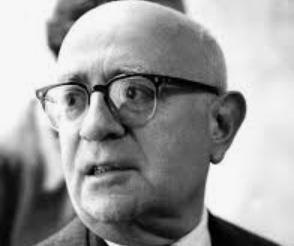
1 month 3 weeks ago
Both are torn halves of an integral freedom, to which however they do not add up.
▼
Source
On high culture and popular culture, in a letter to Walter Benjamin
1 month 3 weeks ago
Fear and destructiveness are the major emotional sources of fascism, eros belongs mainly to democracy.
▼
Source
The Authoritarian Personality (1950), p. 976, co-written with Else Frenkel-Brunswik, Daniel Levinson, and Nevitt Sanford
1 month 3 weeks ago
When I made my theoretical model, I could not have guessed that people would try to realise it with Molotov cocktails.
▼
Source
As quoted in The Dialectical Imagination : A History of the Frankfurt School and the Institute of Social Research (1973) by M Jay, p. 279.
1 month 3 weeks ago
Jazz is the false liquidation of art - instead of utopia becoming reality it disappears from the picture.
▼
Source
Perennial fashion - Jazz, as quoted in The Sociology of Rock (1978) by Simon Frith
1 month 3 weeks ago
The aim of jazz is the mechanical reproduction of a regressive moment, a castration symbolism. 'Give up your masculinity, let yourself be castrated,' the eunuchlike sound of the jazz band both mocks and proclaims, 'and you will be rewarded, accepted into a fraternity which shares the mystery of impotence with you, a mystery revealed at the moment of the initiation rite.
▼
Source
Perennial Fashion - Jazz (1978), Prisms, p. 129, as translated by Samuel Weber and Shierry Weber
1 month 3 weeks ago
If one is to take Lulu's twelve-tone chord as the integral totality of complementary harmony, then Berg's allegorical genius proves itself within a historical perspective which makes the brain reel: just as Lulu in the world of total illusion longs for nothing but her murderer and finally finds him in that sound, so does all harmony of unrequited happiness long for its fatal chord as the cipher of fulfillment - twelve-tone music is not to be separated from dissonance. Fatal: because all dynamics come to a standstill within it without finding release. The law of complementary harmony already implies the end of the musical experience of time, as this was heralded in the dissociation of time according to Expressionistic extremes.
▼
Source
Philosophy of Modern Music (1973) as translated by Anne G. Mitchell and Wesley V. Blomster
1 month 3 weeks ago
Advancing bourgeois society liquidates memory, time, recollection as irrational leftovers of the past.
▼
Source
"Was bedeutet Aufarbeitung der Vergangenheit"
1 month 3 weeks ago
In organized groups such as the army or the Church there is either no mention of love whatsoever between the members, or it is expressed only in a sublimated and indirect way, through the mediation of some religious imagine in the love of whom the members unite and whose all-embracing love they are supposed to imitate in their attitude towards each other. ... It is one of the basic tenets of fascist leadership to keep primary libidinal energy on an unconscious level so as to divert its manifestations in a way suitable to political ends.
▼
Source
"Freudian Theory and the Pattern of Fascist Propaganda," The Essential Frankfurt School Reader (1982), p. 123
1 month 3 weeks ago
In America I was liberated from a certain naïve belief in culture and attained the capacity to see culture from the outside. To clarify the point: in spite of all social criticism and all consciousness of the primacy of economic factors, the fundamental importance of the mind-"Geist"-was quasi a dogma self-evident to me from the very beginning. The fact that this was not a foregone conclusion, I learned in America, where no reverential silence in the presence of everything intellectual prevailed.
▼
Source
as quoted in The Origin of Negative Dialectics (Free Press: 1977), p. 187
1 month 3 weeks ago
We are really no longer ourselves a part of nature at the moment when we notice, when we recognize, that we are a part of nature.
▼
Source
Probleme der Moralphilosophie (Frankfurt: Suhrkamp, 1996), p. 154; as quoted in Andrew Bowie, Adorno and the Ends of Philosophy (Cambridge: Polity, 2013), p. 94
1 month 3 weeks ago
Music for entertainment ... seems to complement the reduction of people to silence, the dying out of speech as expression, the inability to communicate at all. It inhabits the pockets of silence that develop between people molded by anxiety, work and undemanding docility.
▼
Source
p. 271
1 month 3 weeks ago
Impulse, subjectivity and profanation, the old adversaries of materialistic alienation, now succumb to it. ... The representatives of the opposition to the authoritarian schema become witnesses to the authority of commercial success. ... In the service of success they renounce that insubordinate character which was theirs.
▼
Source
p. 273
CivilSimian.com created by AxiomaticPanic, CivilSimian, Kalokagathia