

2 months 2 weeks ago
There are things I can't force. I must adjust. There are times when the greatest change needed is a change of my viewpoint.
▼
Source
As quoted in Cracking the Code of Our Physical Universe : The Key to a Whole New World of Enlightenment and Enrichment (2006) by Matthew M Radmanesh, p. 91
2 months 2 weeks ago
If there is one realm in which it is essential to be sublime, it is in wickedness. You spit on a petty thief, but you can't deny a kind of respect for the great criminal.
2 months 2 weeks ago
There is no kind of harassment that a man may not inflict on a woman with impunity in civilized societies.
▼
Source
"On Women" (1772), as translated in Selected Writings (1966) edited by Lester G. Crocker
2 months 2 weeks ago
We do not know nature; causes hidden in her breast might have produced everything. In your turn, observe the polyp of Trembley: does it not contain in itself the causes which bring about regeneration? Why then would it be absurd to think that there are physical causes by reason of which everything has been made, and to which the whole chain of this vast universe is so necessarily bound and held that, nothing which happens, could have failed to happen,-causes, of which we are so invincibly ignorant that we have had recourse to a God, who, as some aver, is not so much as a logical entity? Thus to destroy chance is not to prove the existence of a supreme being, since there may be some other thing which is neither chance nor God-I mean, nature. It follows that the study of nature can make only unbelievers; and the way of thinking of all its more successful investigators proves this.
▼
Source
As quoted by Julien Offray de La Mettrie, Man a Machine (1747) Tr. Gertrude Carman Bussey
2 months 2 weeks ago
The philosopher has never killed any priests, whereas the priest has killed a great many philosophers.
2 months 2 weeks ago
Distance is a great promoter of admiration!
▼
Source
As quoted in Thesaurus of Epigrams: A New Classified Collection of Witty Remarks, Bon Mots and Toasts (1942) by Edmund Fuller
2 months 2 weeks ago
Genius is present in every age, but the men carrying it within them remain benumbed unless extraordinary events occur to heat up and melt the mass so that it flows forth.
2 months 2 weeks ago
There is no good father who would want to resemble our Heavenly Father.
▼
Source
No. 51
2 months 2 weeks ago
What a hell of an economic system! Some are replete with everything while others, whose stomachs are no less demanding, whose hunger is just as recurrent, have nothing to bite on. The worst of it is the constrained posture need puts you in. The needy man does not walk like the rest; he skips, slithers, twists, crawls.
2 months 2 weeks ago
I have often seen an actor laugh off the stage, but I don't remember ever having seen one weep.
▼
Source
"Paradox on Acting" (1830), as quoted in Selected Writings (1966) edited by Lester G. Crocker
2 months 2 weeks ago
If exclusive privileges were not granted, and if the financial system would not tend to concentrate wealth, there would be few great fortunes and no quick wealth. When the means of growing rich is divided between a greater number of citizens, wealth will also be more evenly distributed; extreme poverty and extreme wealth would be also rare.
▼
Source
Article on Wealth
2 months 2 weeks ago
The blood of Jesus Christ can cover a multitude of sins, it seems to me.
2 months 2 weeks ago
Happiest are the people who give most happiness to others.
▼
Source
As quoted in Happyology by Harald W. Tietze, p. 28
2 months 2 weeks ago
Bad company is as instructive as licentiousness. One makes up for the loss of one's innocence with the loss of one's prejudices.
2 months 2 weeks ago
Impenetrable in their dissimulation, cruel in their vengeance, tenacious in their purposes, unscrupulous as to their methods, animated by profound and hidden hatred for the tyranny of man - it is as though there exists among them an ever-present conspiracy toward domination, a sort of alliance like that subsisting among the priests of every country.
▼
Source
"On Women" (1772), as translated in Selected Writings (1966) edited by Lester G. Crocker
2 months 2 weeks ago
This is a work that cannot be completed except by a society of men of letters and skilled workmen, each working separately on his own part, but all bound together solely by their zeal for the best interests of the human race and a feeling of mutual good will.
▼
Source
Article on Encyclopedia, as translated in The Many Faces of Philosophy : Reflections from Plato to Arendt (2001), "Diderot", p. 237
2 months 2 weeks ago
In any country where talent and virtue produce no advancement, money will be the national god. Its inhabitants will either have to possess money or make others believe that they do. Wealth will be the highest virtue, poverty the greatest vice. Those who have money will display it in every imaginable way. If their ostentation does not exceed their fortune, all will be well. But if their ostentation does exceed their fortune they will ruin themselves. In such a country, the greatest fortunes will vanish in the twinkling of an eye. Those who don't have money will ruin themselves with vain efforts to conceal their poverty. That is one kind of affluence: the outward sign of wealth for a small number, the mask of poverty for the majority, and a source of corruption for all.
2 months 2 weeks ago
We are far more liable to catch the vices than the virtues of our associates.
▼
Source
As quoted in Thesaurus of Epigrams: A New Classified Collection of Witty Remarks, Bon Mots and Toasts (1942) by Edmund Fuller
2 months 2 weeks ago
It is not human nature we should accuse but the despicable conventions that pervert it.
2 months 2 weeks ago
From fanaticism to barbarism is only one step.
▼
Source
Essai sur le Mérite de la Vertu (1745)
2 months 2 weeks ago
We are constantly railing against the passions; we ascribe to them all of man's afflictions, and we forget that they are also the source of all his pleasures ... But what provokes me is that only their adverse side is considered ... and yet only passions, and great passions, can raise the soul to great things. Without them there is no sublimity, either in morals or in creativity. Art returns to infancy, and virtue becomes small-minded.
▼
Source
As translated in Diderot (1977) by Otis Fellows, p. 39
2 months 2 weeks ago
All abstract sciences are nothing but the study of relations between signs.
▼
Source
Dr. Théophile de Bordeu, in "Conversation Between D'Alembert and Diderot"
2 months 2 weeks ago
Justice is the first virtue of those who command, and stops the complaints of those who obey.
▼
Source
As quoted in The Golden Treasury of Thought : A Gathering of Quotations from the Best Ancient and Modern Authors (1873) by Theodore Taylor, p. 227
2 months 2 weeks ago
Are we not madder than those first inhabitants of the plain of Sennar? We know that the distance separating the earth from the sky is infinite, and yet we do not stop building our tower.
▼
Source
No. 4
2 months 2 weeks ago
The most dangerous madmen are those created by religion, and ... people whose aim is to disrupt society always know how to make good use of them on occasion.
2 months 2 weeks ago
Jews are angry and brutish people, vile and vulgar men, slaves worthy of the yoke [Talmudism] which you bear... Go, take back your books and remove yourselves from me. [ The Talmud ] taught the Jews to steal the goods of Christians, to regard them as savage beasts, to push them over the precipice... to kill them with impunity and to utter every morning the most horrible imprecations against them.
▼
Source
See The Jews: A History, Second Edition, by John Efron, Steven Weitzman and Matthias Lehmann
2 months 2 weeks ago
People praise virtue, but they hate it, they run away from it. It freezes you to death, and in this world you've got to keep your feet warm.
2 months 2 weeks ago
The arbitrary rule of a just and enlightened prince is always bad. His virtues are the most dangerous and the surest form of seduction: they lull a people imperceptibly into the habit of loving, respecting, and serving his successor, whoever that successor may be, no matter how wicked or stupid.
▼
Source
Refutation of Helvétius
2 months 2 weeks ago
No man has received from nature the right to give orders to others. Freedom is a gift from heaven, and every individual of the same species has the right to enjoy it as soon as he is in enjoyment of his reason.
▼
Source
Article on Political Authority, Vol. 1, (1751) as quoted in Selected Writings (1966) edited by Lester G. Crocker
2 months 2 weeks ago
Morals are in all countries the result of legislation and government; they are not African or Asian or European: they are good or bad.
2 months 2 weeks ago
Evil always turns up in this world through some genius or other.
▼
Source
As quoted in Dictionary of Foreign Quotations (1980) by Mary Collison, Robert L. Collison, p. 98
2 months 2 weeks ago
Poetry must have something in it that is barbaric, vast and wild.
2 months 2 weeks ago
If you want me to believe in God, you must make me touch him.
▼
Source
as quoted in Diderot and the Encyclopædists (1897) by John Morley, p. 92.
2 months 2 weeks ago
Superstition is more injurious to God than atheism.
2 months 2 weeks ago
We are all instruments endowed with feeling and memory. Our senses are so many strings that are struck by surrounding objects and that also frequently strike themselves.
▼
Source
"Conversation Between D'Alembert and Diderot"
2 months 2 weeks ago
The more man ascends through the past, and the more he launches into the future, the greater he will be, and all these philosophers and ministers and truth-telling men who have fallen victims to the stupidity of nations, the atrocities of priests, the fury of tyrants, what consolation was left for them in death? This: That prejudice would pass, and that posterity would pour out the vial of ignominy upon their enemies. O Posterity! Holy and sacred stay of the unhappy and the oppressed; thou who art just, thou who art incorruptible, thou who findest the good man, who unmaskest the hypocrite, who breakest down the tyrant, may thy sure faith, thy consoling faith never, never abandon me!
▼
Source
As quoted in "Diderot" in The Great Infidels (1881) by Robert Green Ingersoll; The Works of Robert G. Ingersoll Vol. III (1900), p. 367
2 months 2 weeks ago
There are three principal means of acquiring knowledge available to us: observation of nature, reflection, and experimentation. Observation collects facts; reflection combines them; experimentation verifies the result of that combination. Our observation of nature must be diligent, our reflection profound, and our experiments exact. We rarely see these three means combined; and for this reason, creative geniuses are not common.
▼
Source
No. 15
2 months 2 weeks ago
There is not a Musselman alive who would not imagine that he was performing an action pleasing to God and his Holy Prophet by exterminating every Christian on earth, while the Christians are scarcely more tolerant on their side.
2 months 2 weeks ago
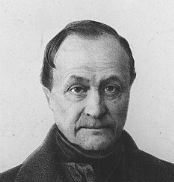
Mathematical Analysis is... the true rational basis of the whole system of our positive knowledge.
▼
Source
Bk. 1, chap. 1; as cited in: Robert Edouard Moritz. Memorabilia mathematica; or, The philomath's quotation-book, (1914), p. 224
2 months 2 weeks ago
It was under Catholic Feudalism that they were first united; a union for which their incorporation into the Roman empire had prepared them, and which was finally organized by the incomparable genius of Charlemagne.
▼
Source
p. 88
2 months 2 weeks ago
Foreknowledge is power.
▼
Source
As quoted in A Dictionary of Scientific Quotations (1991) by Alan Lindsay Mackay
2 months 2 weeks ago
Every attempt to refer chemical questions to mathematical doctrines must be considered, now and always, profoundly irrational, as being contrary to the nature of the phenomena. . . . but if the employment of mathematical analysis should ever become so preponderant in chemistry (an aberration which is happily almost impossible) it would occasion vast and rapid retrogradation....
2 months 2 weeks ago
There are three successive states of morality answering to the three principal stages of human life; the personal, the domestic, and the social stage.
▼
Source
p. 104
2 months 2 weeks ago
Reorganisation, irrespectively of God or king, by the worship of Humanity, systematically adopted. Man's only right is to do his duty. The Intellect should always be the servant of the Heart, and should never be its slave.
▼
Source
Title Page
2 months 2 weeks ago
Language forms a kind of wealth, which all can make use of at once without causing any diminution of the store, and which thus admits a complete community of enjoyment; for all, freely participating in the general treasure, unconsciously aid in its preservation.
▼
Source
Volume II, p. 213
2 months 2 weeks ago
The principal means of realizing it will be the formation of an alliance between philosophers and the working classes, for which both are alike prepared by the negative and positive progress of the last five centuries. The direct object of their combined action will be to set in motion the force of Public Opinion.
▼
Source
p. 153
2 months 2 weeks ago
The object of all true Philosophy is to frame a system which shall comprehend human life under every aspect, social as well as individual. It embraces, therefore, the three kinds of phenomena of which our life consists, Thoughts, Feelings, and Actions.
▼
Source
p. 9
2 months 2 weeks ago
In the final, positive state, the mind has given over the vain search after Abolute notions, the origin and destination of the universe, and the cause of phenomenon, and applies itself to the tudy of their laws, - that is, their invariable relations of succession and resemblance. Reasoning and observation, duly combined, are the means of this knowledge. What is now understood when we speak of an explanation of the facts is simply the establishment of a connection between single phenomena and some general facts, the number of which continually diminishes with the progress of science.
▼
Source
Vol I
2 months 2 weeks ago
To understand a science it is necessary to know its history.
▼
Source
A Course of Positive Philosophy (1832 - 1842) [Six volumes]
2 months 2 weeks ago
The errors of Communism must be rectified; but there is no necessity for giving up the name, which is a simple assertion of the paramount importance of Social Feeling. However, now that we have happily passed from monarchy to republicanism, the name of Communist is no longer indispensable; the word Republican expresses the meaning as well, and without the same danger. Positivism, then, has nothing to fear from Communism; on the contrary, it will probably be accepted by most Communists among the working classes, especially in France where abstractions have but little influence on minds thoroughly emancipated from theology. The people will gradually find that the solution of the great social problem which Positivism offers is better than the Communistic solution.
▼
Source
p. 169
CivilSimian.com created by AxiomaticPanic, CivilSimian, Kalokagathia